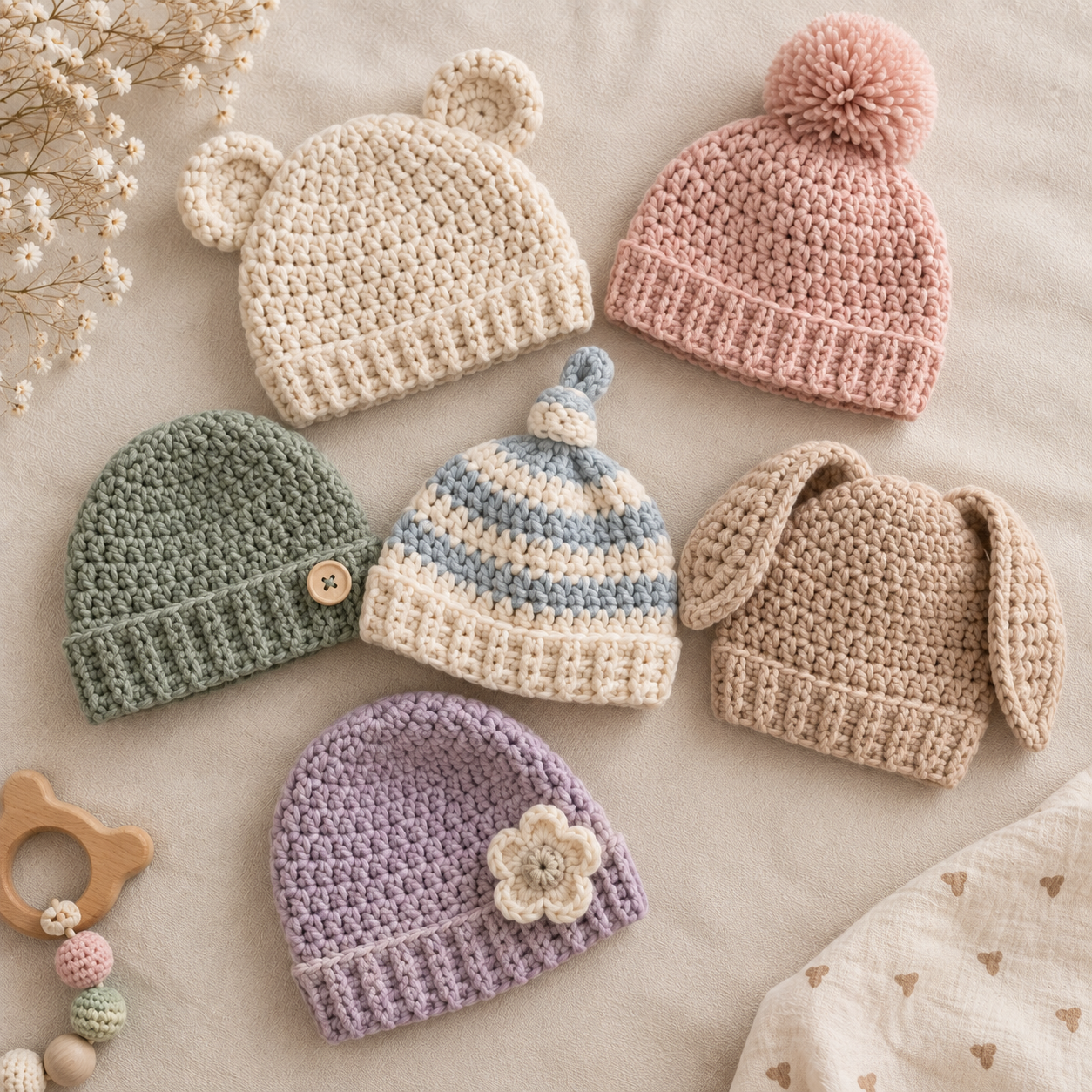
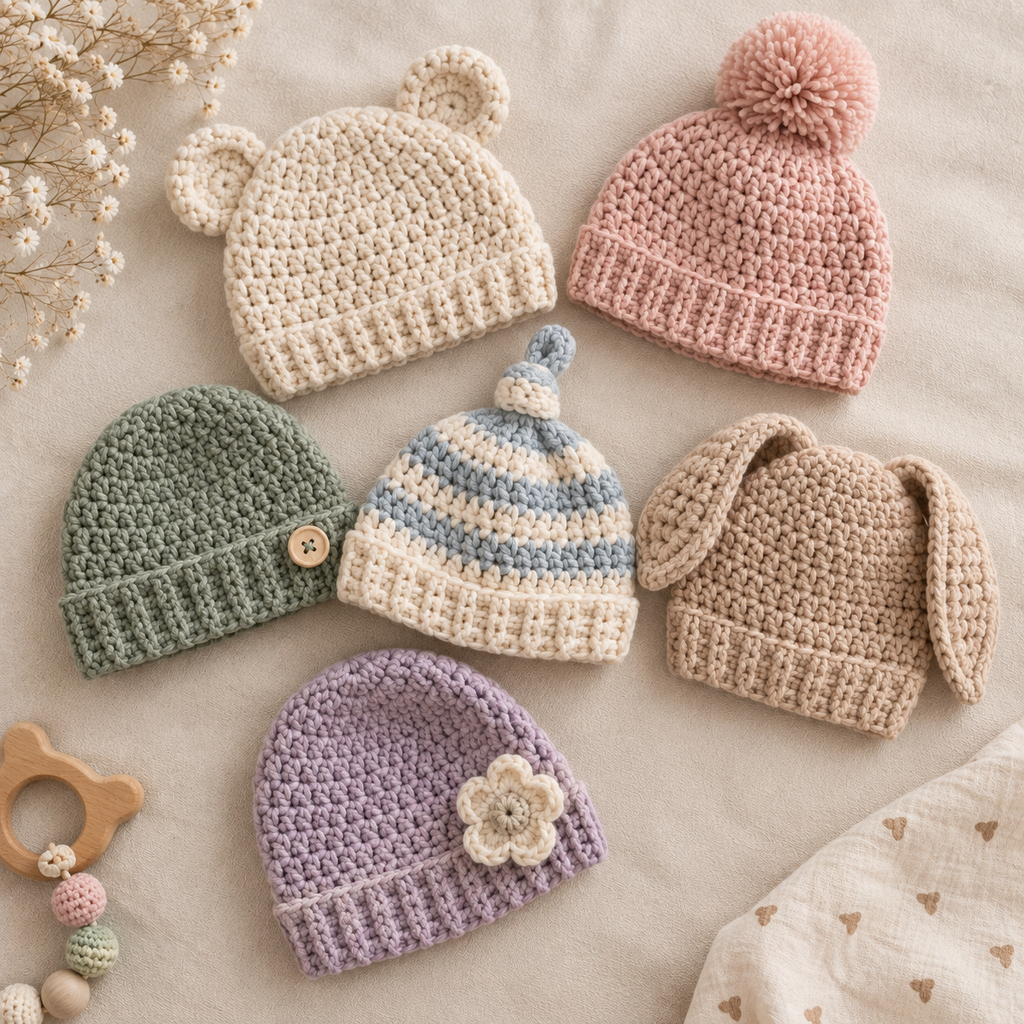
Baby hats come together fast, use very little yarn, and make an easy first gift for a new arrival, but they also come with a few extra considerations that adult hats don’t. Fit changes quickly in the first year, and anything attached to the hat needs to hold up to a lot of tugging from small hands. Here are 7 crochet baby hat patterns to try, along with what’s worth keeping in mind for this age group specifically.
What’s Different About Crocheting for Babies
Sizing is the biggest difference. A newborn’s head measures roughly 13 to 14 inches around, while a one-year-old’s is closer to 18 inches, so a pattern written for one age range won’t fit the other without real adjustment. Softness matters more here too, since baby skin is more sensitive than an adult’s, which is part of why many baby patterns favor a soft acrylic or a gentle cotton blend over anything scratchy or heavily textured. Any decorative pieces, like small pom-poms, bows, or ears, need to be sewn on securely, and anything genuinely small, like a button or a bead, should be skipped entirely for a hat meant for an infant, since those pose a choking hazard if they work loose.
7 Crochet Baby Hat Patterns to Try
1. The Newborn Hospital Cap
A simple, close-fitting ribbed cap with no added embellishments, this style is meant to be practical rather than decorative, keeping a newborn’s head warm right after birth. It’s one of the fastest patterns on this list and a common first project for anyone crocheting for a baby shower or hospital donation.
2. The Pixie Elf Bonnet
Tapering to a soft point at the top rather than a flat crown, and finished with two ties that knot under the chin, this bonnet has a storybook charm that a plain rounded hat doesn’t. The ties help keep it in place on a baby who isn’t sitting still yet.
3. The Strawberry Baby Hat
A rounded red crown paired with a green, leaf-shaped brim gives this design an instantly recognizable, fruit-inspired look. The green brim is worked as a separate piece with a few pointed sections, then attached around the bottom edge of the red cap.
4. The Owl Baby Hat
Two small pointed ear tufts and a pair of soft embroidered eyes give this hat a wide-eyed, wintry character. Skipping plastic safety eyes in favor of embroidered ones is especially important here, since owl-style hats are a popular design for the youngest babies.
5. The Baby Sun Hat
Worked with a wider brim than a typical beanie and often in a lighter cotton yarn, this style is built for warm-weather wear rather than cold-weather warmth. A row or two of single crochet worked more tightly than the rest of the hat helps the brim hold its shape and actually shade the face instead of flopping down.
6. The Ear Flap Baby Hat
Two soft, rounded flaps worked to cover the ears and finished with a pair of crocheted ties or small tassels add extra warmth and a bit of personality for cold-weather wear. The flaps are the only added shaping here, since the main crown still starts from a basic rounded cap.
7. The Top Knot Baby Beanie
A small, soft knot of yarn worked at the very top of an otherwise plain beanie gives this style a playful, slightly trendy look that photographs well. The top knot is worked as a short tube stuffed lightly and folded over, rather than tied from loose strands, so there’s nothing that can come undone.
Sizing Tips for Baby Hats
Since head size changes so quickly in the first year, it helps to crochet slightly looser than you might for an adult hat, since a snug newborn-sized hat will likely only fit for a few weeks. If you’re making a hat as a gift and don’t know the baby’s exact age yet, a 3 to 6 month size is often a safer bet than a newborn size, since it gives a bit more room to grow into. Measuring around the intended wearer’s head, or using a general size chart based on age, is more reliable than guessing from a pattern’s stated measurements alone.
Common Questions
What Size Should I Crochet a Baby Hat?
It depends on the baby’s age, since head circumference grows quickly in the first year. A newborn hat typically measures around 13 to 14 inches, while a 6-month size is closer to 16 to 17 inches, so it’s worth checking a size chart or measuring directly if you can.
What Yarn Is Safest for a Baby Hat?
A soft acrylic or a gentle cotton blend is generally considered a safe, comfortable choice for baby skin, since both are less likely to cause irritation than a coarser wool. Avoid anything with loose fibers that could shed easily, and always skip small attached embellishments like buttons or beads for a hat meant for a young infant.
How Long Does It Take to Crochet a Baby Hat?
Most simple baby hats take somewhere between 1 and 2 hours, making them one of the quicker gift projects to finish. A design with added details, like the ear flaps or the strawberry brim, will generally take a bit longer because of the extra pieces involved.
Are Ear Flaps and Ties Safe for Babies?
Ties are generally fine for a photo session under supervision, but they shouldn’t be left on a baby unattended or during sleep, since any cord around the neck area carries a strangulation risk. For everyday wear, a plain ear flap hat without ties is the safer choice.
How Much Yarn Does a Baby Hat Use?
Most newborn to 6-month hats use somewhere between 50 and 100 yards of worsted or DK-weight yarn, depending on the size and any added brim or flaps. That makes baby hats a good project for using up leftover yarn from a bigger project.
Can I Resize One of These Patterns for an Older Toddler?
Yes, generally by working a few more rounds before starting the crown decreases and using a slightly larger starting stitch count. It’s worth checking your gauge against a current head measurement rather than assuming a baby pattern will scale up evenly on its own.
Final Thoughts
A crochet baby hat is small enough to finish in an afternoon and thoughtful enough to make a genuinely meaningful gift, whether it’s for a shower, a hospital donation, or your own little one. Pick a style that matches the season and the wearer’s age, and keep safety details like ties and small embellishments in mind as you finish it.