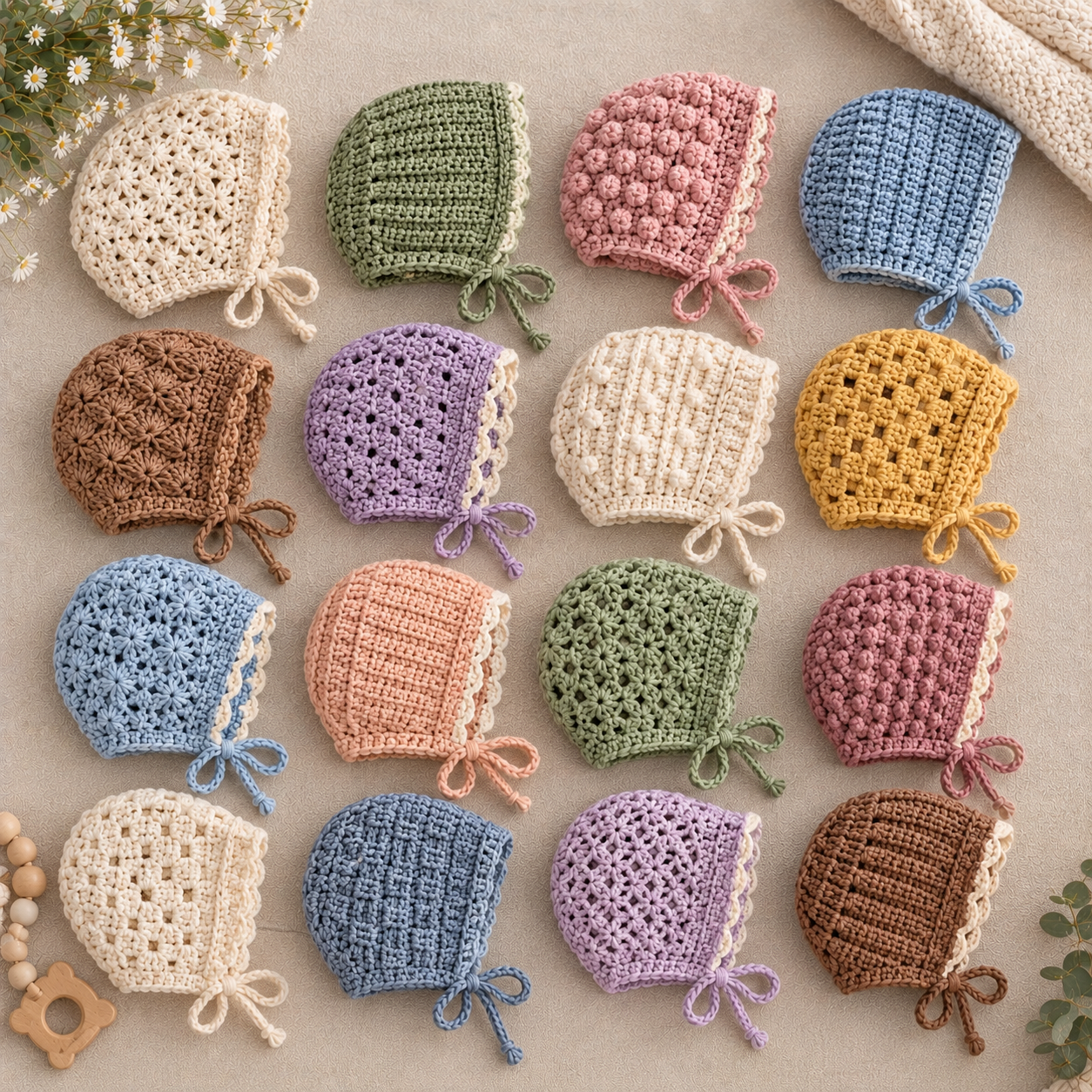
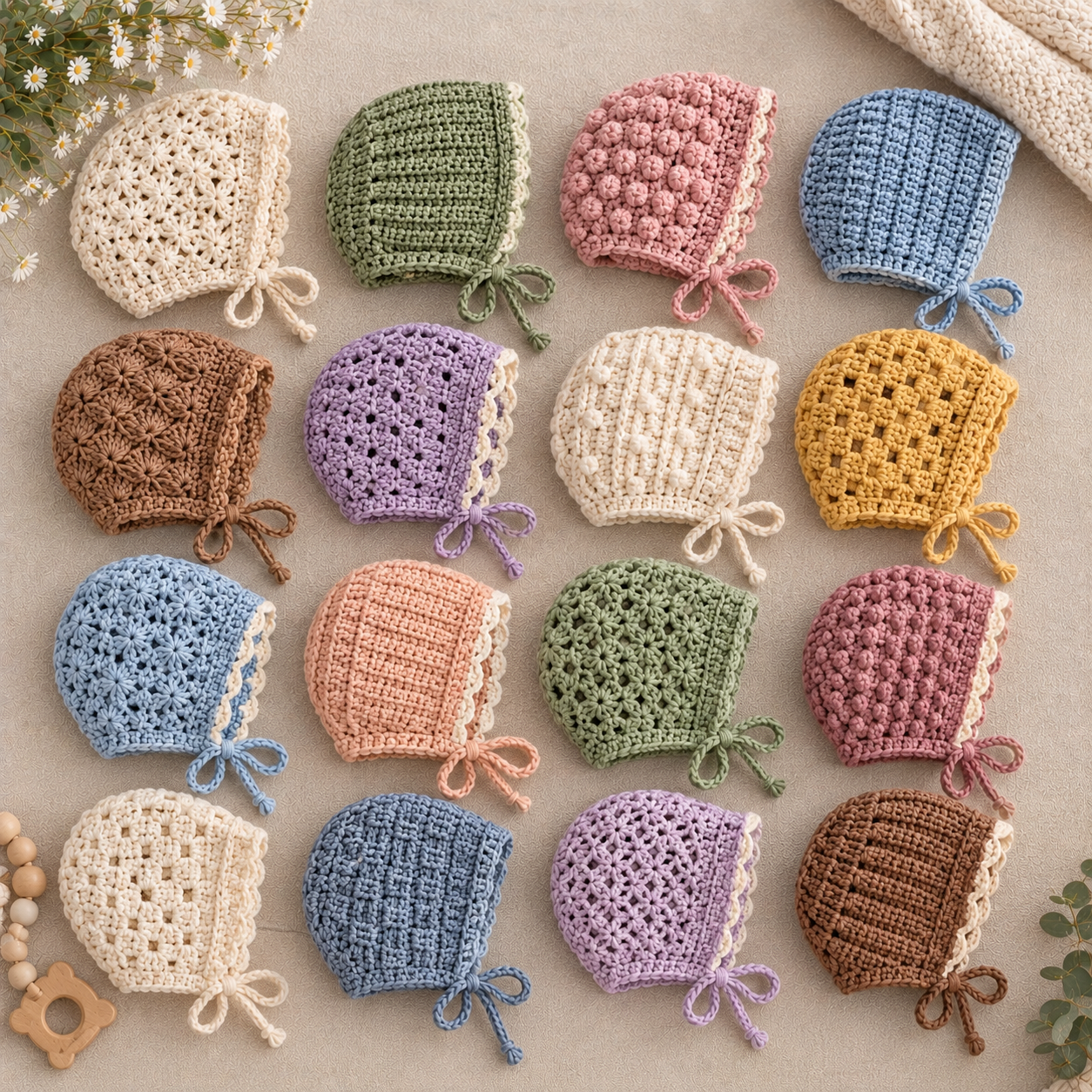
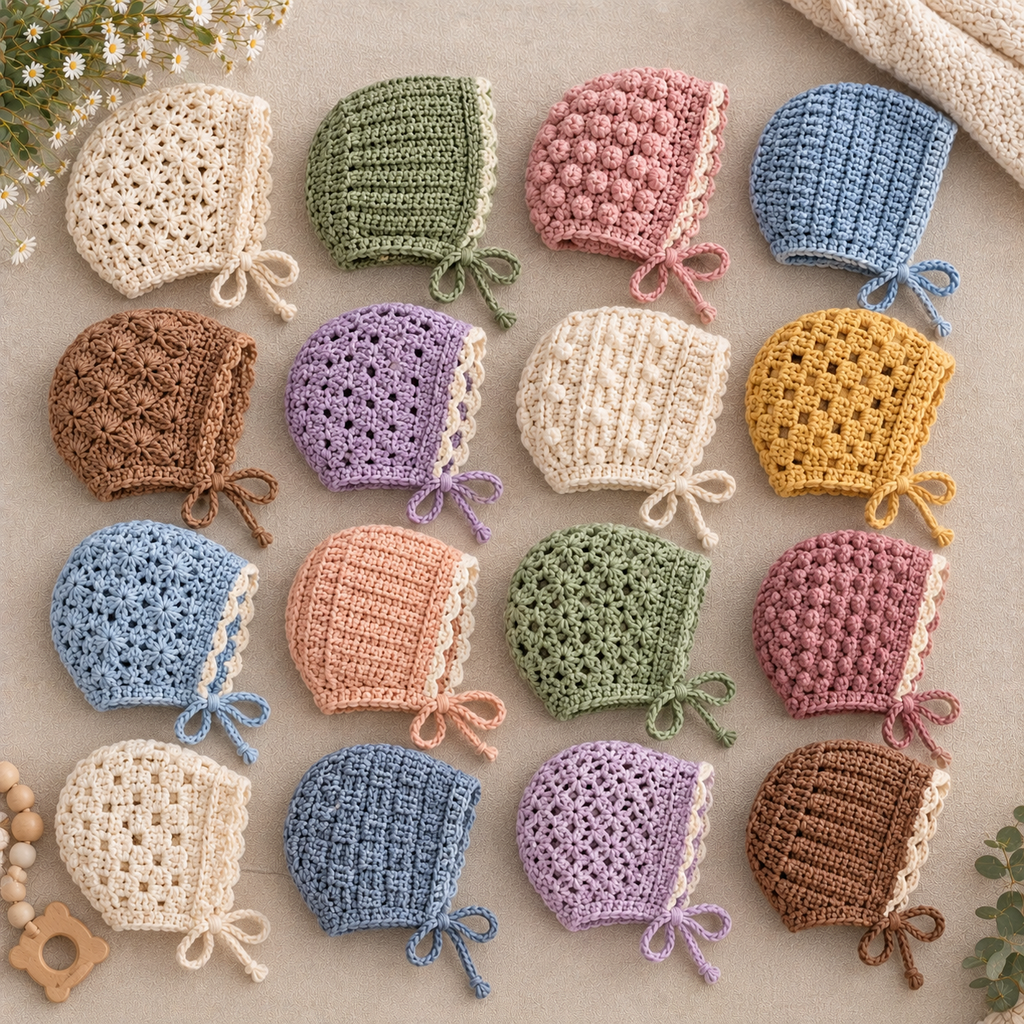
A bonnet doesn’t need a single new closure or trim to feel different from the last one you made, sometimes the stitch pattern itself is enough to completely change the character of the same basic rounded shape. Here are 11 crochet baby bonnet patterns to try, along with a look at why some of these textured stitches change more than just the surface.
How Textured Stitches Affect Bonnet Fit
A plain single or double crochet fabric lies flat and keeps roughly the same width from row to row, but a textured stitch like a puff, a popcorn, or a basketweave pattern pulls the fabric in more, since each raised cluster pinches its own section slightly. That’s why a textured bonnet pattern often calls for a few extra stitches across the same row than a plain version would need, just to end up with the same finished width. Keep this in mind if you ever swap a plain section of one of these patterns for a textured one, since a straight one-for-one stitch swap can leave the bonnet noticeably smaller than planned.
11 Crochet Baby Bonnet Patterns to Try
1. The Puff Stitch Bonnet
Rows of small, raised puff stitches worked across the crown give this bonnet a soft, dimensional texture that catches the light differently than a flat stitch, and add a bit of extra warmth without needing a heavier yarn.
2. The Basketweave Bonnet
Alternating blocks of front-post and back-post stitches create a woven, criss-cross pattern across the crown, giving this bonnet a more tailored look than a plain stitch. It’s a satisfying next stitch to learn once you’re comfortable with basic post stitches.
3. The Fair Isle Colorwork Beanie
A small geometric motif worked in two or three colors using a stranded colorwork technique brings a folk-inspired pattern to the crown, distinct from a simple stripe or color-block design. Carrying the unused color neatly across the back of the work takes some practice to keep even.
4. The Double-Layer Bonnet
Worked as two separate layers joined at the edges, this bonnet traps a bit of air between the layers for extra warmth, making it a good choice for a colder-weather gift. The two layers can also be worked in different colors for a peek of contrast at the brim.
5. The Bunny Ear Bonnet
Two soft, rounded ears attached upright near the top of the crown bring a gentle animal theme to the classic bonnet shape, without needing a full character face or any added panels. Stuffing the ears lightly helps them stand up rather than flopping to the sides.
6. The Popcorn Stitch Bonnet
Small, raised popcorn stitches scattered across the crown in a simple spaced-out pattern add texture without covering the entire surface the way a puff stitch bonnet does. It’s an easy way to add detail while keeping most of the bonnet quick, plain single or double crochet.
7. The Ombré Fade Bonnet
Worked with a gradual color transition from a deep shade at the crown to a much lighter one near the face opening, this bonnet turns a simple color choice into the main design feature. Using a gradient or self-striping yarn is the easiest way to get a smooth fade without managing several separate skeins.
8. The Chevron Ripple Bonnet
A zigzag stitch pattern worked in rows creates a wavy, ripple texture across the crown, giving this bonnet a more dynamic look than a plain or striped design. It reads especially well when worked in two alternating colors to emphasize the zigzag line.
9. The Crossover Wrap Bonnet
Instead of a single symmetrical crown, this design uses two overlapping panels that cross at the forehead, giving the bonnet an asymmetrical, wrapped look that’s different from any of the centered, symmetrical styles on this list. The overlap also adds a bit of extra coverage near the forehead.
10. The Fringe-Trim Bonnet
A row of short, soft fringe worked around the face opening adds movement and a slightly bohemian feel that’s different from a smooth lace or scalloped edge. Trimming the fringe to an even length after attaching it makes the biggest difference in how polished the finished bonnet looks.
11. The Filet Mesh Bonnet
Worked in a grid of open squares using the filet crochet technique, with a few squares filled in to form a simple shape like a heart or star, this bonnet has an airy, graphic look distinct from a rounded eyelet or scalloped lace pattern. It’s a good introduction to filet crochet on a small, low-commitment project.
Picking a Stitch Pattern for Your Skill Level
If you’re newer to textured stitches, start with the popcorn stitch or chevron ripple bonnets, since both use a single repeated technique rather than combining several elements. The basketweave, colorwork, and filet mesh designs ask for more attention to tension and color management, so they’re worth saving until you’ve finished a few plainer bonnets first.
Common Questions
Do Textured Stitches Use More Yarn Than a Plain Bonnet?
Generally yes, since raised stitches like puffs and popcorns use extra yarn to create their dimension, and patterns often add a few extra stitches per row to keep the finished width consistent. Expect a textured bonnet to use somewhat more yarn than a plain version of the same size.
Which of These 11 Styles Is Best for a Beginner?
The popcorn stitch and ombré fade bonnets are both approachable starting points, since neither requires managing more than one new technique at a time. Save the colorwork and filet mesh designs for once you’re comfortable reading a slightly more detailed pattern.
How Long Does It Take to Crochet One of These Bonnets?
Most take somewhere between 1 and 3 hours, with the double-layer and filet mesh designs generally taking longer because of their extra construction steps. The popcorn stitch and chevron ripple bonnets tend to finish fastest, since each binds on a single repeated technique.
What Yarn Works Best for These Bonnet Styles?
A soft, machine-washable cotton or cotton-blend yarn suits most of these designs well, though a gradient or self-striping yarn is worth seeking out specifically for the ombré fade bonnet to get a smooth, even transition.
How Much Yarn Does a Bonnet Use?
Most of these bonnets use somewhere between 60 and 150 yards of worsted-weight yarn, with textured designs like the puff stitch or double-layer bonnet using somewhat more because of their added dimension or extra layer.
Can I Swap a Plain Stitch Section for a Textured One in Any of These Patterns?
You can, but it’s worth adding a few extra stitches across that section first, since textured stitches pull the fabric in more than a plain stitch does. Working a small test swatch in the new stitch before committing to the full bonnet is the easiest way to check your adjusted stitch count is close enough.
Is a Colorwork or Filet Pattern Harder to Read Than a Written Pattern?
Not necessarily harder, just different. A charted colorwork or filet pattern shows the design visually square by square, which some crocheters find easier to follow than a written row-by-row instruction once they’re used to reading a chart.
Final Thoughts
From a woven basketweave to a soft pair of bunny ears, these 11 bonnets prove that texture and stitch choice can carry a design just as much as any trim or closure. Pick whichever style matches your skill level and the look you’re after, and you’ll have a genuinely distinctive little bonnet ready before long.