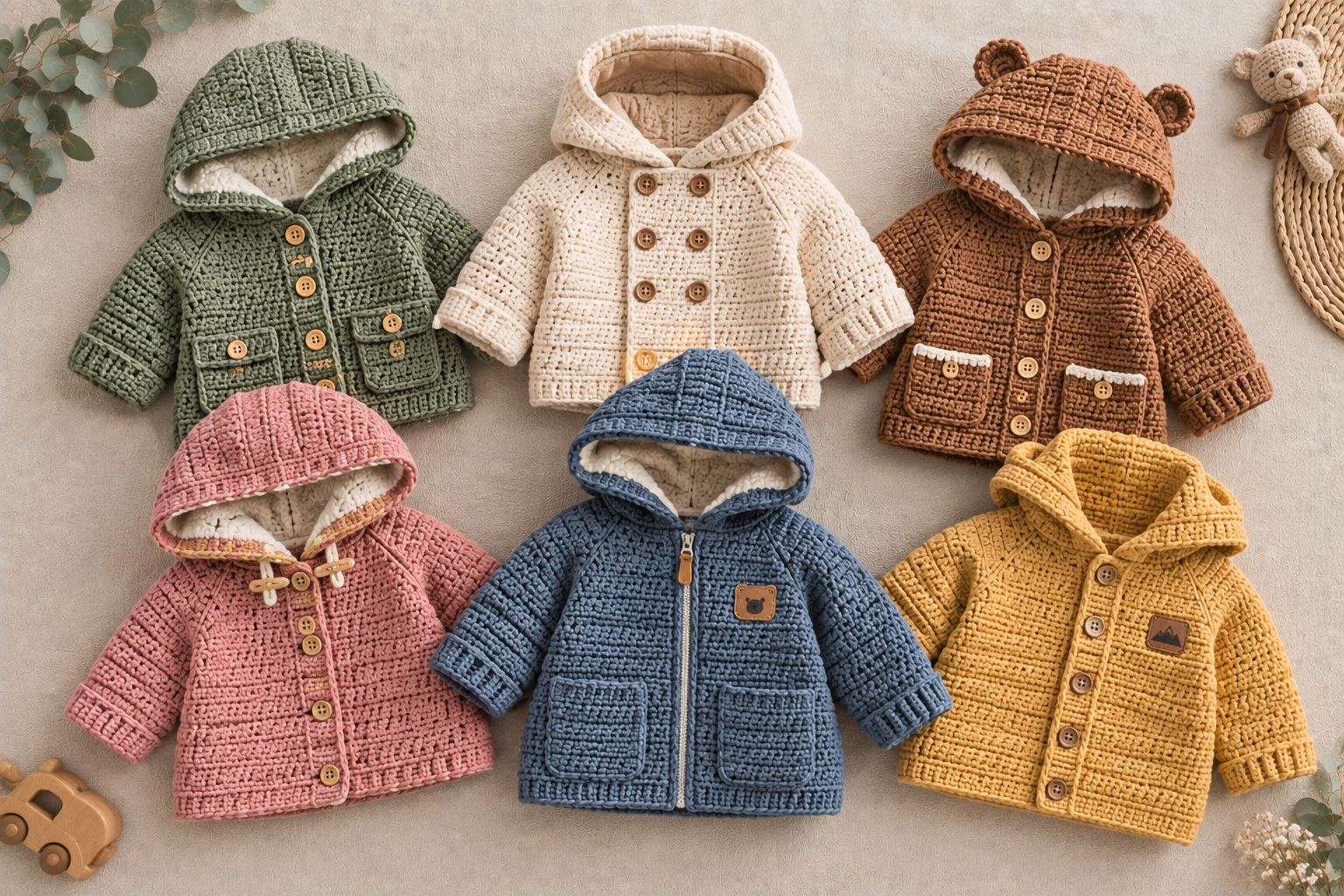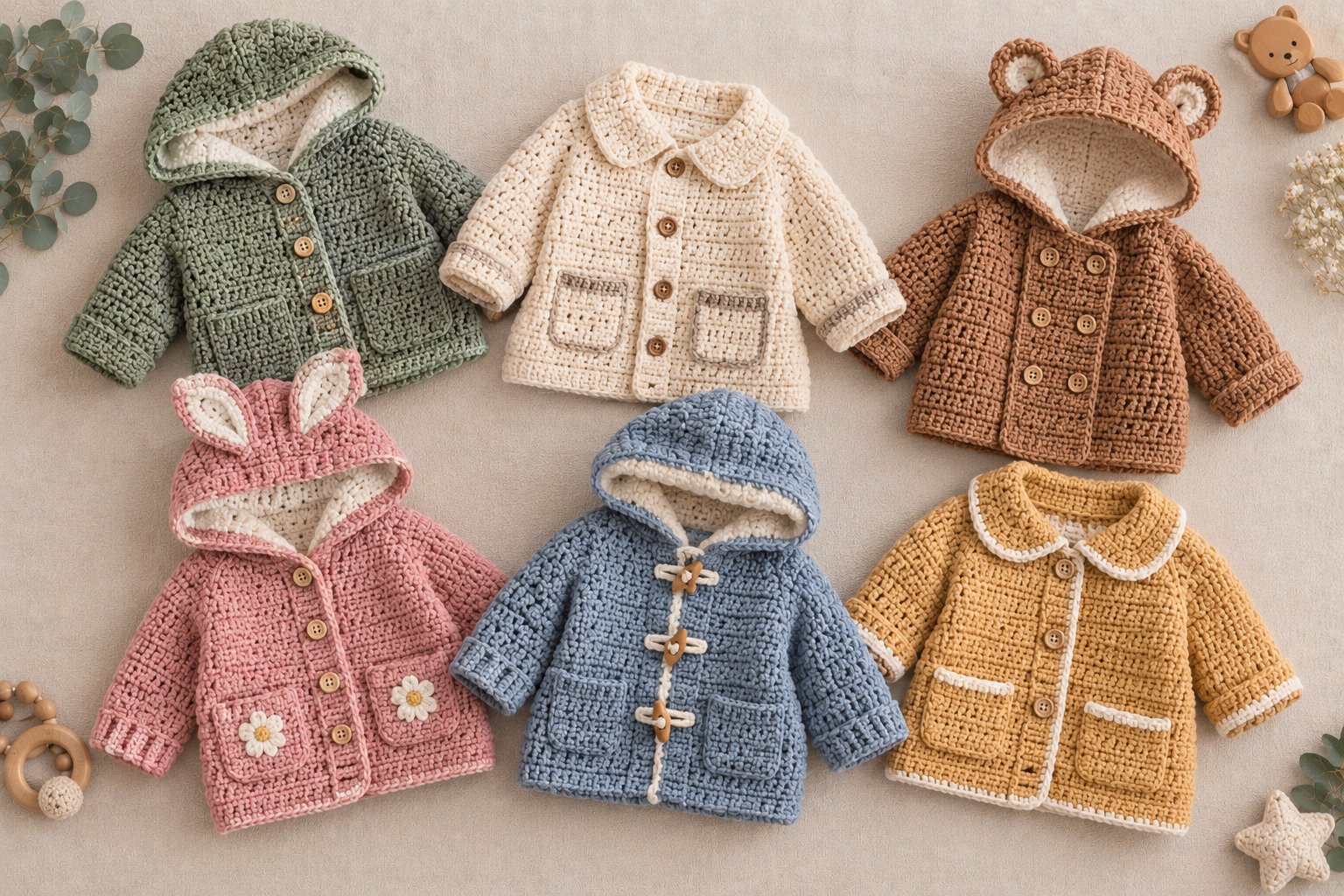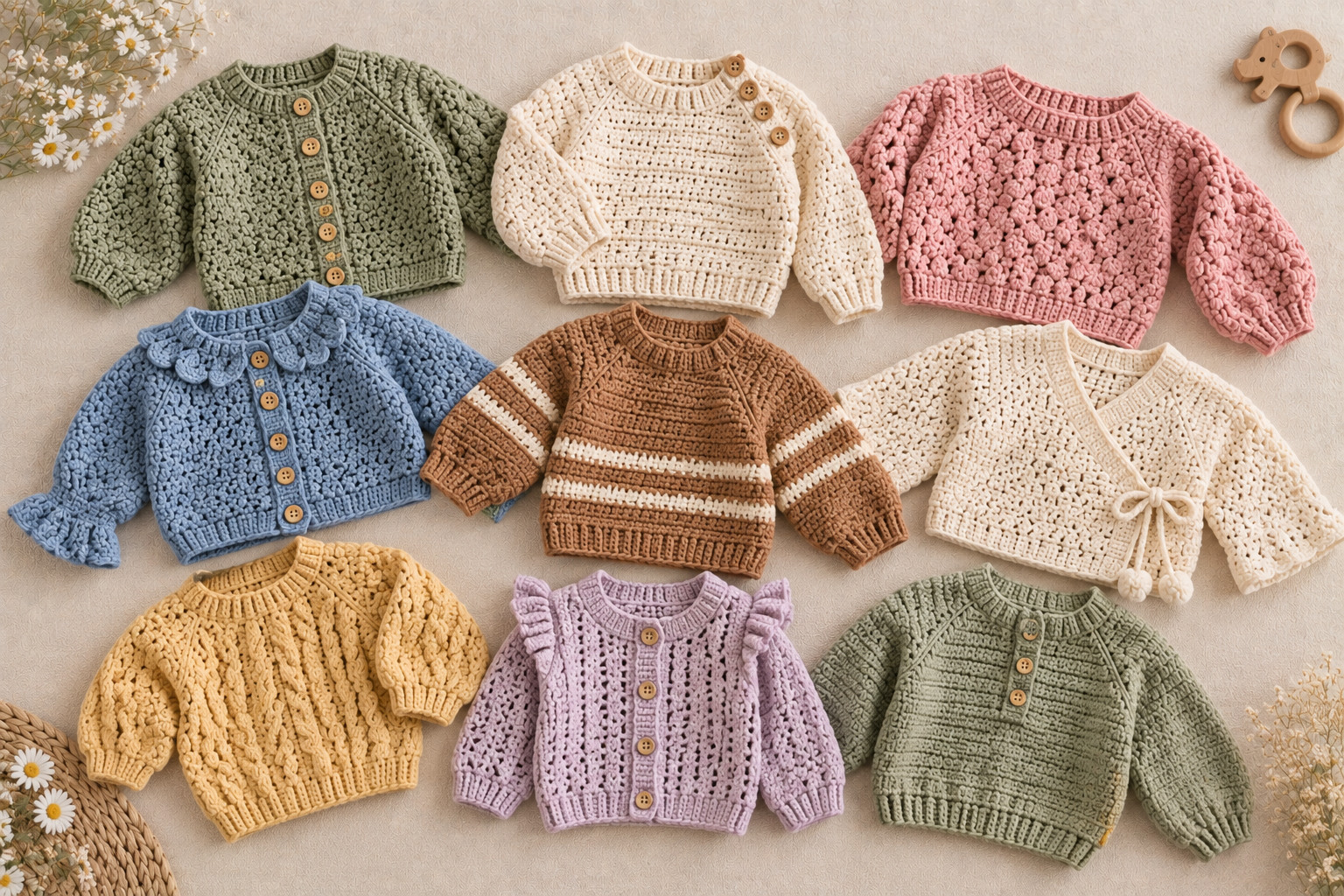
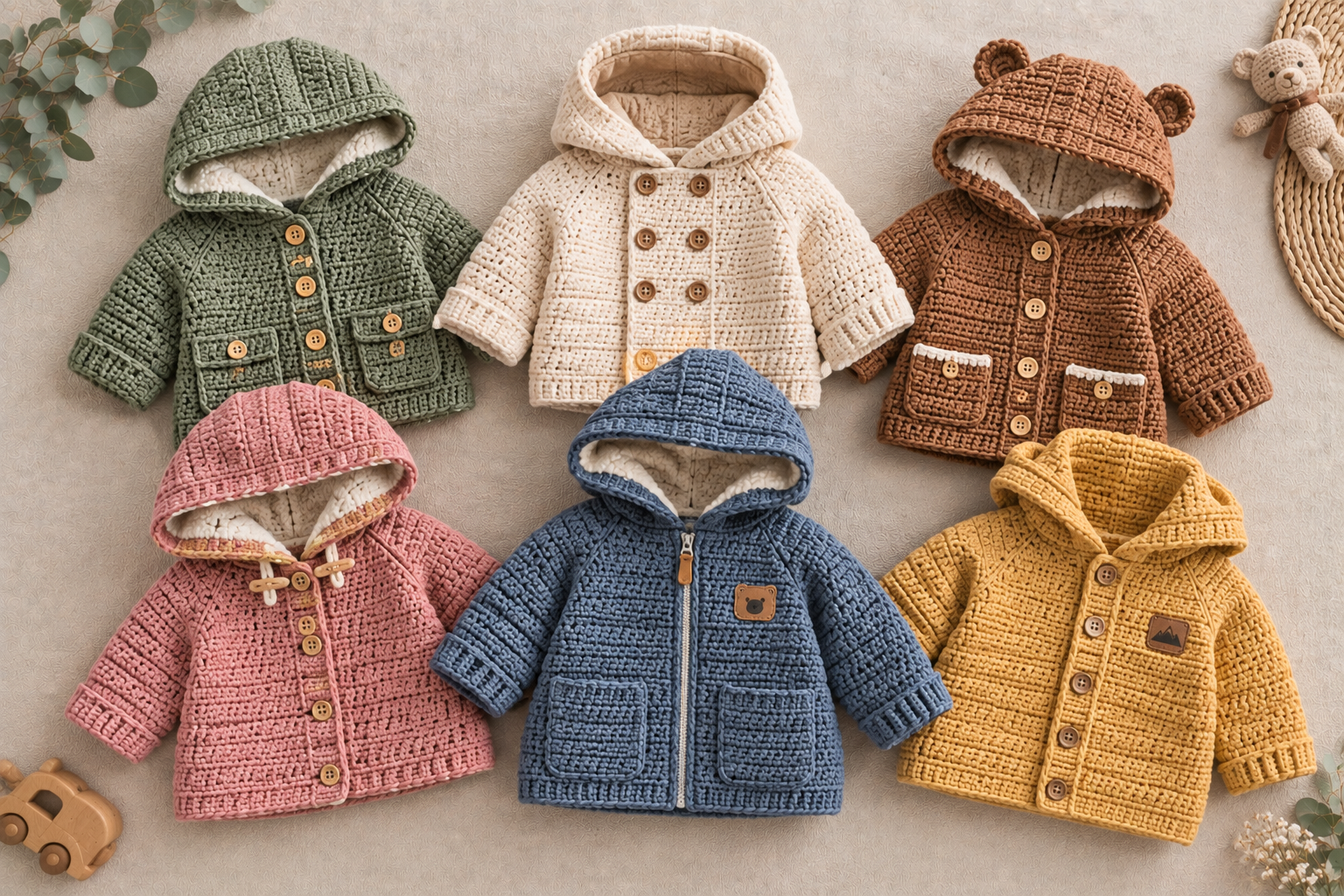
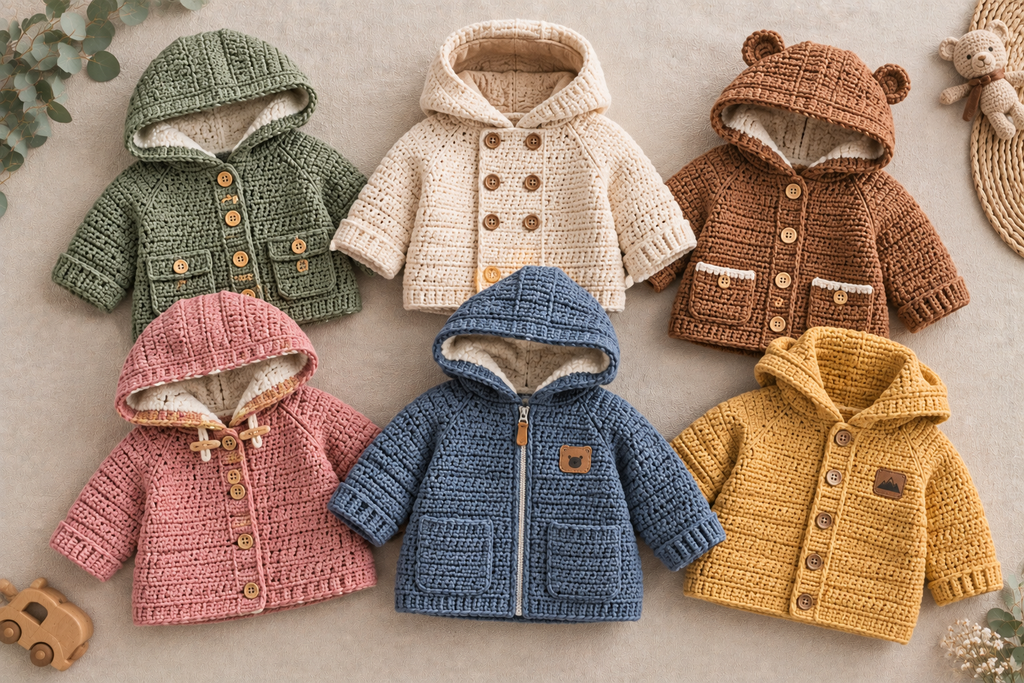
A jacket has to do more than look good, it has to hold its shape and block a bit of wind, and that job starts well before the first stitch pattern is chosen. Here are 9 free crochet baby jacket patterns you’ll love, along with a look at why a jacket gauge usually runs tighter than a sweater’s.
Why Jacket Gauge Runs Tighter Than a Sweater’s
A sweater or cardigan meant for indoor layering can afford a looser, more open gauge, since drape and softness matter more than wind resistance. A jacket generally benefits from a denser fabric, worked with a slightly smaller hook than the yarn label suggests, since tighter stitches leave fewer gaps for air to pass through and also help the finished piece hold its shape better over repeated wear. That density matters even more for a design meant to be reversible or quilted-look, since both rely on a firm, stable fabric to look genuinely finished on both sides rather than floppy or see-through.
9 Crochet Baby Jacket Patterns to Try
1. The Cocoon-Style Jacket
Worked with a dramatically flared body and no fitted armholes, this jacket drapes loosely over the shoulders and arms rather than following the body’s shape closely. It’s an easy, forgiving project since there’s no precise sleeve-setting involved.
2. The Fleece-Look Jacket
A loop stitch worked across the entire body creates a soft, fuzzy texture that mimics the look and feel of a fleece jacket. The looped texture also adds genuine extra warmth compared to a flat stitch.
3. The Striped Jacket
Even bands of color worked across the body and sleeves give this jacket a bold, graphic look that’s simple to customize. It’s also a great way to work through several coordinating colors of sturdier yarn left over from other projects.
4. The Two-Tone Colorblock Jacket
Rather than stripes, this design splits the body into solid color sections, like contrasting sleeves or a differently colored collar, meeting at clean, deliberate lines. It only needs one or two color changes to pull off.
5. The Cable-Front Jacket
A pair of raised, twisted cables worked up each front panel adds structured texture down the length of the jacket, framing the closure in a way a plain stitch can’t. It’s a satisfying next step once you’re comfortable with basic cable shaping.
6. The Toggle-Closure Duffle Jacket
Simple crocheted toggle loops paired with wooden or plastic toggle buttons replace a standard button placket, giving this jacket a classic duffle-coat look. The toggles are easier for small hands to eventually manage than a standard button.
7. The Reversible Jacket
Constructed so both the outside and inside look equally finished, this jacket can be worn with two different colors or textures depending on the day, giving two jackets’ worth of variety from one project. It takes more planning during construction than a single-sided design.
8. The Quilted Diamond-Stitch Jacket
A crossed, diamond-shaped stitch pattern worked across the body mimics the look of a stitched quilted jacket without any actual batting or lining. The crossed texture reads clearly even in a single solid color.
9. The Fringe-Trim Jacket
A row of short, soft fringe worked around the collar and cuffs adds movement and a slightly bohemian detail that’s different from a smooth ribbed trim. Trimming the fringe to an even length after attaching it makes the biggest difference in how polished the finished jacket looks.
Picking a Gauge for the Season
For a jacket meant for genuinely cold weather, lean toward the tighter end of the recommended gauge range and consider a wool or wool-blend yarn for extra insulation. For a lighter transitional-season piece, like the cocoon-style or fringe-trim jacket, a slightly looser gauge in a cotton blend keeps the finished piece from feeling too warm for mild days.
Common Questions
Why Does a Tighter Gauge Matter More for a Jacket Than a Sweater?
A denser fabric blocks wind more effectively and holds its shape better over time, both of which matter more for an outer layer than for something worn only indoors. A sweater can prioritize softness and drape instead, since it’s rarely the only layer between the baby and the outside air.
Which of These 9 Styles Is Easiest for a Beginner?
The cocoon-style and striped jackets are both good starting points, since neither requires an added closure detail or a textured stitch pattern. Save the reversible and quilted diamond-stitch designs for once you’re comfortable with the core construction.
How Long Does It Take to Crochet a Baby Jacket?
Most of these jackets take somewhere between 7 and 14 hours, with the reversible and cable-front designs generally taking longer because of their added construction steps.
What Yarn Works Best for These Jacket Styles?
A sturdier cotton, cotton blend, or wool blend worked at a slightly tighter gauge suits most of these designs well, while a fuzzier yarn is worth choosing specifically for the fleece-look jacket to get its signature texture.
How Much Yarn Do These Patterns Use?
Most use somewhere between 450 and 850 yards of worsted or DK-weight yarn, with the reversible and fleece-look designs generally using more because of their added layer or looped texture.
Are Toggle Closures Safer Than Buttons for a Baby Jacket?
Toggles are generally similar in risk to a large button, so the same rule applies either way: choose a larger, securely attached style and check it periodically, and favor a snap or tie closure instead for a very young baby.
Can I Make a Denser Fabric on a Pattern That Wasn’t Written for a Jacket?
Yes, to an extent. Working with a hook one size smaller than the yarn label suggests, and checking your gauge swatch against the pattern’s listed measurements, is the easiest way to add density to a sweater or cardigan pattern you’d like to repurpose as an outer layer.
Can I Combine Two of These Ideas, Like a Toggle Closure on a Colorblock Jacket?
Yes, and it’s an easy way to make a design more your own. Since the toggle loops, fringe trim, and cable panels are all separate details layered onto a basic jacket shape, most of them can be mixed and matched across the other patterns on this list.
Is a Quilted or Fleece-Look Jacket Warmer Than a Plain Stitch Jacket?
Generally yes, since both rely on added texture, either the looped fleece stitch or the raised diamond quilting, to trap more air than a flat stitch does. A plain stitch jacket in a heavier yarn can still be plenty warm, but texture gives you extra insulation without needing to size up the yarn weight.
Final Thoughts
From a cozy fleece-look texture to a classic toggle-closure duffle shape, these 9 jackets show just how much personality a firmer, more purposeful gauge can support. Pick whichever style and closure suits the season, and you’ll have a genuinely sturdy little jacket ready before long.