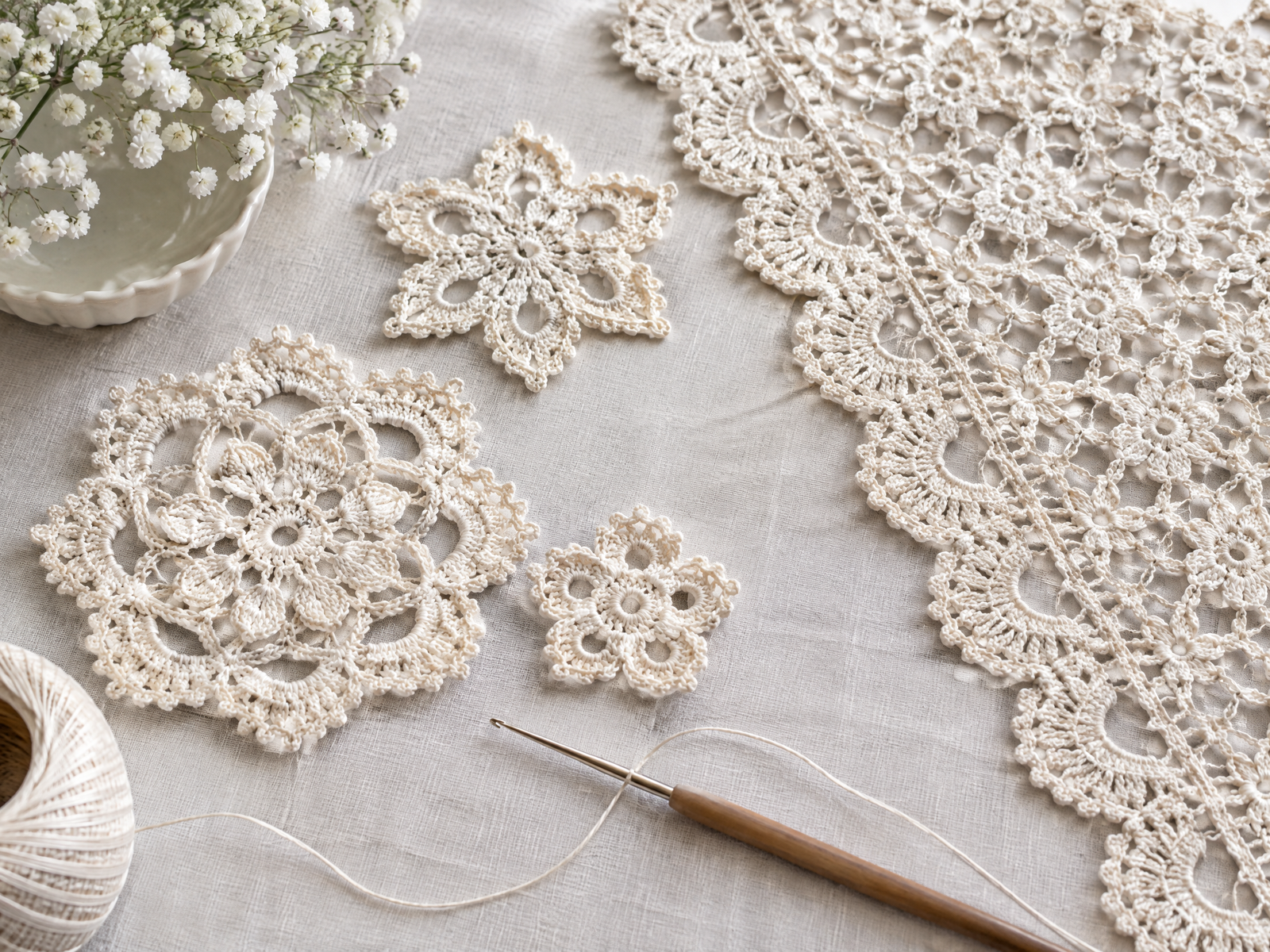
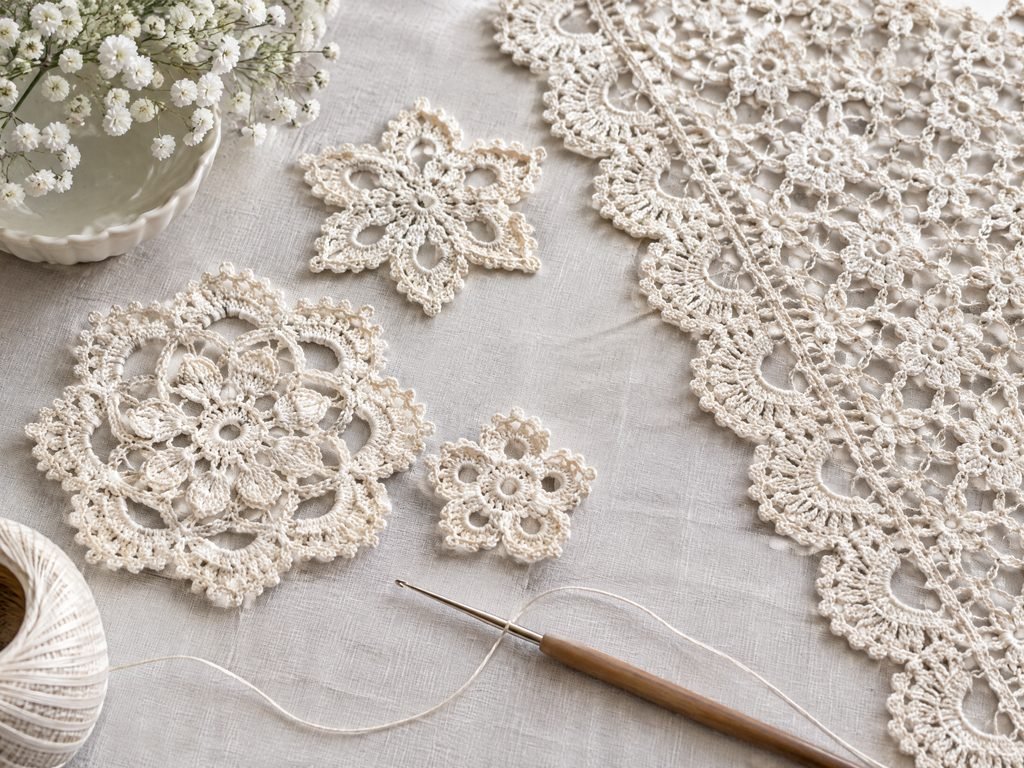
Delicate crochet lace isn’t really about a harder stitch pattern, it’s about scale. A fine thread and a small hook turn the exact same stitches you already know into something that looks intricate, precise, and almost jewelry-like. Here are 10 crochet lace patterns built around small, delicate designs, from wearable accessories to tiny decorative pieces.
What Makes Lace Feel Delicate?
Thread weight does more to create a delicate look than stitch choice does. A pattern worked in a fine crochet thread with a small steel hook will look refined and detailed, even using basic stitches like chains and double crochet, simply because the scale is so much smaller than a typical yarn project. Blocking, meaning pinning a finished piece into shape while damp and letting it dry, also matters more here than in larger projects, since it’s what gives small lace pieces their crisp, precise edges.
10 Crochet Lace Patterns for Delicate Designs
1. The Lace Bridal Hair Comb Motif
A small, round or floral lace motif crocheted in fine thread, then stiffened and attached to a plain hair comb. It’s a quick project that turns a basic accessory into something that looks custom-made for a special occasion.
2. The Delicate Lace Collar
A narrow, decorative lace panel shaped to fit around a neckline, worn over a plain top or attached directly to one. It’s a detailed, close-up piece, so a fine thread makes a noticeable difference in how refined the finished collar looks.
3. The Lace Fingerless Mitts
Worked in an open lace stitch rather than a solid one, these mitts prioritize a delicate look over warmth. They’re a nice transitional accessory for cool evenings when a full glove would feel like too much.
4. The Lace Bookmark
A narrow strip of lace, often finished with a tassel or small motif at the end, makes a fast, low-commitment way to practice a new lace stitch. It’s also a genuinely useful, giftable little project.
5. The Lace Earring Motif
Tiny lace motifs, like small flowers or geometric shapes, crocheted in fine thread and attached to earring hooks. Because the finished piece is so small, even a fairly simple stitch pattern reads as detailed once it’s scaled down this far.
6. The Lace Coaster Set
A set of small, round or square lace motifs, often stiffened slightly so they hold their shape under a cup. They’re a practical way to get comfortable with a lace repeat before committing to a much bigger project.
7. The Lace Baby Bonnet
A small, rounded cap shape worked in an open lace stitch, often finished with a ribbon tie. The scale of a baby bonnet makes it an approachable way to try lace shaping techniques without the time commitment of an adult-sized piece.
8. The Lace Butterfly Appliqué
A small, shaped lace motif crocheted separately, then sewn onto a garment, bag, or home decor piece as a decorative accent. It’s a flexible pattern, since the same appliqué can dress up almost anything once it’s finished.
9. The Lace Handkerchief Corner
Rather than a full lace border, this pattern adds a small, decorative lace motif to just one corner of a plain handkerchief or fabric square. It’s a fast way to bring in a delicate lace detail without committing to an edge that wraps the entire piece.
10. The Lace Lampshade Trim
A narrow lace band, crocheted to fit around the bottom edge of a small lampshade, adds a delicate, vintage-inspired detail to a plain fixture. Since it’s viewed up close and often backlit, a fine thread makes the open stitch pattern especially visible.
Choosing a Project That Matches Your Patience Level
Some of these patterns take an afternoon, while others reward a slower, more careful pace. A bookmark or coaster set is a good choice when you want a finished result quickly, while a lace collar or bridal hair comb motif is better suited to an evening where you’re not in a rush and can focus on keeping every stitch even.
Tips for Working Small, Delicate Lace
A finer thread paired with a smaller hook is what actually creates the delicate look, so don’t be afraid to size down from what you’d normally use for a garment or blanket. Blocking matters even more on small pieces than large ones, since pinning something like a motif or appliqué into shape helps it hold a crisp, symmetrical form once it dries. For pieces that need to hold their shape on their own, like earrings, hair combs, or coasters, a light fabric stiffener or a simple sugar-water starch solution can help the finished lace stay firm instead of going limp.
Common Questions
What Thread Is Best for Delicate Lace Projects?
A fine crochet thread, often labeled by a number like size 10 or size 20, paired with a small steel hook, is the standard choice for traditional delicate lace. A lightweight cotton yarn with a slightly larger hook can also create a softer, more modern version of the same look, though it won’t be quite as fine.
How Do You Stiffen Crochet Lace for Jewelry or Ornaments?
A store-bought fabric stiffener is the most reliable option, applied to the finished piece and left to dry flat or over a shaped form. A homemade alternative, made from a strong sugar-water solution, works in a pinch, though it isn’t as long-lasting or water-resistant as a proper fabric stiffener.
Is Delicate Lace Harder to Crochet Than Regular Lace?
Not inherently. The stitches themselves are usually the same as any other lace pattern, chains, clusters, and simple shells. What takes more patience is working with a finer thread and smaller hook, since the stitches are harder to see and your tension needs to stay more consistent.
Can Beginners Make These Delicate Lace Projects?
Yes, especially the smaller ones like the bookmark, coaster, or earring motif. Starting with a small, low-commitment project is actually a good way to build comfort with fine thread before attempting something larger, like a full lace collar or bridal accessory.
How Much Thread Do These Small Lace Projects Use?
Because most of these patterns are small in scale, they use surprisingly little thread. A single ball of fine crochet thread is often enough for several bookmarks, coasters, or earring motifs, and even a piece like a lace collar or baby bonnet typically uses well under a full skein. That makes this kind of project a good way to get meaningful practice without a big yarn investment.
Can I Turn a Regular Lace Pattern Into a Smaller, Delicate Version?
Often, yes. Many larger lace patterns, like the motifs used in a shawl or tablecloth, can be worked as a single, smaller piece instead of joined into a bigger project. Switching to a finer thread and smaller hook, then stopping after just one or two motifs, is an easy way to turn a bigger pattern into something like a coaster, appliqué, or earring design.
Final Thoughts
Delicate crochet lace proves that scale, not complexity, is what makes a piece look intricate. Whether you want a wearable accessory or a small decorative accent, there’s a pattern on this list that turns a fine thread and a simple stitch into something genuinely special.