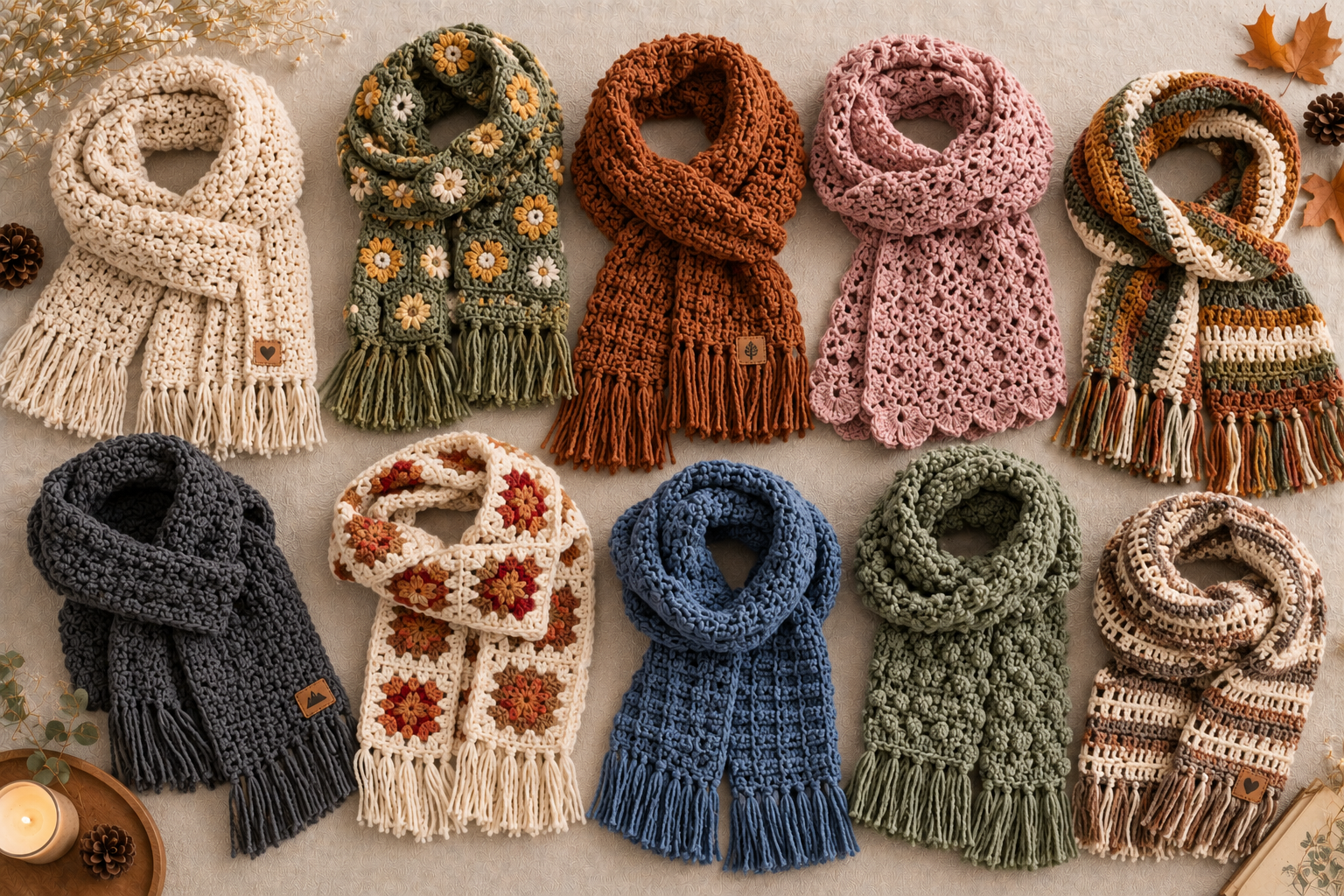
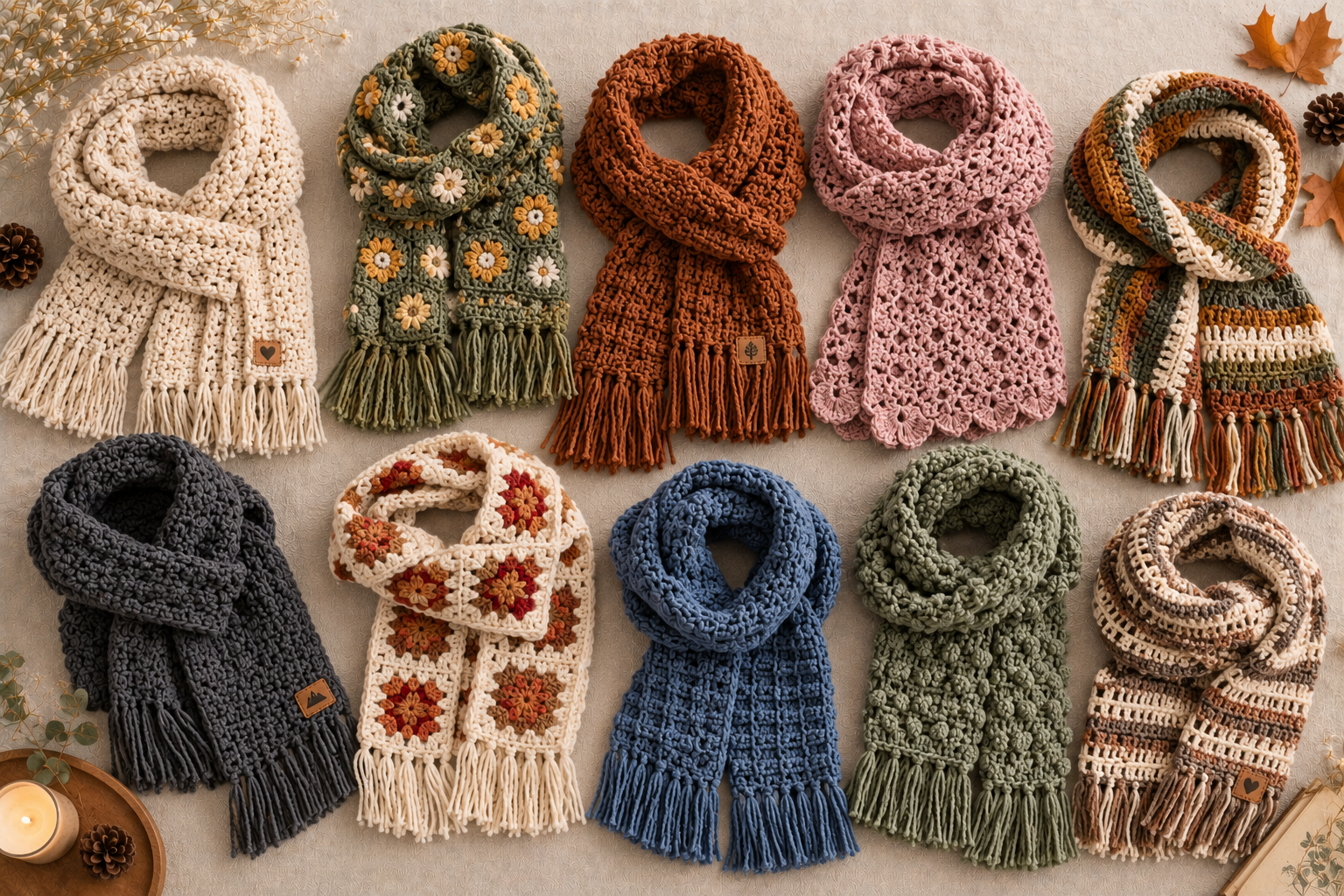
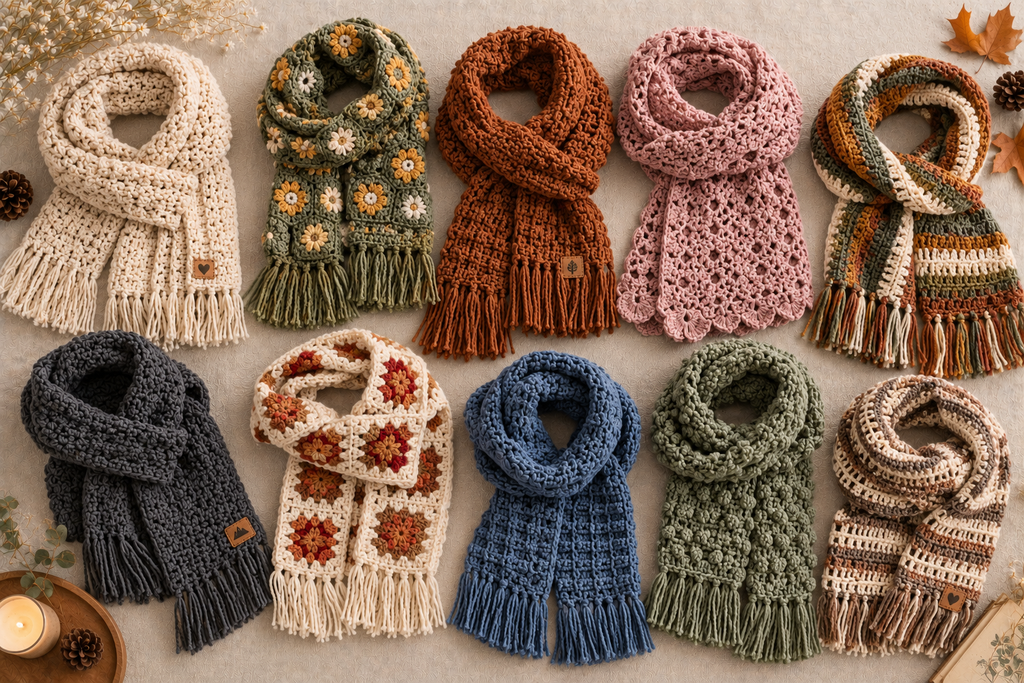
A scarf is one of the most flexible things you can crochet, working as a quick beginner project, a satisfying use for a favorite skein, or a genuinely warm cold-weather layer depending on the yarn and stitch you choose. Here are 14 crochet scarf ideas for fall and winter, along with a quick look at how the different shapes come together.
How Crochet Scarves Are Built
Most scarves fall into one of two basic shapes: a long, straight rectangle worked back and forth in rows, or an infinity loop worked either in the round or as a rectangle that’s seamed into a circle at the end. A straight scarf is more versatile, since it can be wrapped, draped, or tied in different ways, while an infinity loop stays put more securely and skips loose ends entirely.
14 Crochet Scarf Ideas for Fall and Winter
1. The Classic Ribbed Scarf
A simple, straight scarf worked entirely in ribbing, giving it a bit of stretch and a close, structured drape. It’s an easy, versatile starting point that works with almost any outfit.
2. The Chunky Infinity Scarf
Made with bulky yarn and worked in the round, this infinity scarf uses fewer stitches to reach a warm, substantial finished size. It’s one of the fastest scarves on this list to complete.
3. The Granny Stripe Scarf
Rows of double crochet with regular color changes turn a basic straight scarf into something colorful and playful. It’s also a great way to use up smaller amounts of yarn in different colors.
4. The Cable-Front Scarf
Raised, textured stitch columns that mimic knit cables run the length of this scarf, adding visual interest and extra thickness. The added texture also makes it one of the warmer options here.
5. The Fringe-Trim Scarf
A plain, straight scarf finished with a long fringe at both ends, adding movement and a bit of drama to an otherwise simple stitch pattern. The fringe does most of the visual work here.
6. The Lace-Trim Scarf
A narrow band of open, decorative stitches worked along both short edges gives this scarf a slightly more delicate, dressed-up look than a plain version. The main body stays simple and quick to work.
7. The Color-Gradient Scarf
Working in a slowly shifting range of colors from light to dark, or one hue to another, this scarf turns a simple stitch pattern into something with real visual movement. Planning the color order takes a bit of extra thought up front.
8. The Textured Waffle Scarf
A grid of small raised bumps across the fabric adds both texture and extra warmth compared to a flat stitch. It’s a good pattern to try if you want something more interesting than a plain rectangle without a lot of added difficulty.
9. The Pom-Pom Trim Scarf
A row of small pom-poms attached both along ends adds a playful, textured detail to an otherwise straightforward scarf. The pom-poms can be store-bought or made from wrapped yarn, so this style doesn’t require any new stitches to learn.
10. The Reversible Two-Tone Scarf
Worked so that both sides look equally finished, this scarf can be worn with either color facing out depending on your outfit that day. It takes a bit more planning during construction, but it effectively gives you two scarves in one.
11. The Star Stitch Scarf
Star stitch creates a distinctive, layered texture with a small ridge at the center of each stitch, giving the whole scarf a woven, fabric-like look rather than an obviously crocheted one. It’s a slower stitch, but the result stands out.
12. The Bobble Stitch Scarf
Small, raised clusters scattered across the length of the scarf add serious texture without requiring any shaping changes. The bobbles catch the light and add visual weight, making this a truly eye-catching option.
13. The Long Wrap Scarf
Working noticeably longer than a standard scarf, this style is meant to be wrapped around the neck multiple times or draped like a light shawl. It uses more yarn and time than a typical scarf, but the extra length adds real versatility.
14. The Kids’ Mini Scarf
A shorter, narrower version of a basic scarf pattern, sized to fit a child comfortably without excessive length getting in the way. Because it uses less yarn, it’s also one of the faster projects on this list to finish.
Choosing the Right Stitch for Drape and Warmth
Stitch choice changes a scarf’s character more than almost anything else. A denser stitch, like single crochet or a double ribbing, blocks more cold air and holds its shape well, while a looser stitch, like double crochet or an open lace pattern, drapes more softly but offers less wind protection. If curling along the edges is a concern, a stitch with some built-in texture, like ribbing or waffle stitch, tend to lie flatter than a plain single crochet row worked with inconsistent tension.
Common Questions
How Much Yarn Does a Scarf Use?
Most standard scarves use somewhere between 300 and 600 yards of worsted-weight yarn, depending on length and width. A chunky infinity scarf may use fewer total yards despite looking bulkier, since thicker yarn covers more ground with fewer stitches, while a long wrap scarf will generally use more.
How Long Does It Take to Crochet a Scarf?
Most scarves take somewhere between 3 and 8 hours, depending on length, yarn weight, and stitch complexity. A chunky infinity scarf tends to finish fastest, while a long wrap scarf or a heavily textured style like cables or bobbles will generally take longer.
Should I Make an Infinity Scarf or a Straight Scarf?
An infinity scarf is quicker to put on and stays in place without needing to be tied or tucked, which makes it a convenient everyday choice. A straight scarf offers more versatility in how it’s worn and tends to be a simpler first project, since there’s no need to seam it into a loop at the end.
How Do I Keep My Scarf From Curling at the Edges?
Curling usually comes from uneven tension or a stitch pattern that naturally pulls fabric inward, like a plain single crochet worked too tightly. Adding a border of single crochet or a few rows of a stitch with more texture, like ribbing, around the edges helps the fabric lie flatter.
Can I Combine Two of These Scarf Ideas Into One Pattern?
Yes, and it’s a common way to make a basic pattern feel more personal. A fringe trim added to a color-gradient scarf, or a lace border worked onto an otherwise plain ribbed scarf, are both simple ways to combine two ideas from this list without needing an entirely new pattern. Just keep in mind that adding a border or trim usually means slightly more yarn than the base pattern alone calls for.
Final Thoughts
A scarf is a small project with enormous range, capable of being a quick weekend gift, a warm winter essential, or a detailed showcase piece depending on the stitch and yarn you choose. Pick one of the 14 ideas above that matches your timeline and style, and you’ll have a genuinely useful cold-weather accessory before the season is over.