The newborn stage calls for a slightly different approach than baby hats made for an older infant. Gauge, softness, and fit all matter more in these first few months, since a newborn’s head is smaller and their skin is more sensitive than it will be even a few weeks later. Here are 15 crochet baby hat patterns for newborns, along with what to keep in mind about yarn and gauge at this stage specifically.
Getting Gauge and Softness Right for a Newborn
A newborn head typically measures somewhere between 13 and 14 inches around, which is small enough that even a slightly loose gauge throws off the fit more than it would on a larger project, so a proper gauge swatch matters here more than almost anywhere else in crochet. Yarn choice matters just as much: a fine or DK-weight yarn in a soft cotton, bamboo, or gentle acrylic blend gives a lighter, less bulky result than a worsted or chunky yarn, which can feel heavy against newborn skin. Anything with ties should be reserved for short, supervised wear, like a photo session, rather than everyday or sleep use.
15 Crochet Baby Hat Patterns to Try
1. The Seed Stitch Newborn Cap
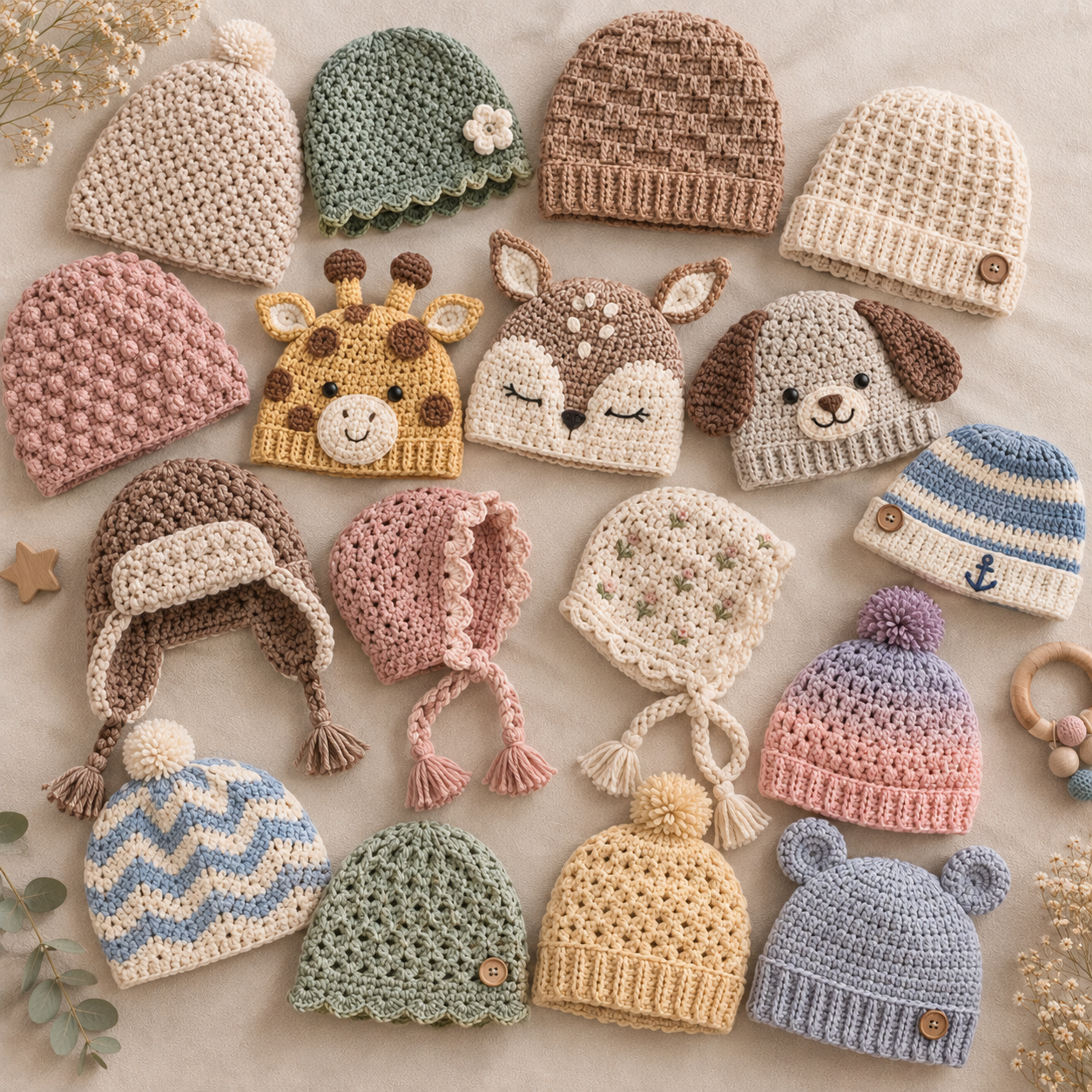
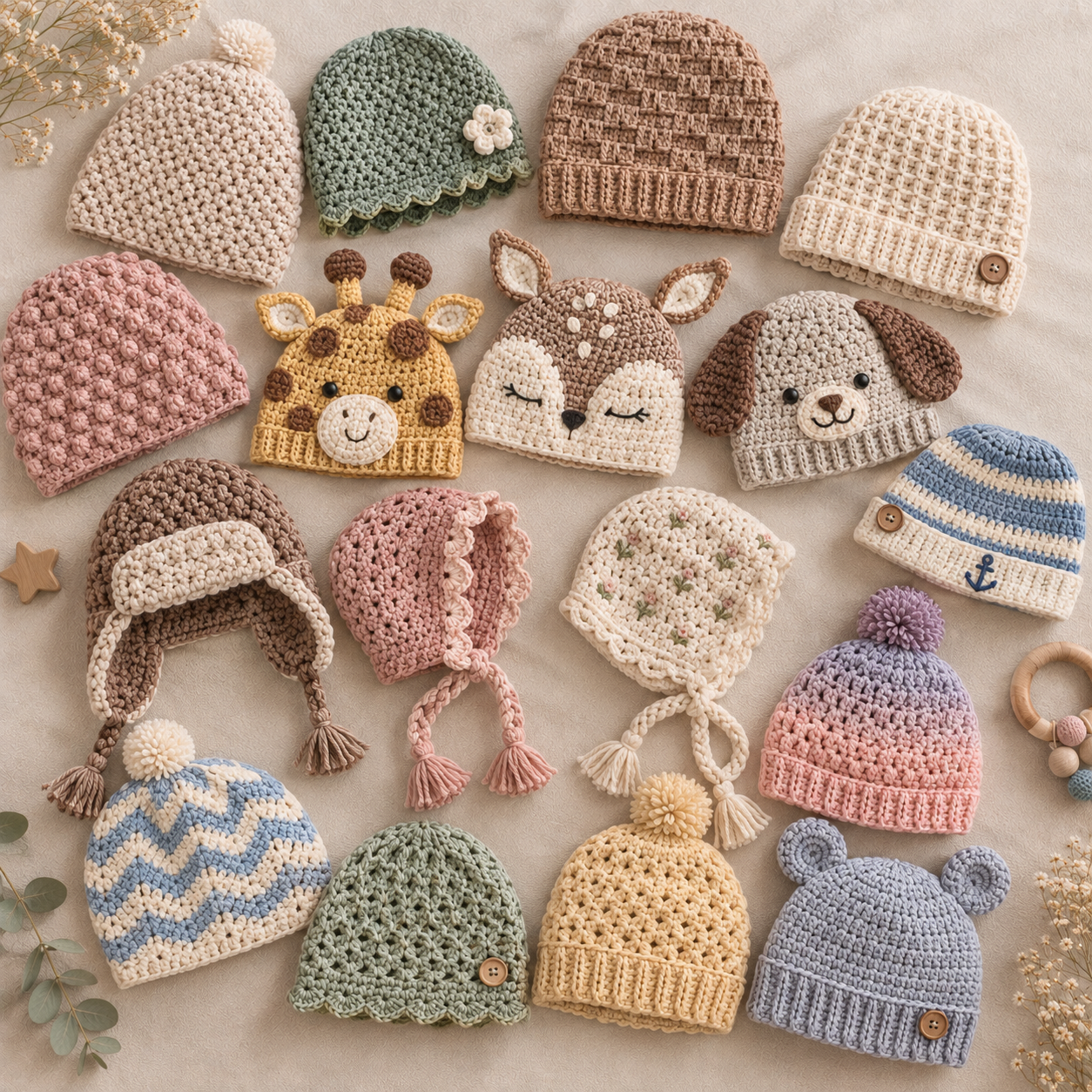
Alternating single and double crochet stitches across each round create a fine, bumpy texture that’s more interesting than a plain surface without adding real bulk. It’s a good stitch to practice on a small, low-commitment project like this.
2. The Shell Stitch Edge Cap
A plain rounded cap gets a delicate border of small shell stitches worked around the bottom edge, adding a soft, scalloped detail without changing the main body of the hat.
3. The Basketweave Newborn Cap
Blocks of front-post and back-post stitches arranged in a woven pattern give this cap a textured, structured look reminiscent of a basketweave knit, worked at the same small newborn scale as any other cap here.
4. The Waffle Stitch Newborn Cap
A grid of small raised bumps across the surface adds texture and a bit of extra loft compared to a flat stitch, without requiring a heavier yarn to achieve.
5. The Popcorn Stitch Newborn Cap
Small, raised clusters scattered across the cap in a simple repeating pattern add noticeable texture and visual interest to a design that’s still fundamentally simple to construct.
6. The V-Stitch Lace Cap
An open, airy stitch pattern worked in a V-shaped repeat gives this cap a delicate, lacy look well suited to a warm-weather newborn or a christening-style gift. A finer yarn keeps the more open fabric from feeling too loose.
7. The Double-Layer Newborn Cap
This design crochets a second, thinner layer inside the main cap, adding warmth for a cooler nursery without needing a bulkier single-layer yarn. It takes more time than a single-layer cap, but the extra warmth can be worth it.
8. The Chevron Stripe Newborn Cap
Narrow, zigzagging stripes worked in two soft, coordinating colors give this cap visual movement compared to a plain solid color, created through simple increases and decreases at regular intervals.
9. The Tassel-Tie Bonnet
A softly rounded, gently gathered bonnet shape is finished with two thin crocheted ties, each ending in a small tassel, that knot loosely under the chin for photos. Like any hat with ties, it’s meant for short, supervised wear rather than everyday use.
10. The Mini Sailor Cap
A structured, gently domed crown paired with a small folded brim gives this design a classic sailor cap silhouette, often finished with a thin contrast stripe, for a more tailored look than a soft, floppy beanie.
11. The Baby Trapper Hat
Two soft flaps worked to cover the ears, finished with extra loft or a faux fur-style trim, give this design real cold-weather warmth. It’s bulkier than most patterns here, so a finer base yarn keeps it from feeling too heavy.
12. The Ombre Fade Newborn Cap
Working in a gradual shift from a pale shade to a deeper one of the same color family, this cap turns a plain rounded shape into something with real visual depth. Planning where each color change falls takes some extra thought, but the fade looks intentional and polished.
13. The Giraffe Baby Hat
A soft golden-yellow cap dotted with a few small irregular brown patches, finished with two short rounded ears and a pair of small stubby horns, gives this design a gentle safari theme suited to the softer look many newborn patterns lean toward.
14. The Fawn Baby Hat
A soft brown cap with a scattering of small white dots and two short rounded ears recreates a baby deer’s spotted coat in miniature, a gentle alternative to bolder animal designs made for older babies.
15. The Puppy Ear Baby Hat
Two soft, floppy ears attached low on the sides of a plain cap, along with a small embroidered nose, give this design a sweet character well suited to the newborn stage. The floppy shape needs no stiffening or extra support.
Working at Newborn Scale
Because everything on this list is worked at such a small size, count rounds carefully and use a stitch marker consistently, since it’s easy to lose track of where you are on a small, fast-finishing piece. If you’re not sure of the exact due date or the baby’s size at birth, sizing slightly larger than a strict newborn measurement gives a bit of room, since many newborns quickly outgrow a snugly fitted first-size hat.
Common Questions
What Yarn Weight Works Best for a Newborn Hat?
A fine or DK-weight yarn is generally the best match for newborn-sized patterns, since it keeps the fabric light and closely fitted without adding unnecessary bulk. Worsted-weight yarn can work too, but it’s worth sizing the pattern up slightly to account for the thicker fabric.
How Long Does It Take to Make a Newborn Hat?
Most of these patterns take somewhere between 30 minutes and 2 hours, with more heavily textured designs, like the basketweave or popcorn stitch caps, generally taking a bit longer than a plain, simple round.
Is It Safe to Put a Tied Bonnet on a Sleeping Newborn?
No. Any hat with ties, like the tassel-tie bonnet, should only be worn during supervised time, such as a photo session, and removed before sleep, since a cord or tie near the neck carries a strangulation risk for an unsupervised infant.
How Much Yarn Does a Newborn Hat Use?
Most newborn-sized hats use somewhere between 40 and 90 yards of fine or DK-weight yarn, making them one of the most economical projects to make, even with a bit of texture or a second color added in.
Can I Make These Patterns Bigger for an Older Baby?
Yes, generally by adding a few extra rounds before the crown decreases and using a slightly larger starting stitch count. It’s worth checking your gauge against an updated head measurement rather than assuming the pattern will scale evenly.
What’s the Best Newborn Hat for a Hospital Photo?
A simple, well-fitted style without any hanging ties or delicate embellishments, like the seed stitch cap or the shell stitch edge cap, tend to photograph cleanly and holds up well to being put on and taken off several times during a short hospital stay.
Final Thoughts
Newborn hats reward a bit of extra care in gauge and yarn choice, but the payoff is a genuinely soft, well-fitted first hat for a brand-new baby. Pick whichever texture, color, or gentle animal theme feels right, and you’ll have a sweet little cap ready well before the due date.