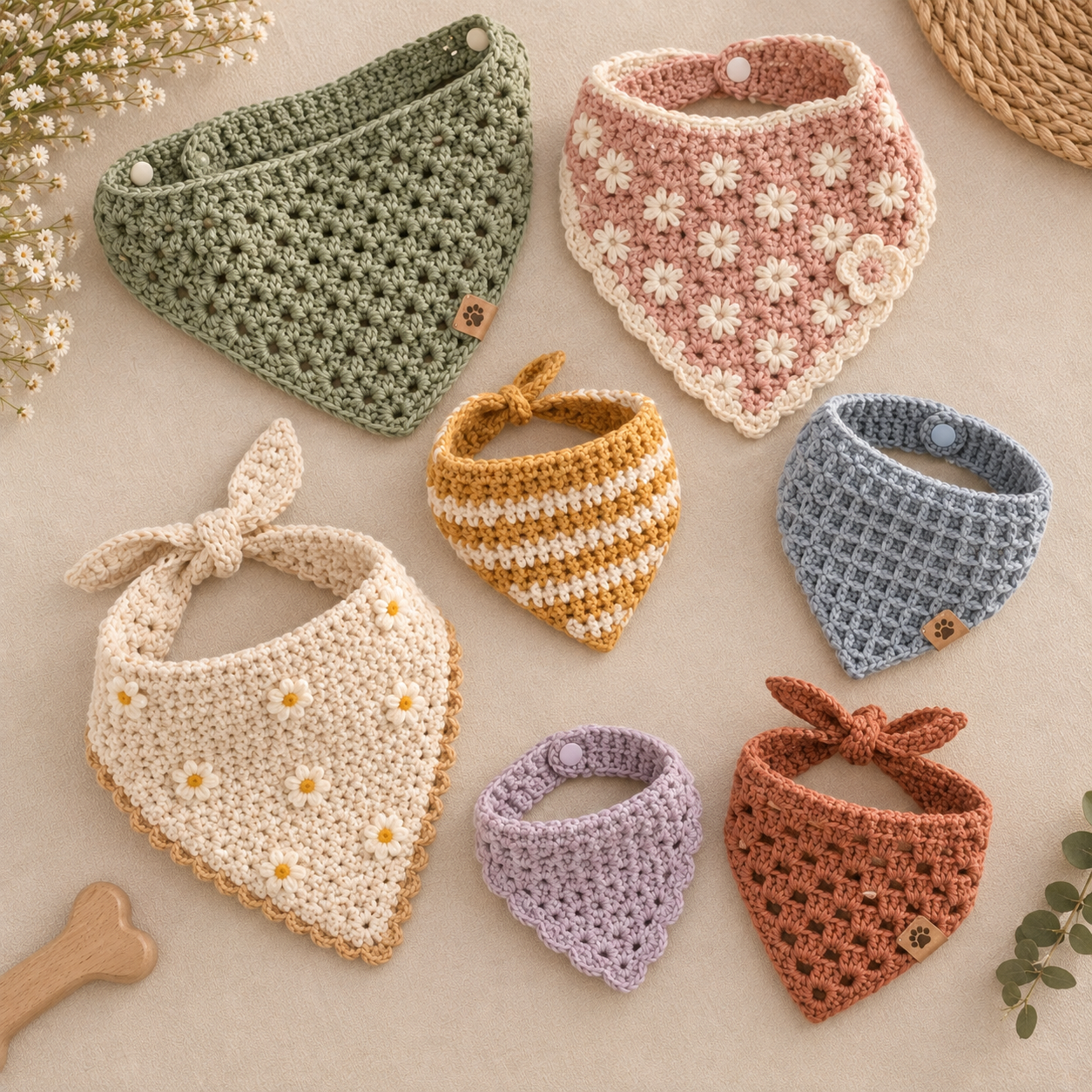
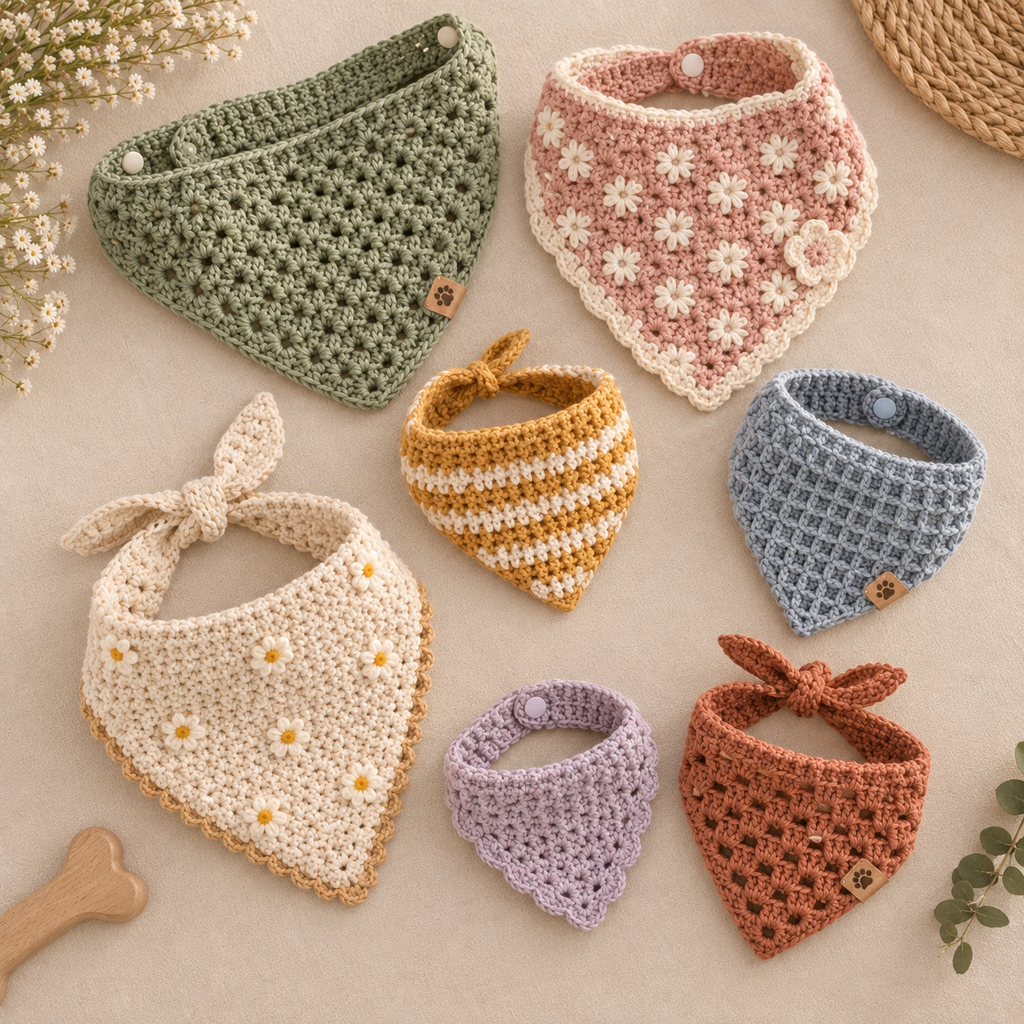
A crochet bandana is one of the fastest, most versatile small projects you can make. It’s small enough to finish in an evening, uses very little yarn, and works as a hair accessory, a neck scarf, or even a pet accessory depending on how you size it. Here are 8 bandana crochet patterns worth trying, along with a quick look at how the basic shape comes together.
How a Crochet Bandana Is Built
Most bandanas start as a simple triangle, either worked from the top point downward with increases on each row, or from the wide top edge downward with decreases as you go. Both methods are beginner-friendly, since you’re just adding or removing a stitch or two at the edges of otherwise straight rows. Ties are usually added afterward, either as a long crocheted chain or a length of ribbon threaded through the top corners, which is what lets a bandana be worn snug around the head or neck.
8 Bandana Crochet Patterns to Try
1. The Classic Triangle Bandana
A plain triangle worked in a single color and a basic stitch, finished with simple tie ends. It’s the easiest starting point on this list and works as a head covering, a neck accessory, or even folded and worn as a simple headband.
2. The Granny Stripe Bandana
Worked in rows of double crochet with regular color changes, this bandana turns the same basic triangle shape into something colorful and eye-catching. It’s also a good way to use up small amounts of leftover yarn in different colors.
3. The Boho Fringe Bandana
A plain triangle finished with a fringe border along the bottom edge, adding movement and a relaxed, festival-ready look. The fringe is the only detail doing any visual work here, so the base pattern itself stays simple.
4. The Lace-Trim Bandana
This version adds a narrow band of open, decorative stitches along the bottom edge of an otherwise solid triangle. It gives the bandana a slightly more delicate, dressed-up look than a plain version without changing the main construction.
5. The Reversible Two-Color Bandana
Worked so that both sides show a clean, finished look rather than a distinct right and wrong side, this style lets you flip the bandana depending on which color you want facing out that day. It takes a bit more planning but adds real versatility to a single project.
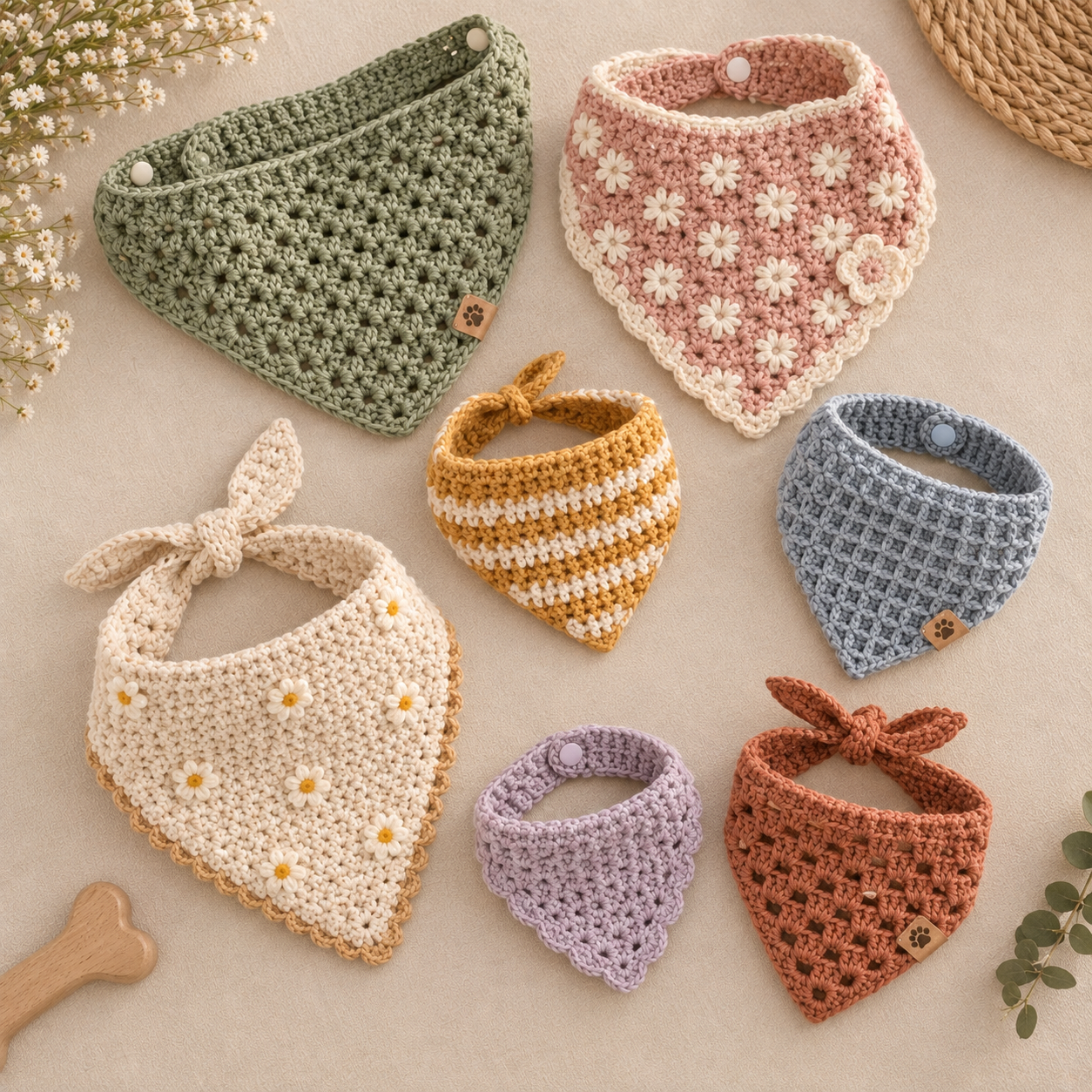
6. The Dog Bandana
Close-up product photography of a small crochet triangle bandana sized for a dog collar, laid flat or draped over a collar, soft natural lighting, neutral tones, no people, no hands, no dog, cozy pet-accessory product photography
Sized down and shaped to tie or slip onto a collar, this pattern turns the same basic triangle into a pet accessory. It’s a fast, low-yarn project, and it’s easy to size up or down for different dog breeds by adjusting the number of rows.
7. The Kids’ Bib Bandana
A bandana-shaped bib, usually finished with snaps or a button instead of ties, gives a practical project a bit more personality than a plain rectangular bib. The absorbent, textured stitch also makes it useful for drool or light spills.
8. The Textured Waffle Stitch Bandana
A grid of small raised bumps across the fabric gives this bandana more visual texture than a flat stitch would, without changing the basic triangle shape underneath. It’s a good pattern to try if you already know the basic bandana construction and want to practice a new stitch.
Choosing the Right Bandana Style for Your Project
If you want a quick, low-effort make, the classic triangle or dog bandana are the fastest options here, since both use the simplest version of the basic shape. If you’re crocheting a gift or something with a bit more visual interest, the granny stripe, boho fringe, or lace-trim versions dress up the same underlying construction without adding real difficulty. And if you already know the basic triangle well and want to practice something new, the reversible or textured waffle stitch bandanas are a good next step.
Tips for Wearing and Finishing a Crochet Bandana
How you finish the edges changes how the bandana wears. A crocheted chain tie is soft and blends into the piece, while a ribbon threaded through the corners adds a bit of structure and a different visual detail. If you’re making a human-sized bandana to wear as a head covering, leaving slightly longer ties gives you more flexibility to tie it in different styles, like at the nape of the neck or on top of the head.
Common Questions
How Do I Size a Bandana for a Dog Instead of a Person?
Measure around your dog’s neck where the collar sits, then crochet your triangle so the top edge, before adding ties, is roughly that same length. Smaller dogs generally need a bandana with a shorter top edge and fewer overall rows than a human-sized version.
How Long Does It Take to Crochet a Bandana?
Most bandanas take somewhere between 1 and 3 hours, depending on size and yarn weight, which makes them one of the faster projects on this list of topics. A dog bandana or bib-sized version finishes even quicker, since there’s less fabric overall.
What’s the Easiest Way to Build the Triangle Shape?
Starting with a small chain at the top point and increasing by one stitch at the beginning and end of every row is usually the simplest method, since it only requires tracking one type of increase. Working from the wide top edge downward with decreases is just as easy once you’re comfortable with the concept, but tracking two decreases per row can take a little more attention at first.
Can I Make a Bandana Without Following an Exact Pattern?
Yes, especially the classic triangle style. Since the shape is really just rows that grow or shrink evenly on both sides, you can build a bandana to whatever size you need by increasing or decreasing until it reaches your desired width, then adding ties once you’re happy with the shape.
How Much Yarn Does a Bandana Use?
A human-sized bandana typically uses well under a single skein of worsted-weight yarn, often somewhere between 100 and 200 yards depending on the finished size. A dog bandana or kids’ bib uses even less, which makes this a great project for using up partial skeins left over from bigger projects.
What Yarn Weight Works Best for a Bandana?
Worsted weight is a reliable, easy-to-find choice for most of the styles above, especially the classic triangle, granny stripe, and textured waffle versions. A lighter cotton yarn works well for the lace-trim bandana, since it keeps the open stitch pattern from feeling too heavy, while a soft, absorbent cotton is a practical choice for the kids’ bib version specifically.
Final Thoughts
A crochet bandana is a small project with a lot of range, working just as well as a quick handmade gift, a fashion accessory, or a fun pet project. Pick one of the 8 styles above, and you’ll likely have a finished piece before you’d even get through a full movie.