Dinosaurs translate into amigurumi almost as well as they translate into a kid’s imagination, since each species already comes with one unmistakable signature feature built right in. Here are 8 crochet dinosaur patterns that are almost too cute, along with a look at how a single detail usually carries the whole design.
One Feature Does Most of the Work
Unlike a lot of amigurumi animals that rely on subtle differences in ear shape or face proportions, dinosaurs tend to be instantly recognizable from just one exaggerated feature: a triceratops needs its horns and frill, a stegosaurus needs its row of back plates, and a pterodactyl needs its wings. That means the base body across most dinosaur patterns can stay fairly simple and similar from species to species, a rounded torso with four short legs and a tapering tail, while nearly all of the design work and personality goes into that one defining piece. Getting comfortable with a plain dinosaur body first makes every other pattern on this list faster to pick up.
8 Crochet Dinosaur Patterns to Try
1. The Sitting Triceratops
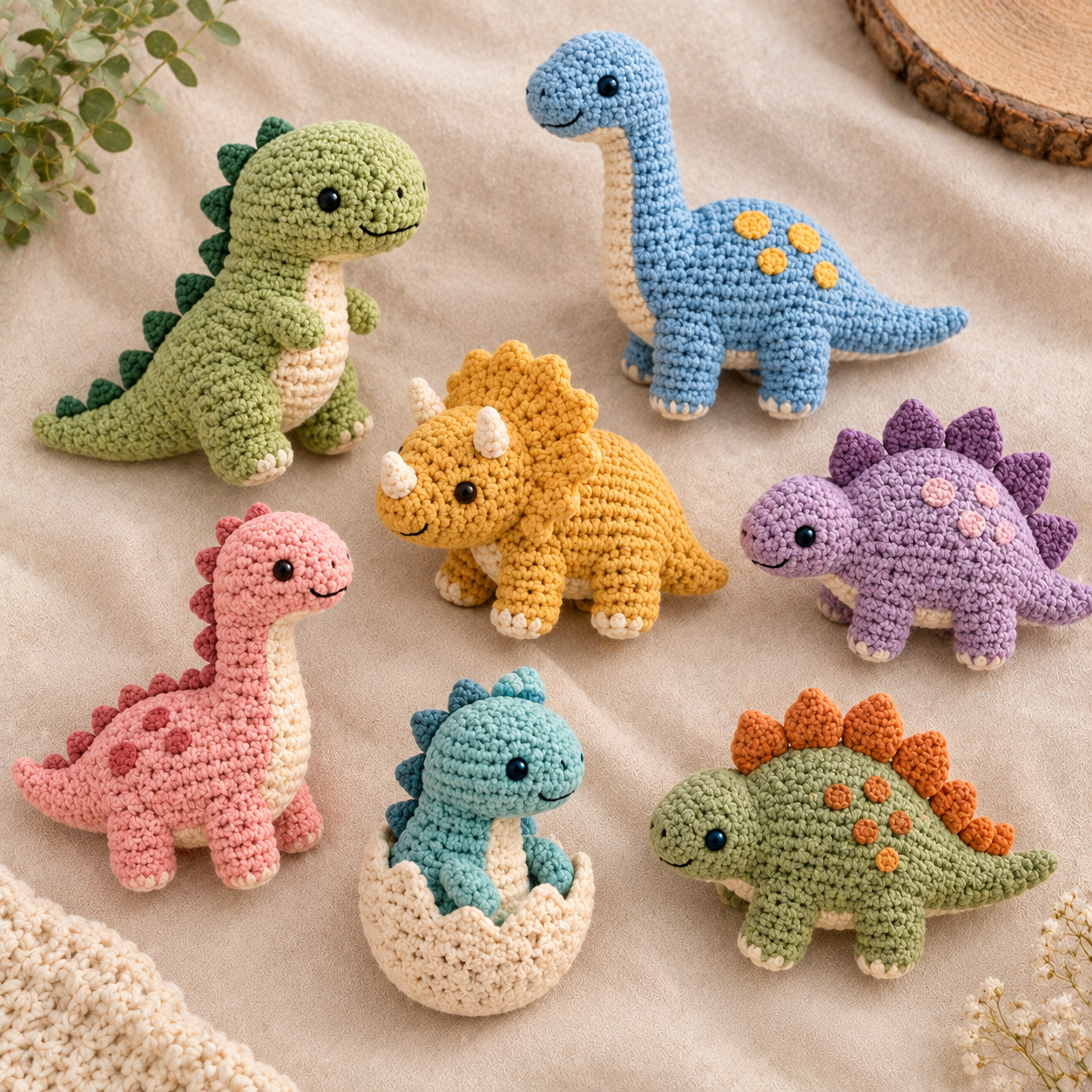
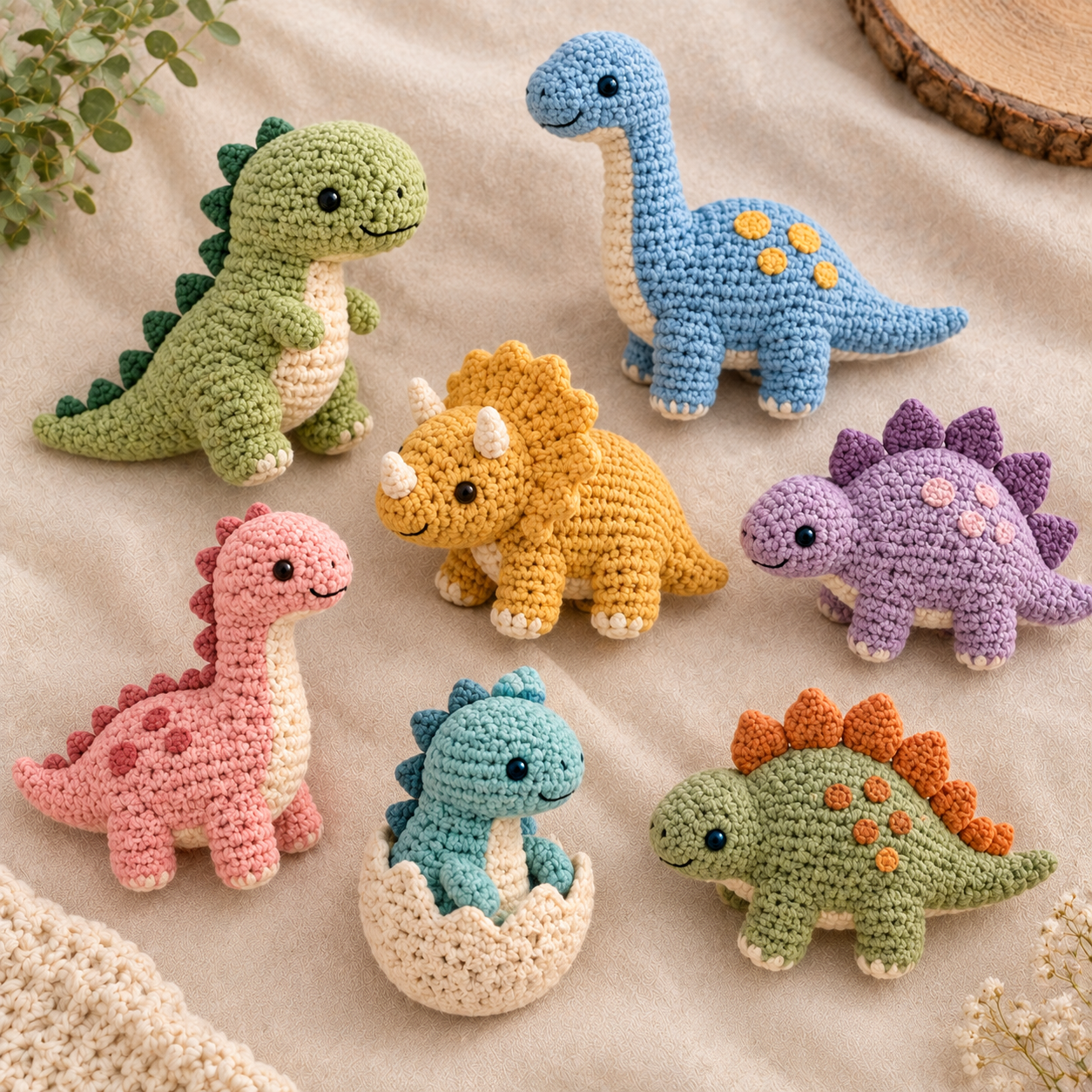
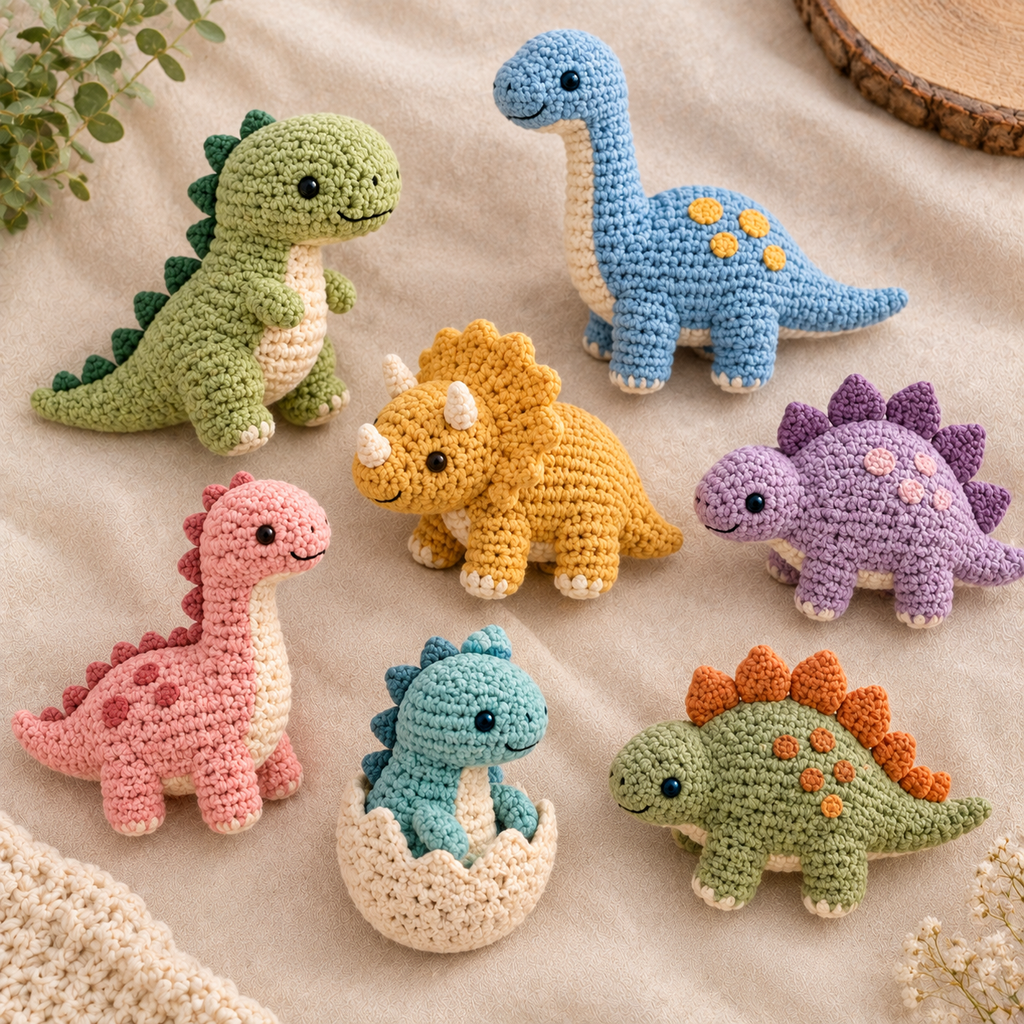
Three horns, a small pair above the eyes and one larger one on the snout, along with a wide frill worked as a separate flat piece behind the head, make this one of the most detailed dinosaurs on this list. The frill is the main technical challenge, since it needs to curve around the back of the head without pulling the neck out of shape.
2. The T-Rex with Tiny Arms
A large head, a thick tail for balance, and two deliberately short, stubby arms capture this dinosaur’s most famous, slightly comedic proportions. Keeping those arms genuinely tiny compared to the rest of the body is what makes the design read clearly as a T-Rex rather than a generic lizard shape.
3. The Stegosaurus with Back Plates
A row of small, flat, alternating plates worked separately and sewn along the spine, paired with a spiked tail, gives this design a distinctive silhouette from every angle. Each plate is a quick, simple piece, but attaching a whole row evenly along a curved back takes some patience.
4. The Long-Necked Brontosaurus
An extended neck and tail worked as elongated tubes on either end of a small rounded body give this gentle plant-eater a graceful, elongated shape unlike any other dinosaur on this list. Stuffing the neck firmly enough to hold its curve without flopping over is the main thing to watch for here.
5. The Pterodactyl
Two wide, membrane-like wings worked flat and attached to a small body, along with a pointed beak-like head, capture this flying reptile’s distinctive shape. Because pterodactyls are technically flying reptiles rather than true dinosaurs, this is a fun bonus for a prehistoric-themed set even if it stretches the category slightly.
6. The Baby Dino Hatching From an Egg
A small, simplified dinosaur head and front legs peek out from a cracked, two-piece crocheted egg shell, creating a cute, storytelling scene rather than a standalone figure. The egg is worked as its own piece with a jagged opening, so the little dinosaur underneath can stay a simple, low-detail shape.
7. The Spiky Ankylosaurus
Rows of small rounded bumps or blunt spikes covering the back, finished with a heavy, rounded club at the end of the tail, give this armored dinosaur a tough, textured look. The club tail is worked as an oversized rounded piece attached to a tapering tail base, making it heavier than the tail on most other dinosaur patterns here.
8. The Rainbow Pastel Dino
Using the same basic body as any other dinosaur on this list but worked in bright, non-realistic colors, like a pastel gradient or a rainbow stripe pattern, turns a plain dinosaur shape into a cheerful decor piece or nursery toy. It’s an easy way to reuse a base pattern you already know while giving the finished piece a completely different personality.
Tips for Getting Dinosaur Proportions Right
Keep the head noticeably larger than a realistic scale would suggest, since an oversized head is part of what makes most amigurumi read as cute rather than fierce, even for a design like the T-Rex. For any dinosaur with a long tail, adding a secure internal support, like a folded pipe cleaner sealed away from little hands, is unsafe for baby-safe designs, so lean on a slightly thicker hook tube and firm stuffing instead to keep it standing upright.
Common Questions
Which Dinosaur Pattern Is Easiest for a Beginner?
The rainbow pastel dino or a basic version of the T-Rex are both good starting points, since each relies mainly on the same simple rounded body with minimal separate pieces. Save the triceratops and stegosaurus, which both require several small attached parts, for once you’re comfortable with the basic shape.
What Yarn Works Best for a Dinosaur Amigurumi?
A worsted-weight cotton or cotton-blend yarn holds its shape well and gives clean stitch definition for detailed pieces like a triceratops’s frill or a stegosaurus’s plates. Acrylic works fine too, especially for a soft, huggable version meant for regular play.
How Long Does It Take to Crochet a Dinosaur?
Most standard-sized dinosaurs take somewhere between 3 and 6 hours, with more detailed designs like the triceratops or stegosaurus generally taking longer because of their separate attached pieces. A simpler shape, like the T-Rex or the rainbow pastel dino, finishes a bit faster.
Are These Dinosaurs Safe for Young Children?
With a few adjustments, yes. Skip small plastic safety eyes and beads in favor of embroidered features for anything meant for a very young child, and make sure any small attached pieces, like plates or spikes, are sewn on securely with several stitches rather than just tacked on.
How Much Yarn Does a Dinosaur Amigurumi Use?
Most standard-sized dinosaurs use somewhere between 150 and 300 yards of worsted-weight yarn, with a long-necked design like the brontosaurus generally using more because of its elongated neck and tail.
Can I Make a Matching Set of Several Dinosaurs?
Yes, and it’s a popular way to build out a themed nursery or a kid’s collection. Since most of these patterns share a similar base body, working through several designs back to back gets faster once you’re comfortable with the core shaping.
Do All Dinosaur Patterns Start From the Same Base Body?
Mostly, yes. A rounded torso with four short legs and a tapering tail underlies nearly every design on this list, which is part of why learning one dinosaur pattern well makes the others faster to pick up, since most of what changes between species is the one signature feature attached on top.
Final Thoughts
Dinosaurs prove that a single well-chosen feature, whether that’s a frill, a set of plates, or a pair of wings, can carry an entire amigurumi design. Pick whichever prehistoric character appeals most, and you’ll have a genuinely charming little dinosaur ready before long.