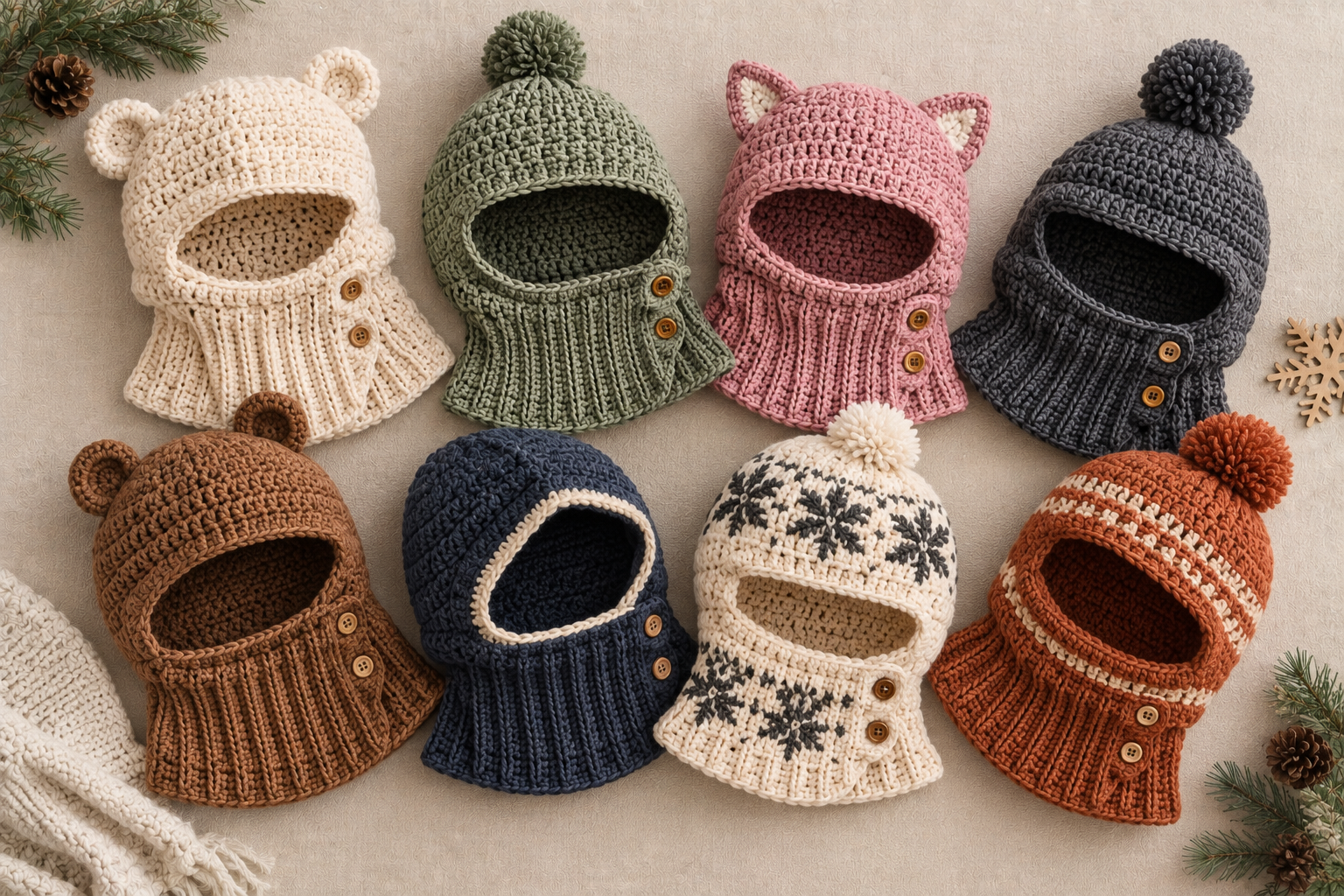
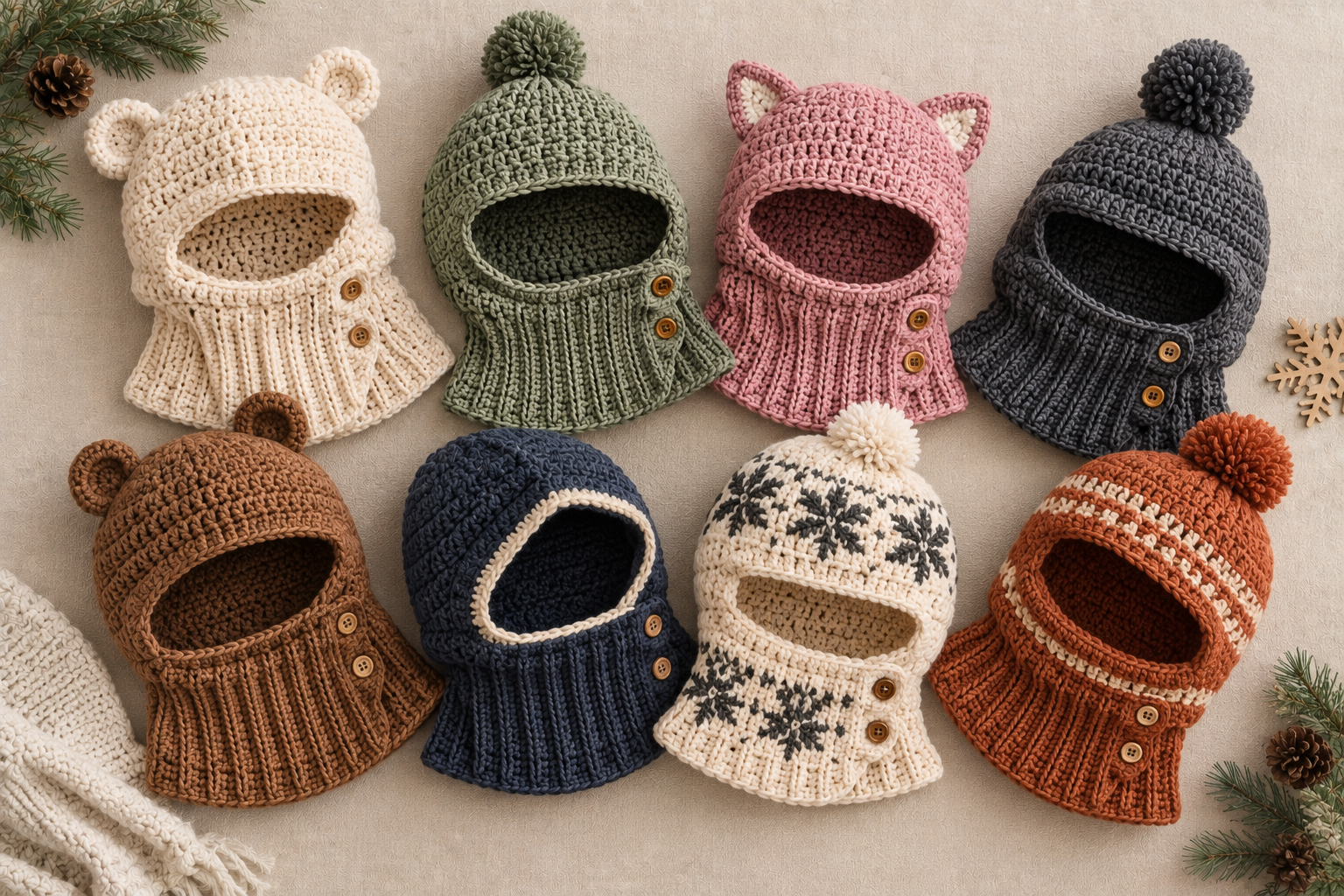
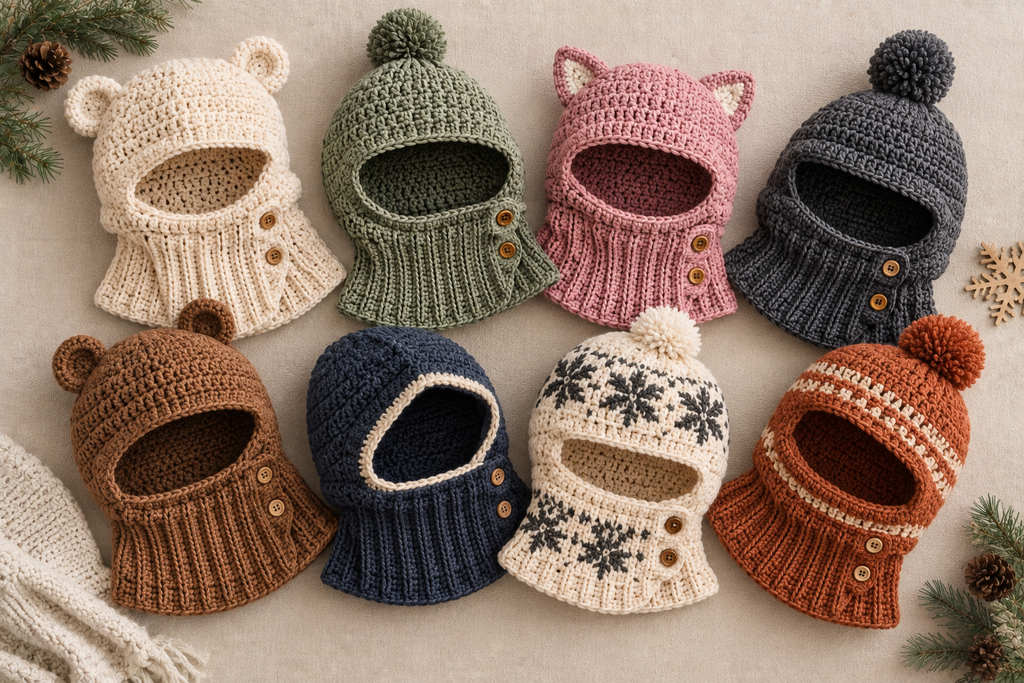
The balaclava has moved well past its purely functional roots and into everyday winter fashion, and it’s easy to see why. It combines a hat, a scarf, and a hood into one piece, cutting out the layering and gaps that let cold air sneak in around your neck. Here are 8 trendy crochet balaclava patterns for winter, along with a look at how the shape actually comes together.
How a Crochet Balaclava Is Built
A balaclava is really a hood and a neck tube worked as one connected piece, rather than two separate accessories joined together. Most patterns start at the crown, the same way a beanie would, then continue down into a wider tube that covers the neck and shoulders, with an opening left for the face somewhere along the way. Where that opening sits, and how large it is, is what separates a full-coverage style from a more relaxed, cropped one.
8 Trendy Crochet Balaclava Patterns for Winter
1. The Classic Full-Coverage Balaclava
This style covers the head, neck, and shoulders in one continuous piece, with just an opening for the face. It’s the most protective option here, built for genuinely cold, windy conditions rather than just everyday styling.
2. The Cropped Balaclava
A shorter version that skips full face coverage, leaving the whole face open while still covering the head, ears, and upper neck. It’s a more everyday, fashion-forward take on the balaclava shape, closer to a hood than a full mask.
3. The Ribbed Ski-Style Balaclava
Worked in a stretchy ribbed stitch throughout, this style hugs closer to the head and neck than a plain stitch version would. The close fit is both a style choice and a practical one, since it keeps cold air from getting in around the edges.
4. The Chunky Oversized Balaclava
Made with bulky yarn and a looser, roomier fit, this balaclava prioritizes a dramatic, cozy silhouette over a snug one. It’s one of the faster patterns on this list to finish, thanks to the heavier yarn and larger stitches.
5. The Two-Piece Snood Balaclava
Rather than one continuous piece, this style separates the hood and neck warmer into two connected sections, giving the finished piece a bit more shape and structure around the shoulders. It’s a good option if you want the balaclava look without an overly tight or tube-like feel.
6. The Cutout Face Balaclava
This version defines a more tailored opening around the eyes, nose, and mouth rather than one large oval cutout, giving it a distinctly graphic, fashion-forward look. It takes more careful shaping around the face opening than a simpler style would.
7. The Color-Block Balaclava
Built from large solid sections of two or three colors rather than an all-over pattern, this balaclava turns a functional piece into a bold, statement accessory. Each color section is simple to work, since the visual interest comes from the blocking rather than a complex stitch.
8. The Textured Cable Balaclava
Raised, textured stitch columns running up the hood and neck give this balaclava a knit-cable look and extra warmth from the added thickness. It’s a good project if you already know the basic balaclava shape and want to practice a new stitch.
Why the Balaclava Became a Winter Wardrobe Staple
Part of the appeal is practical: one piece replaces a hat, scarf, and sometimes even earmuffs, which means less bulk and fewer gaps for cold air to slip through. The other part is simply that it photographs well and pairs easily with an oversized coat or puffer jacket, which is a big reason it’s shown up so often in street style and on social media in recent years. Making your own version means you can also choose exactly how much coverage, warmth, and color you want, rather than settling for whatever’s available off the shelf.
Getting the Fit and Face Opening Right
The face opening is the part of a balaclava most worth double-checking before you commit to a full pattern. Too small, and it feels restrictive and hard to pull on; too large, and it lets in the exact cold air the balaclava is meant to block. Measuring loosely around your face, from roughly ear to ear and forehead to chin depending on the style, and comparing that to the pattern’s opening measurement is the most reliable way to avoid a bad fit. A stretchy stitch, like ribbing, also adds a bit of built-in forgiveness if your measurements are slightly off.
Common Questions
Is a Balaclava the Same as a Ski Mask?
They’re closely related, but not always identical. Both cover the head and neck, but a balaclava, especially in a fashion context, may leave more of the face open, like the cropped style above, while a traditional ski mask usually has a tighter, more complete opening around just the eyes and mouth for maximum wind protection.
What Yarn Is Best for a Warm but Breathable Balaclava?
A wool or wool-blend yarn holds heat well without feeling stiff, and it tends to breathe better than a fully synthetic yarn, which matters since a balaclava sits directly against your face and can feel stuffy if the fiber doesn’t allow any airflow. A dense stitch adds warmth, but it’s worth balancing that against comfort around the nose and mouth.
How Long Does It Take to Crochet a Balaclava?
Most balaclavas take somewhere between 4 and 8 hours, longer than a basic beanie since you’re also crocheting the neck section and shaping a face opening. A chunky yarn version, like the oversized style above, will generally finish on the faster end of that range.
How Do I Size the Face Opening Correctly?
Measure loosely around the area you want left open, then compare that measurement to your pattern’s gauge and stitch count for the opening. If you’re between sizes, a slightly larger opening is usually more comfortable and easier to adjust with a scarf or hood layered underneath than one that’s too tight to begin with.
How Much Yarn Does a Balaclava Use?
Most adult balaclavas use somewhere between 250 and 500 yards of worsted-weight yarn, more than a beanie since the neck and shoulder coverage adds a fair amount of extra fabric. A chunky-yarn version may use fewer total yards even though it looks bulkier, since thicker yarn covers more ground with fewer stitches.
Can I Wear a Balaclava Under a Hood or Hat?
Yes, and many people do, especially with the cropped or ribbed styles above. A closer-fitting balaclava layers well underneath a jacket hood or a separate hat for extra warmth on the coldest days, while a bulkier, oversized version is usually meant to be worn on its own.
Final Thoughts
A crochet balaclava brings together warmth and style in a way most single-piece accessories can’t match. Whether you want maximum protection from the cold or a more relaxed, everyday silhouette, there’s a pattern on this list worth adding to your winter hook queue.