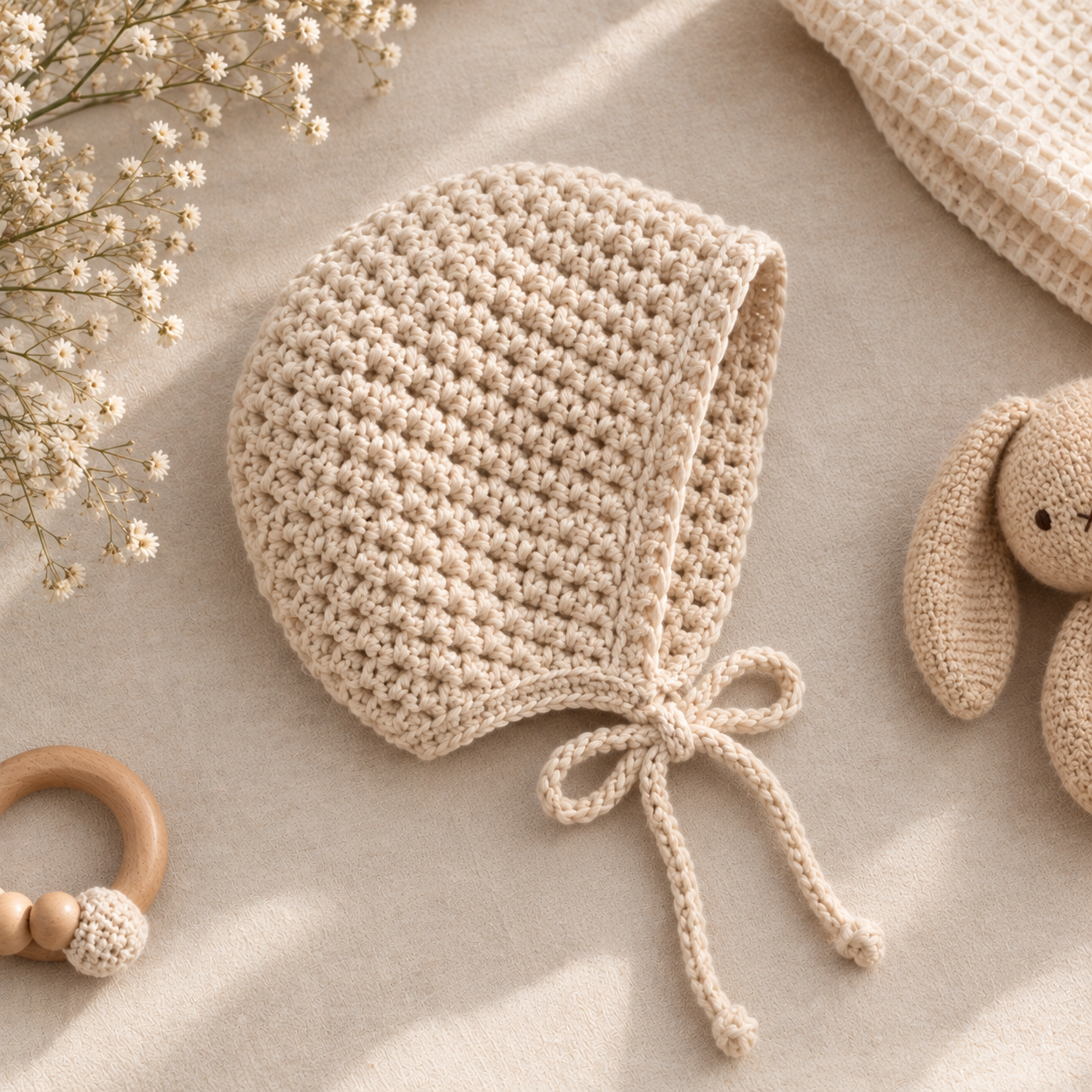
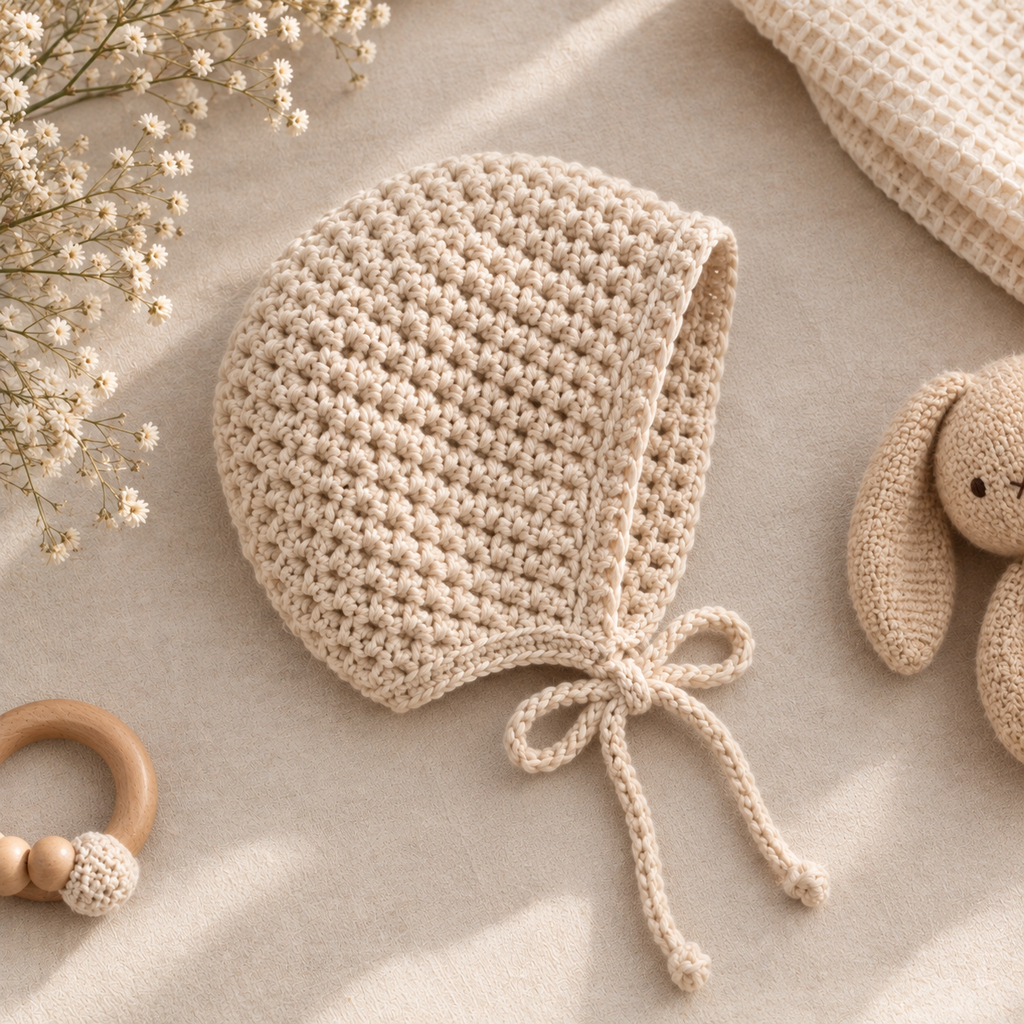
A bonnet is one of the most rewarding small projects a beginner can make. It’s quick enough to finish in an evening, uses very little yarn, and the tiny scale means even small mistakes barely show once it’s on a baby’s head. Here are 10 easy bonnet crochet patterns to start with, along with some tips on sizing and choosing the right yarn.
What Makes a Bonnet Different From a Beanie?
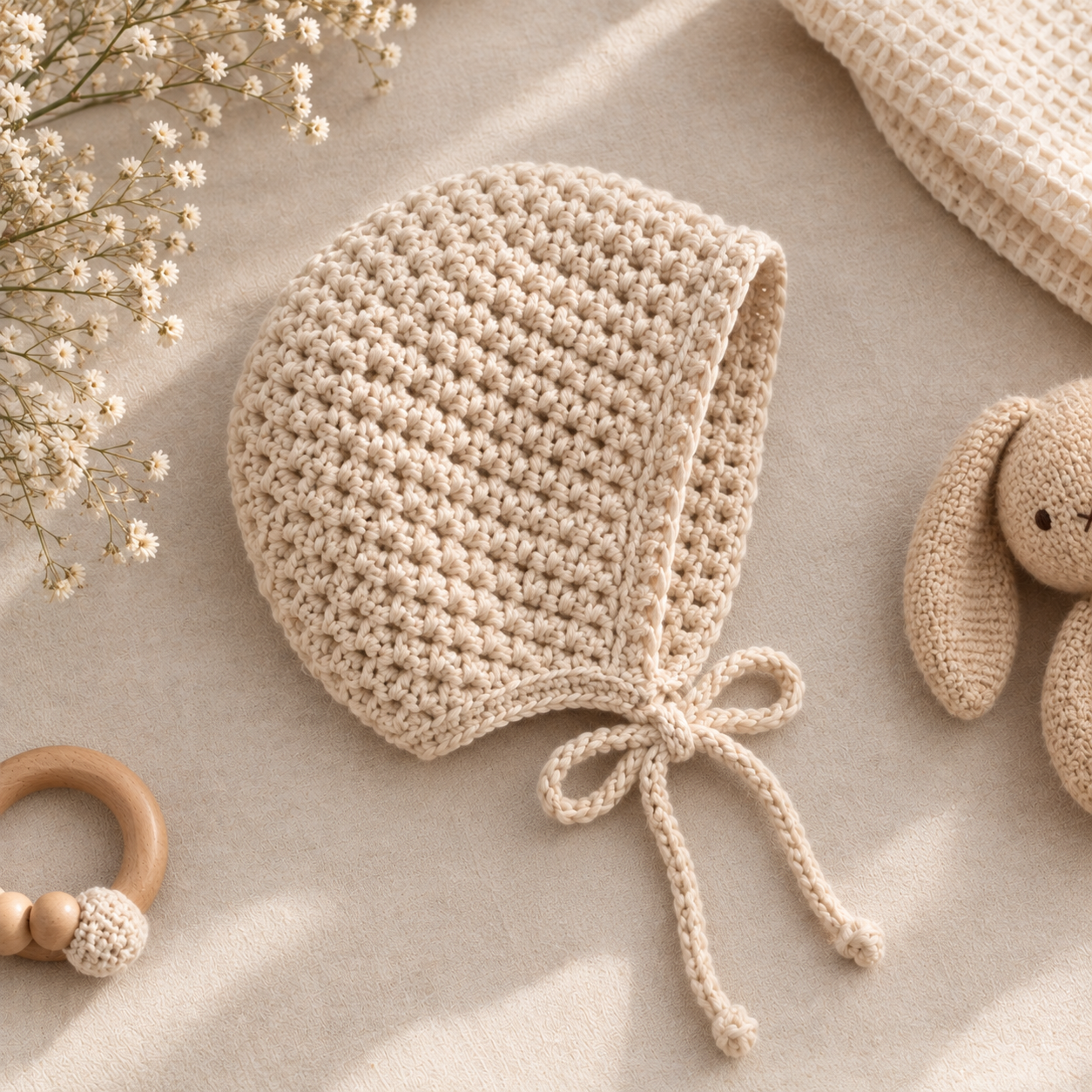
A bonnet covers more of the head than a typical beanie, usually extending down over the ears and tying under the chin with attached strings or ribbon. That extra coverage is really the only structural difference, since most bonnets still start with the same basic crown worked in rounds that a beanie does. The ties are what turn a simple hat shape into something that stays securely in place on a baby, which matters more for a bonnet than it does for an adult hat.
10 Easy Bonnet Crochet Patterns to Try
1. The Basic Newborn Bonnet
A simple, snug-fitting bonnet worked in a plain stitch with basic ties added at the end. It’s the easiest starting point on this list, since there’s no decorative detail to slow you down, just the core shaping and construction.
2. The Ribbon-Tie Baby Bonnet
Instead of crocheted ties, this version uses a length of ribbon threaded through small spaces left along the bottom edge. It’s a nice way to add a soft, finished look without any extra crochet work beyond the main bonnet shape.
3. The Shell Stitch Bonnet
A row or two of shell stitch worked around the face opening adds a delicate, scalloped detail to an otherwise plain bonnet. It’s a good next step once you’re comfortable with the basic shape and want to add just a little texture.
4. The Ear Flap Bonnet
This style adds soft, slightly extended sides that cover more of the ears than a standard bonnet does. It’s a practical choice for colder weather, and the extra coverage is created with simple extra rows rather than any complicated shaping.
5. The Granny Stripe Bonnet
Worked in rows of double crochet with regular color changes, this bonnet turns a basic shape into something colorful and playful. It’s also a great way to use up small amounts of leftover yarn from other baby projects.
6. The Bow-Front Bonnet
A small crocheted bow attached to the front or side of a plain bonnet adds a sweet, finished detail. The bow itself is just a small rectangle folded and cinched in the middle, so it doesn’t require any new stitches to learn.
7. The Vintage-Style Bonnet
Inspired by traditional sun bonnets, this style features a slightly gathered brim that frames the face more than a simple round crown does. It has an old-fashioned, storybook look while still relying on basic stitches throughout.
8. The Reversible Bonnet
Worked so that both sides look equally finished, this bonnet can be worn with either side facing out, which is especially handy if you’re using two coordinating colors. It takes a little more planning but no new techniques beyond the basic construction.
9. The Preemie Bonnet
A smaller, scaled-down version of a standard newborn bonnet, sized for a premature baby. Because it’s worked on a smaller scale, it’s also one of the fastest projects on this list, using only a small amount of yarn.
10. The Toddler Bonnet
A larger version of the basic bonnet shape, sized to fit an older baby or young toddler rather than a newborn. The construction stays exactly the same as the smaller versions, just with more rounds worked before you start the ties.
Why Bonnets Make Great Practice Projects
Beyond being genuinely useful, a bonnet is a good way to build core garment-adjacent skills, like crocheting evenly in the round and adding simple shaping, without the time investment of a full sweater or blanket. If a bonnet turns out slightly too big or small, it’s a much smaller setback than discovering the same issue partway through a larger project, which makes it a low-risk way to get comfortable reading a pattern from start to finish.
Sizing Tips for Different Ages
Bonnet sizing comes down almost entirely to head circumference. A preemie typically needs a bonnet sized around 11 to 13 inches around, a newborn closer to 13 to 15 inches, and a toddler anywhere from 17 to 19 inches, though it’s always worth measuring the specific baby if you can. Crocheting a small gauge swatch and comparing it to your pattern’s listed measurements before starting the full bonnet is the most reliable way to land on the right size.
Common Questions
What’s the Easiest Stitch for a First Bonnet?
Single crochet or double crochet are both good starting points, since they’re likely stitches you already know and they create an even, predictable fabric. Save shell stitch or other decorative details for after you’ve made at least one plain bonnet and feel comfortable with the basic shaping.
How Long Does It Take to Crochet a Bonnet?
Most bonnets take somewhere between 1 and 3 hours, depending on size and yarn weight, which makes them one of the faster beginner projects around. A preemie-sized bonnet finishes even more quickly, since there’s simply less fabric to work through.
What Yarn Is Safe for a Baby Bonnet?
A soft, machine-washable cotton or cotton-blend yarn is generally the safest and most practical choice for anything worn against a baby’s skin. Avoid anything with loose fibers that could shed easily, and skip small decorative buttons or beads in favor of sewn or crocheted details if the bonnet is meant for a very young baby.
Can I Adjust a Bonnet Pattern to Fit a Different Age?
Yes, in most cases. Since most bonnets are built from the same basic rounds, you can usually add or remove a few rounds at the crown to make the finished piece bigger or smaller, as long as you keep an eye on your gauge and check the fit against an actual head measurement as you go.
How Much Yarn Does a Bonnet Use?
Most bonnets use well under a full skein of yarn, often somewhere between 50 and 150 yards depending on size. That makes them an excellent project for using up leftover yarn from a bigger baby project, like a blanket or a sweater, without needing to buy anything new.
Do I Need to Know How to Crochet in the Round for a Bonnet?
Yes, most bonnet patterns start with a small circle worked in rounds, similar to the crown of a beanie. If you’ve never crocheted in the round before, it’s worth practicing on a simple flat circle first, since that same increasing pattern is what shapes the top of nearly every bonnet on this list.
Final Thoughts
A bonnet is a small, satisfying project that’s genuinely well-suited to a beginner, whether you want something plain and quick or a little more detailed with a bow or shell stitch trim. Pick one of the 10 patterns above, keep your stitch choice simple, and you’ll have a finished, wearable bonnet well within your first few crochet projects.