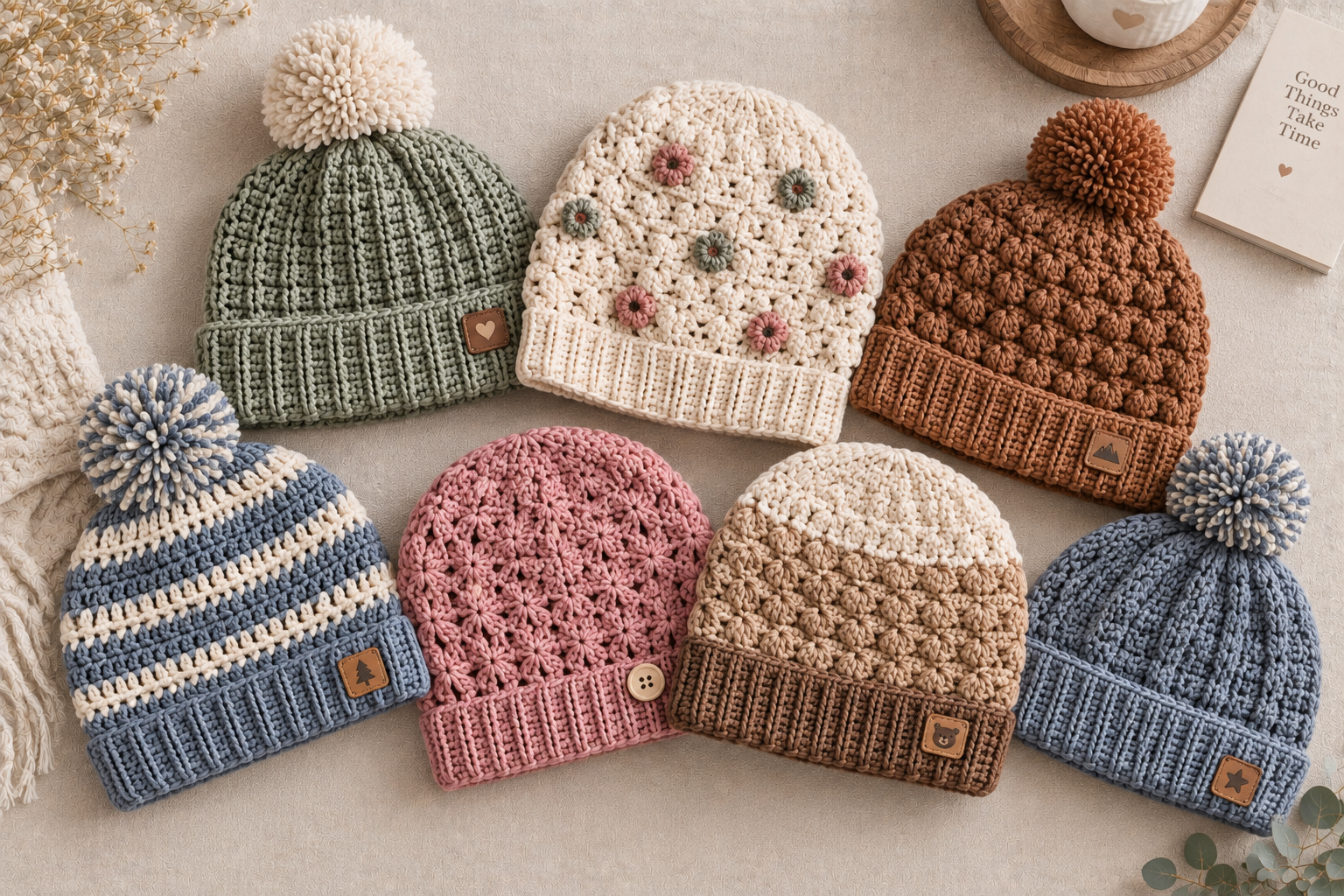
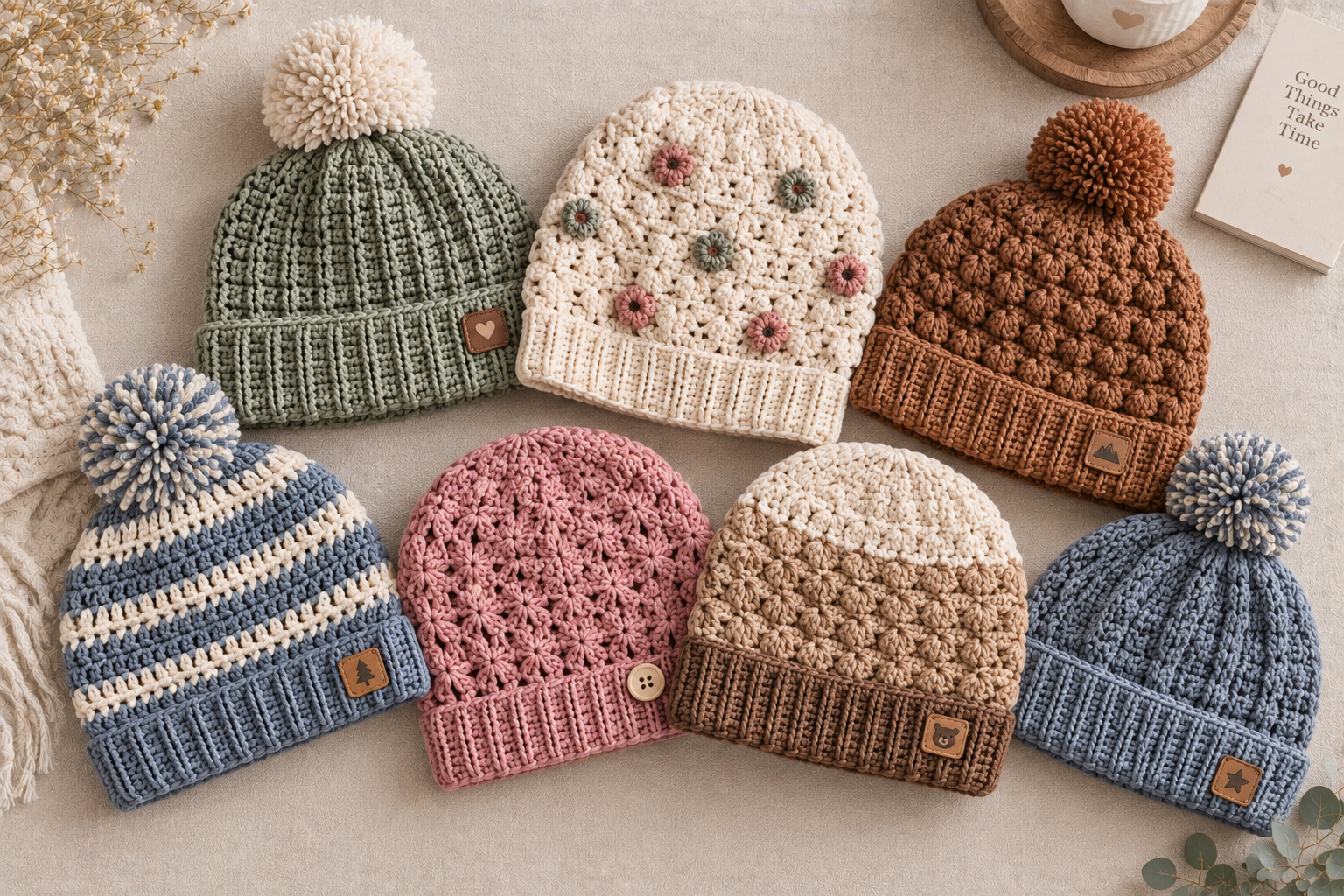
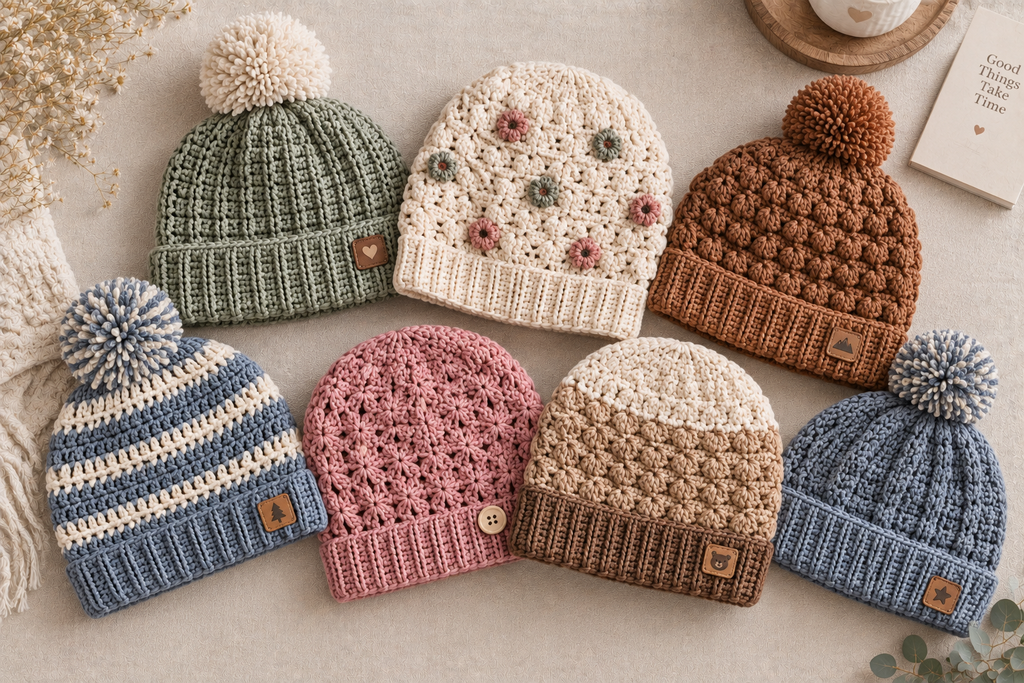
Not every beanie needs to be plain to be practical. A little bit of stitch texture or a simple color combination can turn the same basic hat shape into something you actually reach for instead of setting aside. Here are 8 free crochet beanie patterns built around different looks, so you can find one that matches your style instead of just your head size.
A Quick Note on Construction
Every beanie on this list starts the same way, with a small circle at the crown that grows with regular increases until it reaches the right width, then continues straight down to form the body. What changes between patterns is the stitch pattern layered on top of that basic shape, whether that’s texture, color, or a decorative detail worked into otherwise ordinary rounds.
8 Free Crochet Beanie Patterns to Try
1. The Textured Waffle Stitch Beanie
A grid of small raised bumps covers this beanie from crown to brim, giving it a cozy, dimensional look similar to a waffle-knit fabric. The texture also adds a bit of extra warmth compared to a flat stitch, without requiring a heavier yarn.
2. The Fair Isle Colorwork Beanie
Worked using two colors carried across each round to build a repeating pattern, this beanie brings a traditional, wintery look to a simple hat shape. It takes more planning than a solid-color version, since you’re tracking both color changes and stitch counts.
3. The Granny Square Beanie
Made from a handful of small granny squares joined into a rounded shape, this beanie has a colorful, patchwork look that’s distinctly different from a typical round-and-round construction. It’s a fun way to use several different colors in one small project.
4. The Bobble Stitch Beanie
Small, raised clusters scattered across the crown and body add serious texture without requiring any shaping changes. The bobbles catch the light and add visual weight, making this one of the most eye-catching options on this list.
5. The Reversible Two-Tone Beanie
Worked so that both the inside and outside look equally finished, this beanie can be worn with either color facing out. It takes a bit more attention while crocheting, but it effectively gives you two beanies in one.
6. The Shell Stitch Beanie
Rows of shell stitch, worked in small clusters, give this beanie a soft, scalloped texture that feels a little more decorative than a plain stitch pattern. It’s a nice option if you want something with visual interest but not a full colorwork commitment.
7. The Star Stitch Beanie
Star stitch creates a distinctive, layered texture with a small ridge at the center of each stitch, giving the whole beanie a woven, fabric-like appearance rather than a typical crochet look. It’s a slower stitch to work, but the result looks noticeably different from anything else on this list.
8. The Moss Stitch Beanie
Also called linen stitch, this pattern alternates single crochet stitches with chain spaces to create a dense, woven texture. It’s one of the easiest stitches here to learn, and the finished fabric has a tailored, almost fabric-like look rather than an obviously crocheted one.
Matching a Beanie to How You Actually Dress
Think about your existing coats, scarves, and everyday colors before picking a pattern. A bold colorwork or granny square beanie works best as a statement piece against a simple, neutral outfit, while a subtly textured style, like the moss stitch or waffle stitch version, blends in more easily as an everyday layer you can wear with almost anything. Picking based on what you’ll actually reach for, rather than which pattern looks the most impressive to make, is what determines whether a beanie gets worn all winter or sits in a drawer.
Getting a Good Fit, Whatever the Stitch
Textured and colorwork stitches can behave a little differently than a plain single or double crochet fabric, so it’s worth crocheting a gauge swatch in your actual stitch pattern before starting the full hat, rather than assuming it will match a plain-stitch gauge. A snug, close fit usually calls for fewer increases at the crown and a slightly smaller finished circumference than a relaxed or slouchy style would.
Common Questions
Can I Crochet a Beanie Flat Instead of in the Round?
Yes, some patterns work a beanie as a flat rectangle that’s seamed up one side afterwards, rather than crocheting in continuous rounds. It’s a good option if you find working in the round tricky, though most of the textured stitches above are easier to follow when worked in rounds, since the pattern repeats consistently without a seam interrupting it.
How Do I Make a Beanie Less Itchy?
Choosing a soft yarn, like a smooth acrylic, cotton blend, or superwash wool, makes the biggest difference in comfort against the skin. A dense stitch pattern can also feel scratchier than an open one in certain fibers, so if itchiness is a concern, it’s worth testing a small swatch against your skin before committing to a full hat in a new yarn.
Which of These Stitches Is Easiest for a Beginner?
The moss stitch and bobble stitch beanies are both approachable for less experienced crocheters, since moss stitch only alternates two familiar stitches and bobbles are worked at set intervals rather than throughout. Fair isle colorwork and star stitch both take more practice, since they involve tracking color changes or a slightly less common stitch technique.
How Much Yarn Do These Beanie Patterns Use?
Most of these patterns use somewhere between 100 and 200 yards of worsted-weight yarn, similar to a basic beanie, though colorwork and granny square styles split that yardage across two or more colors rather than using it all in one.
How Long Do These Beanies Take Compared to a Plain One?
Most textured or patterned beanies take a bit longer than a plain-stitch version, usually adding somewhere between 30 minutes and an hour to the total time, depending on the technique. Fair isle colorwork and granny square construction tend to take the longest of the styles above, since both involve extra steps beyond simply working around in one continuous stitch.
Can I Combine Two of These Stitch Patterns into One Beanie?
Yes, and it’s a common way designers put their own spin on a basic hat. A shell stitch band worked above a moss stitch body, or a few rounds of bobble stitch added to an otherwise plain fair isle crown, are both simple ways to combine techniques once you’re comfortable with each one on its own. Just keep in mind that combining stitches with different tensions or heights can affect your overall gauge, so it’s worth swatching the combination before committing to a full hat.
Final Thoughts
A beanie doesn’t have to be an afterthought project just because it’s small and quick to make. Whether you’re drawn to bold colorwork, subtle texture, or a classic stitch worked a little differently, there’s a free pattern on this list that turns a basic hat into something worth wearing on repeat.