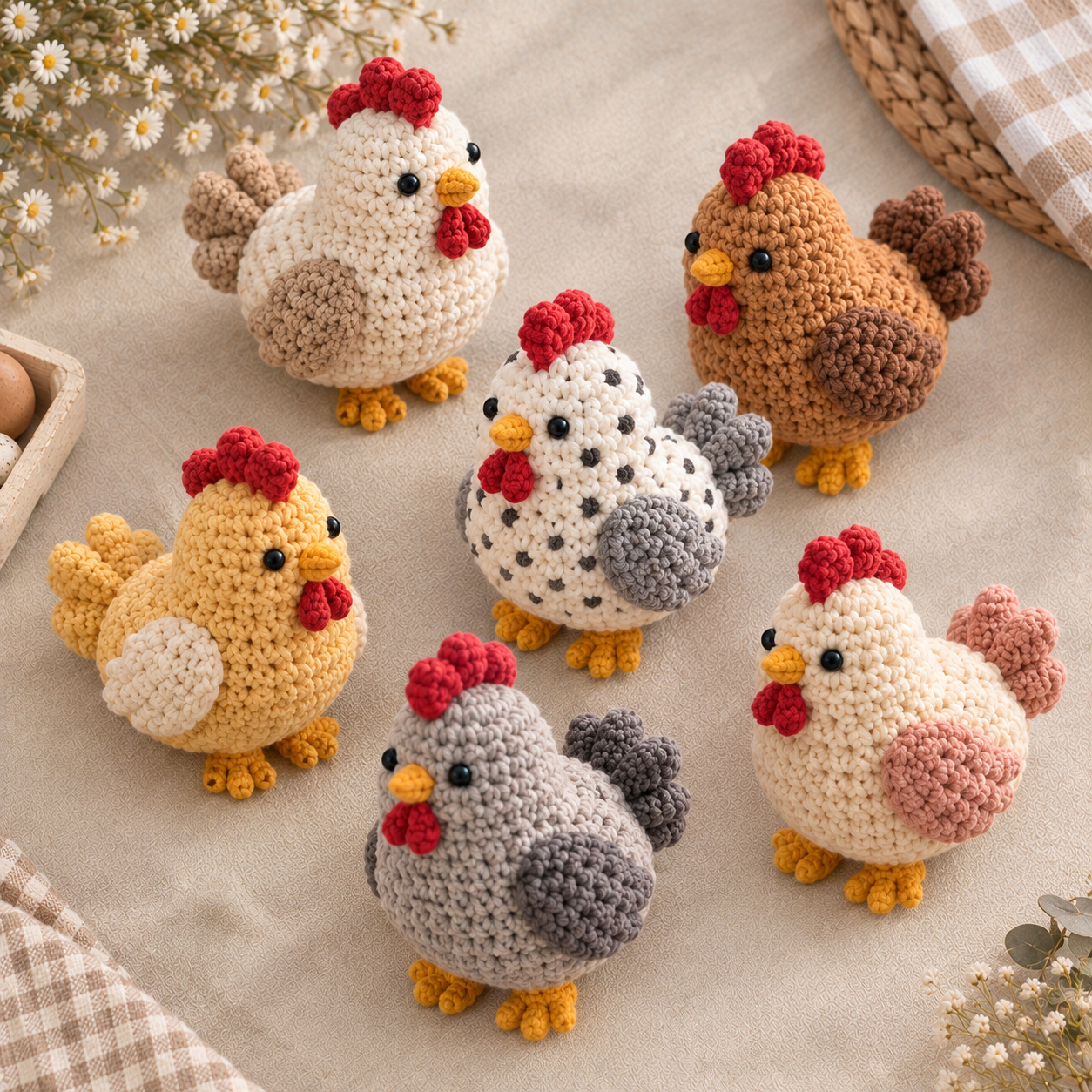
Chickens have a charm that comes almost entirely from their small, distinctive details, since a rounded body reads as almost any bird until you add the comb, the wattle, and that particular forward-leaning stance. Here are 8 free crochet chicken patterns that are almost too cute, along with a look at what actually makes a chicken shape read as a chicken.
The Details That Make a Chicken a Chicken
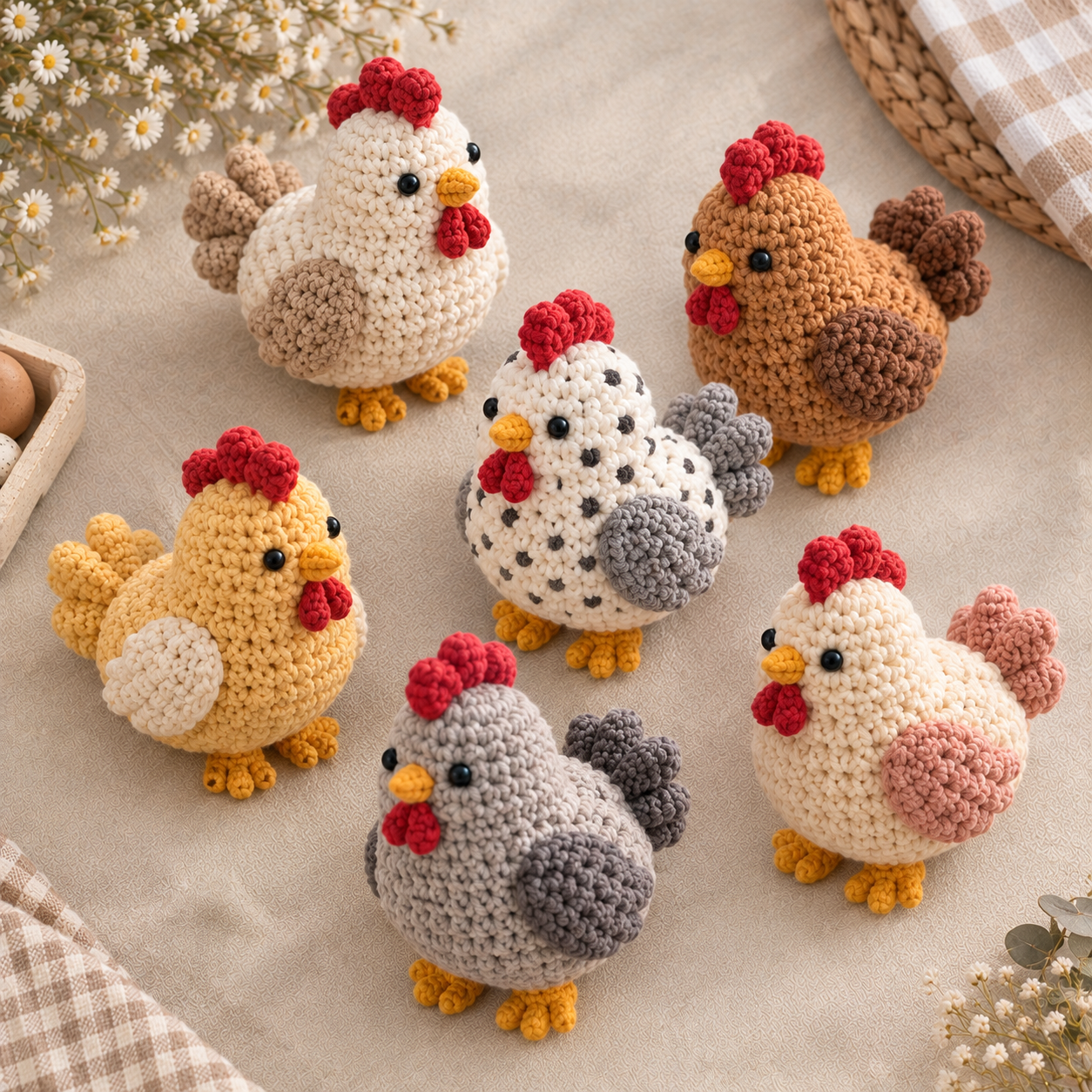
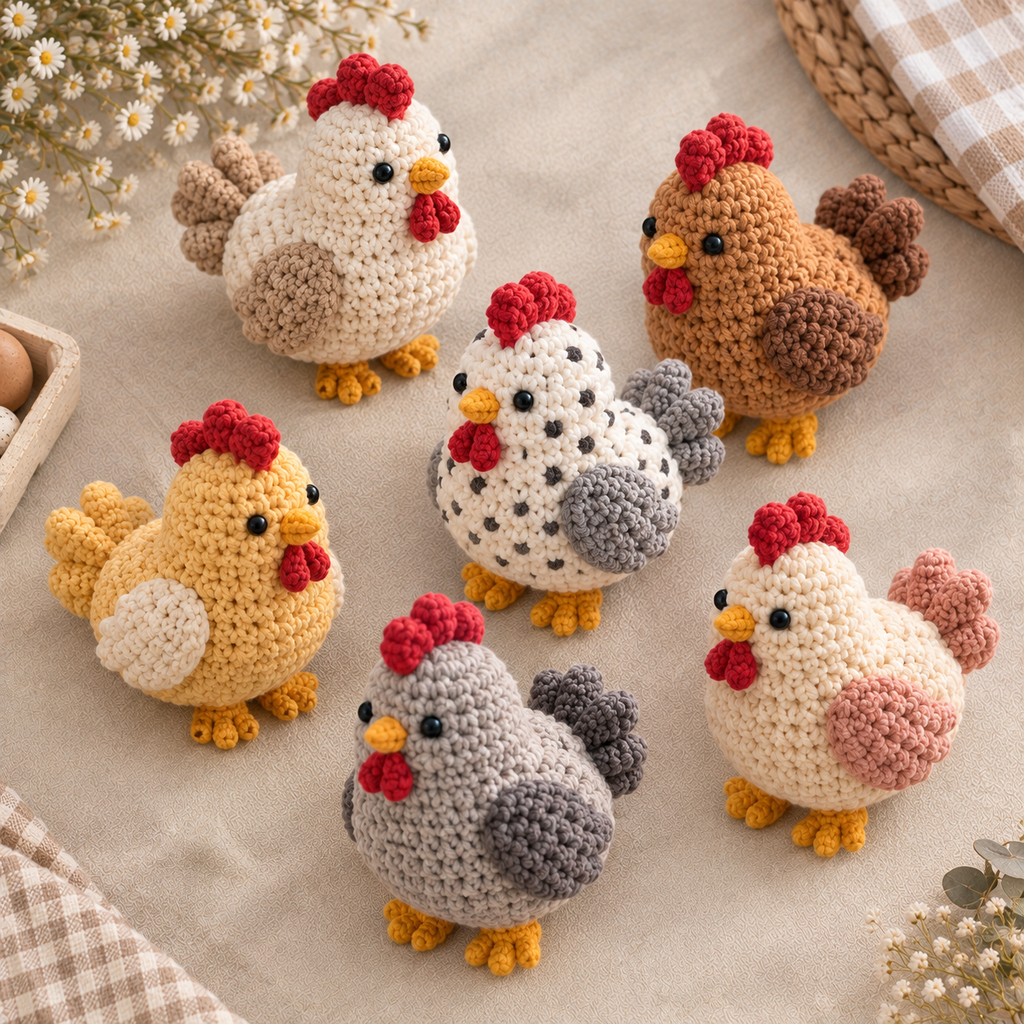
Beyond the basic rounded body most birds share, two small features do most of the work in making a design recognizably chicken-like: the comb, a small ridged or scalloped piece of red fabric worked flat and attached along the top of the head, and the wattle, a smaller matching piece that hangs just below the beak. Both are usually worked as separate flat pieces rather than shaped directly into the head, since that keeps their scalloped edges crisp and lets you attach them at exactly the angle you want. A short, slightly pointed beak and a body that leans forward rather than sitting perfectly upright round out the look.
8 Crochet Chicken Patterns to Try
1. The Classic Roosting Hen
A rounded, slightly flattened body posed as if sitting on a nest, complete with a simple red comb and wattle, is the most traditional chicken shape on this list. It’s a good starting point for practicing comb and wattle placement before moving on to more detailed designs.
2. The Colorful Rooster
Featuring a larger, more dramatic comb and a sweeping tail made of several long, curved pieces in mixed colors, this design captures a rooster’s showier appearance. The tail feathers take more time than the body itself, since each one is usually worked separately and attached individually.
3. The Fluffy Yellow Chick
A small, round, all-yellow body with a tiny triangular beak and simple stick-out feet keeps this design about as simple as a bird gets. It skips the comb and wattle entirely, since young chicks don’t have them yet, which makes it one of the quickest patterns on this list.
4. The Speckled Hen
Small, scattered stitches of a darker color worked across an otherwise solid body mimic the mottled feather pattern seen on many real hen breeds. Placing the speckles randomly rather than in an even pattern gives a more convincing, natural-looking result.
5. The Chicken Egg Cozy
Shaped like a small open-topped pouch with a chicken face, comb, and wattle added to the front, this design slips over a boiled egg or egg cup instead of standing alone as a toy. It’s one of the most functional patterns here and a fun way to dress up breakfast.
6. The Chicken Coop Family Set
A larger hen worked alongside two or three smaller chick shapes makes a sweet farmhouse-themed set for a kitchen shelf or a kid’s room. Keeping the same basic proportions across different sizes takes a bit of practice, but the finished set has real charm together.
7. The Chicken in a Bonnet
A classic hen shape finished with a small crocheted bonnet tied under the chin adds a playful, old-fashioned detail without changing the underlying body construction. It’s an easy way to dress up a basic hen for a spring or farmhouse-themed gift.
8. The Mini Chicken Keychain
A small, simplified chicken head or a compact rounded body scaled down to keychain size makes a quick project that still includes a tiny comb and wattle for recognizability. It’s a good introduction to chicken proportions if a full-sized hen feels like too big a commitment to start.
Tips for Getting Comb and Wattle Placement Right
Pin the comb and wattle in place with stitch markers or scrap yarn before sewing them down permanently, and check the angle from a few different sides, since a comb sewn even slightly off-center can throw off the whole face. A firmer red yarn, or one with a bit of stiffening worked in, helps the comb’s scalloped points stand up rather than flopping over, which keeps the shape crisp and easy to read at a glance.
Common Questions
Why Don’t Baby Chick Patterns Have a Comb and Wattle?
Real baby chicks don’t develop a visible comb and wattle until they’re several weeks old, so most fluffy chick patterns skip both features to stay accurate to how a young chick actually looks. It’s also part of what keeps chick patterns so quick and simple compared to adult hen or rooster designs.
What Yarn Works Best for a Chicken Pattern?
A worsted-weight acrylic or cotton-blend yarn works well for the body, while the comb and wattle benefit from a firmer, more tightly spun red yarn that will hold its scalloped shape better than something soft and loose. Cotton in particular gives the comb crisper stitch definition.
How Long Does It Take to Crochet a Chicken?
Most standard hen or rooster designs take somewhere between 2 and 4 hours, with the rooster generally taking longer because of its more elaborate tail. A simple fluffy chick, with no comb or wattle to attach, can often be finished in under an hour.
Can I Make a Rooster and Hen as a Matching Pair?
Yes, and it’s a popular way to expand a single chicken pattern into a small set. Using the same basic body shape and swapping in a larger comb and a dramatic tail for the rooster, while keeping the hen’s proportions more understated, gives you a clearly matched but distinct pair.
How Much Yarn Does a Chicken Amigurumi Use?
A standard-sized hen typically uses somewhere between 100 and 180 yards of worsted-weight yarn, with a rooster using more because of its added tail feathers. A mini chick or keychain-sized chicken will use considerably less.
Is a Chicken Pattern Good for Beginners?
The body itself is fairly approachable, similar in difficulty to most other simple animal amigurumi, but attaching a comb and wattle at the right angle takes a bit more practice than a design without separate face pieces. Starting with the fluffy chick, which skips both features, is a good way to build confidence first.
Can I Turn This Pattern Into a Different Bird?
To some extent. Removing the comb and wattle and adjusting the beak shape and coloring can shift the same basic rounded body toward a different bird, like a duck or a small songbird, though the chicken’s forward-leaning posture and stubby tail are fairly specific to this particular shape.
Final Thoughts
A chicken’s personality comes almost entirely from a few small, well-placed details, which makes these patterns a satisfying next step once you’re comfortable with basic amigurumi shaping. Pick a design that matches your farmhouse or springtime decor, and you’ll have a genuinely charming little chicken ready before long.