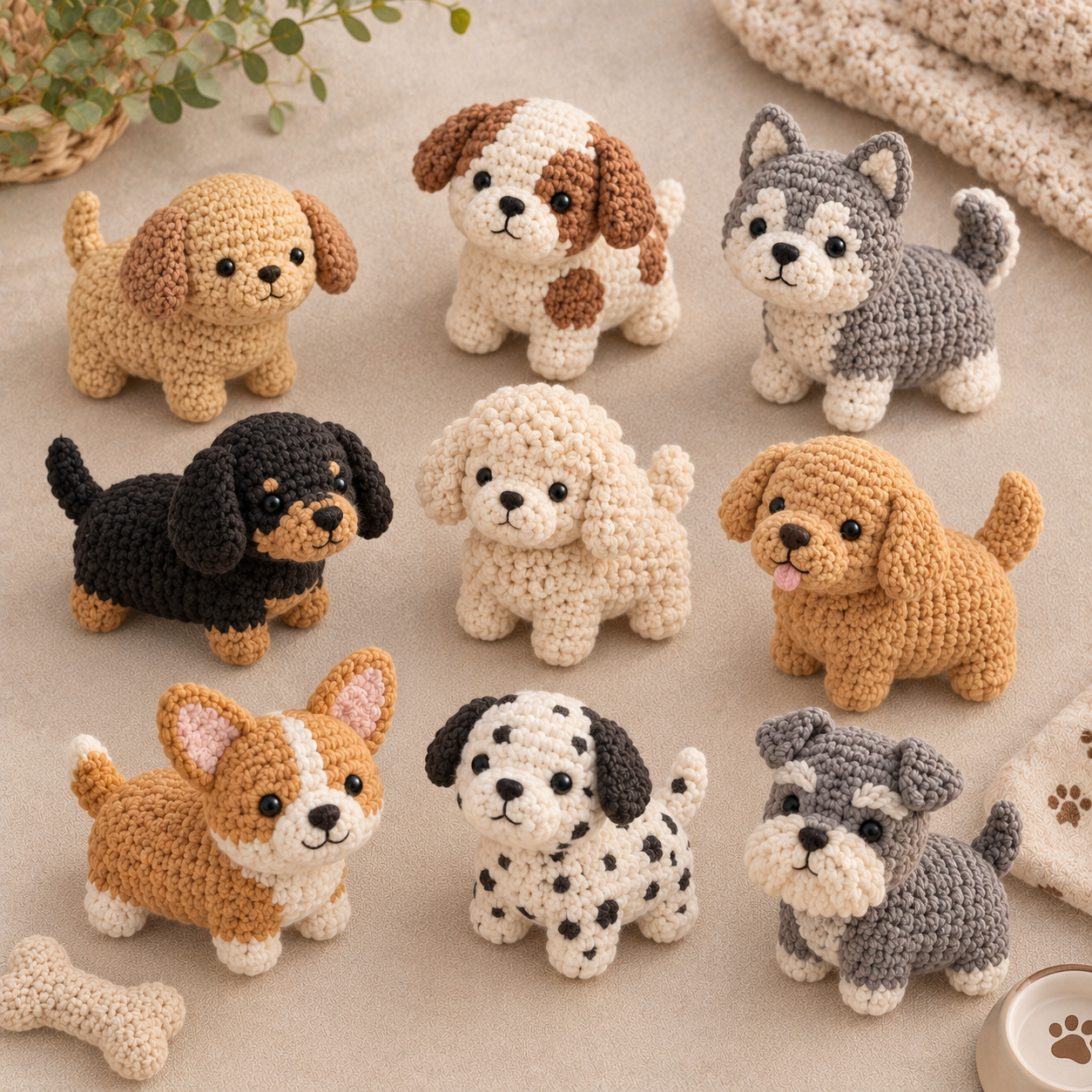
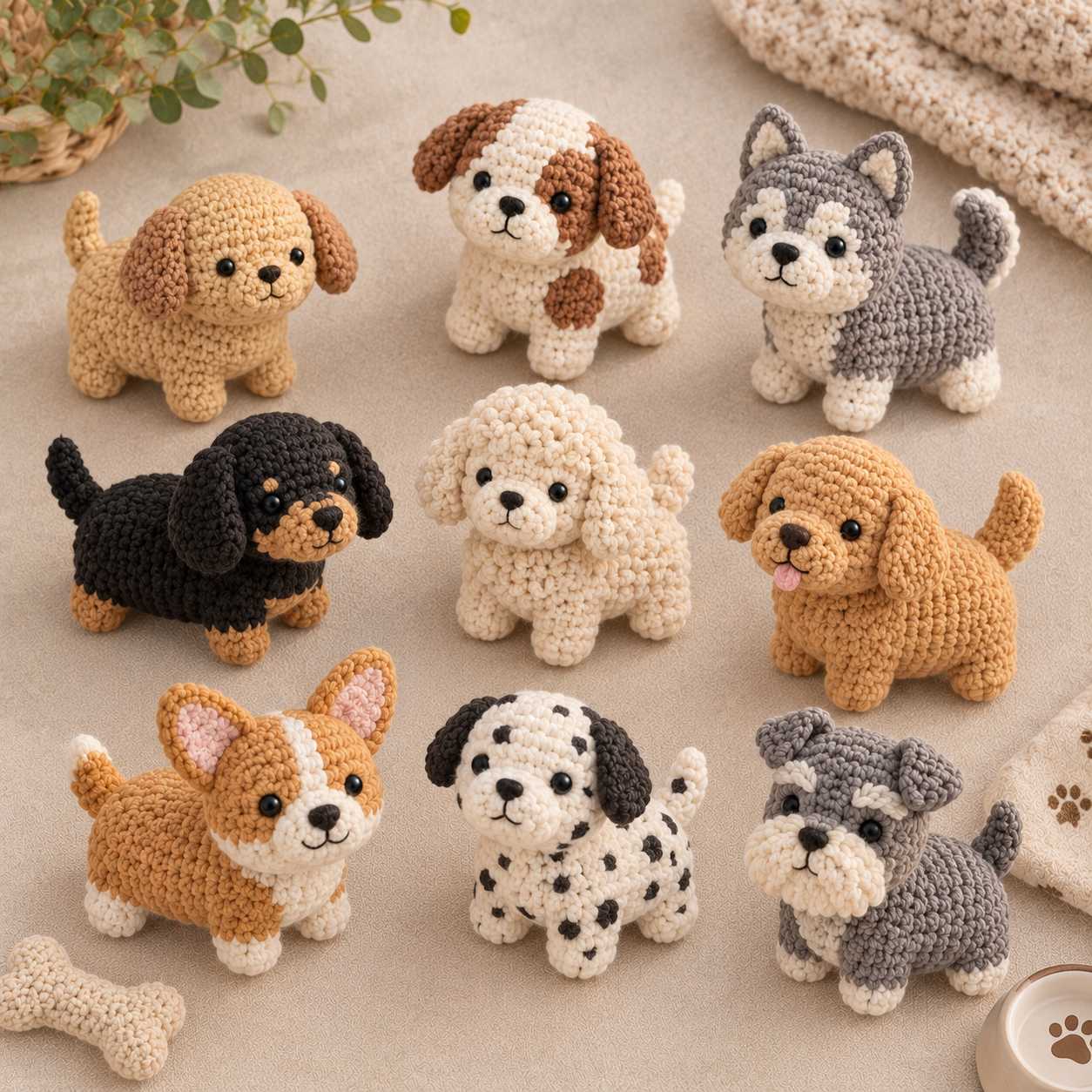
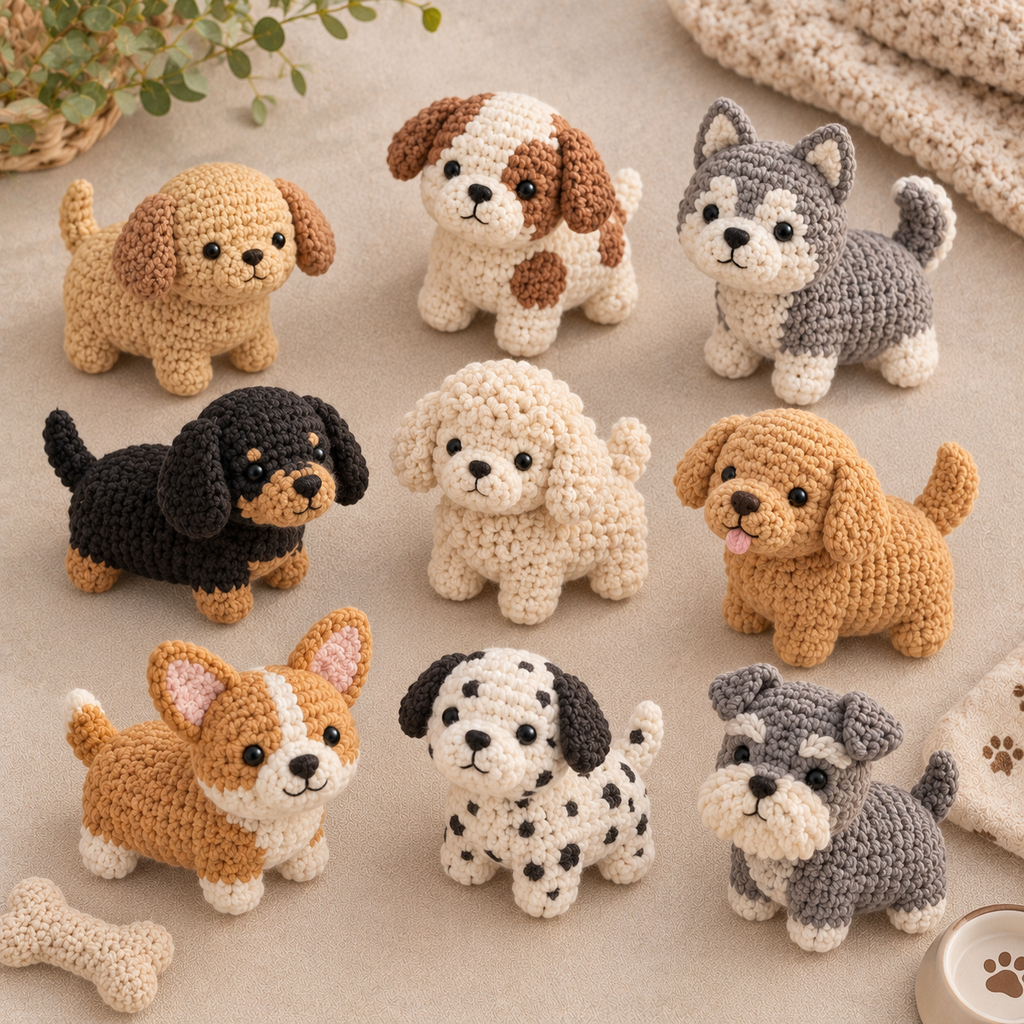
Dogs are one of the best places to start if you’re new to amigurumi, since most breeds share the same basic vocabulary: a rounded body, four short legs, two ears, and a tail. Once you’ve made one dog, the next one usually just means swapping a proportion or two. Here are 7 crochet dog patterns to try first, arranged roughly from simplest to more involved.
Why Dogs Are a Smart Starting Point
Learning a single base dog body carries over from breed to breed more directly than almost any other animal category, since the differences between most dogs come down to ear shape, leg length, and coat texture rather than a completely different underlying structure. That means your second and third dog patterns will go noticeably faster than your first, even if they look quite different once finished. It also means small mistakes are more forgiving here than on an animal with more exacting proportions, since dogs come in such a wide range of real-life shapes that a slightly uneven body still reads convincingly as some kind of dog.
7 Crochet Dog Patterns to Try First
1. The Round Sitting Puppy
A simple, rounded body with no specific breed features, just two basic ears and a plain snout, this is the most forgiving starting point on this list. It’s designed to teach the core body shape you’ll reuse in every other pattern here.
2. The Labrador Pup
Worked in a single solid color with a smooth coat and no added texture, this design focuses on getting clean, even proportions right rather than introducing any new technique. It’s a good second project, since you’re building on the same skills from the round sitting puppy with slightly more defined shaping.
3. The Corgi Pup
Short, stubby legs paired with tall, upright ears and a slightly rounder rump give this design a distinctive, low-to-the-ground silhouette. The upright ears are the main new skill here, since they need enough stuffing to stand on their own rather than lying flat like the puppy’s.
4. The Dachshund Pup
An elongated body and shorter-than-usual legs create this breed’s famous long, low shape, which means working several extra rounds in the middle of the body rather than any new stitch or technique. It’s a good project for practicing patience with a longer, more repetitive section.
5. The Poodle Pup
Worked mostly in a loop or bobble stitch to mimic a poodle’s curly coat, this design introduces a new textured stitch on top of the basic dog body you’ve already learned. The legs and head are often left in plain stitching, so only part of the body needs the new technique.
6. The Bulldog Pup
A stockier, wider body with a slightly wrinkled face, worked using small surface stitches or gathered rows around the snout, brings a bit more shaping challenge than the breeds above. Getting the wrinkles to look intentional rather than messy takes a little practice.
7. The Husky Pup
Two-tone color patterns worked around the face and ears, along with upright ears and sometimes a curled tail, make this the most involved pattern on this list. Carrying a second color cleanly through a small, detailed face section is the main new skill this design asks for.
Tips for Your First Dog Amigurumi
Start with a hook one or two sizes smaller than your yarn label recommends, since tighter stitches keep the stuffing from peeking through, a common early mistake that’s easy to avoid once you know to watch for it. Keep a stitch marker on your working round at all times, since it’s easy to lose track of where a round starts when everything is worked in a continuous spiral rather than joined rounds. If a design calls for ears that stand upright, like the corgi or husky, stuff them more firmly than the rest of the body, since underfilled ears are one of the most common reasons a finished dog looks a little off.
Common Questions
What’s the Easiest Dog Breed to Crochet as a First Project?
The round sitting puppy and the Labrador pup are both good starting points, since neither requires anything beyond the basic body shape and a simple color scheme. Save the husky and bulldog for once you’ve built some confidence, since both ask for a bit more shaping or color work.
Do I Need to Know Special Stitches to Make These Dogs?
Mostly no. Every pattern here relates mainly to basic single crochet along with simple increases and decreases. The poodle introduces a loop or bobble stitch for texture, and the husky adds a second color, but neither is a difficult technique to pick up.
How Long Does a Beginner Dog Pattern Take to Finish?
Most of these designs take somewhere between 2 and 4 hours for a confident beginner, a bit longer the first few times through while you’re still getting comfortable with tension and stitch counting. The dachshund’s extra body length adds some time compared to the other breeds here.
Why Do My Dog’s Ears Look Floppy Instead of Standing Up?
Not enough stuffing is the usual cause for a breed like the corgi or husky that’s meant to have upright ears. Stuffing the ears more firmly than the body, or adding a small strip of stiff material inside for extra support, generally solves it.
Can I Turn One of These Patterns Into a Different Breed?
Yes, to a good extent. Since these patterns share the same basic body, adjusting ear shape, leg length, and coat texture can shift the same underlying pattern toward a breed that isn’t on this list, like a beagle or a terrier, once you’re comfortable with the core shaping.
What Yarn Is Best for a First Dog Amigurumi?
A worsted-weight acrylic or cotton-blend yarn is a practical, easy-to-find choice for a first project, since it’s forgiving to work with and widely available in a range of colors. Save specialty or textured yarns for later projects once you’re more comfortable with basic shaping.
Should I Practice the Base Body Before Trying a Specific Breed?
It can help, especially if you’re brand new to amigurumi. Working a plain round sitting puppy first, without worrying about breed-specific ears or color changes, lets you get comfortable with tension, increases, and decreases before you’re relying on getting a more detailed design right the first time.
Final Thoughts
Dogs are a genuinely smart place to start with amigurumi, since one well-learned base pattern opens the door to a whole range of breeds with just small changes. Work through this list in order, and you’ll have a solid foundation in basic amigurumi shaping by the time you finish the husky.