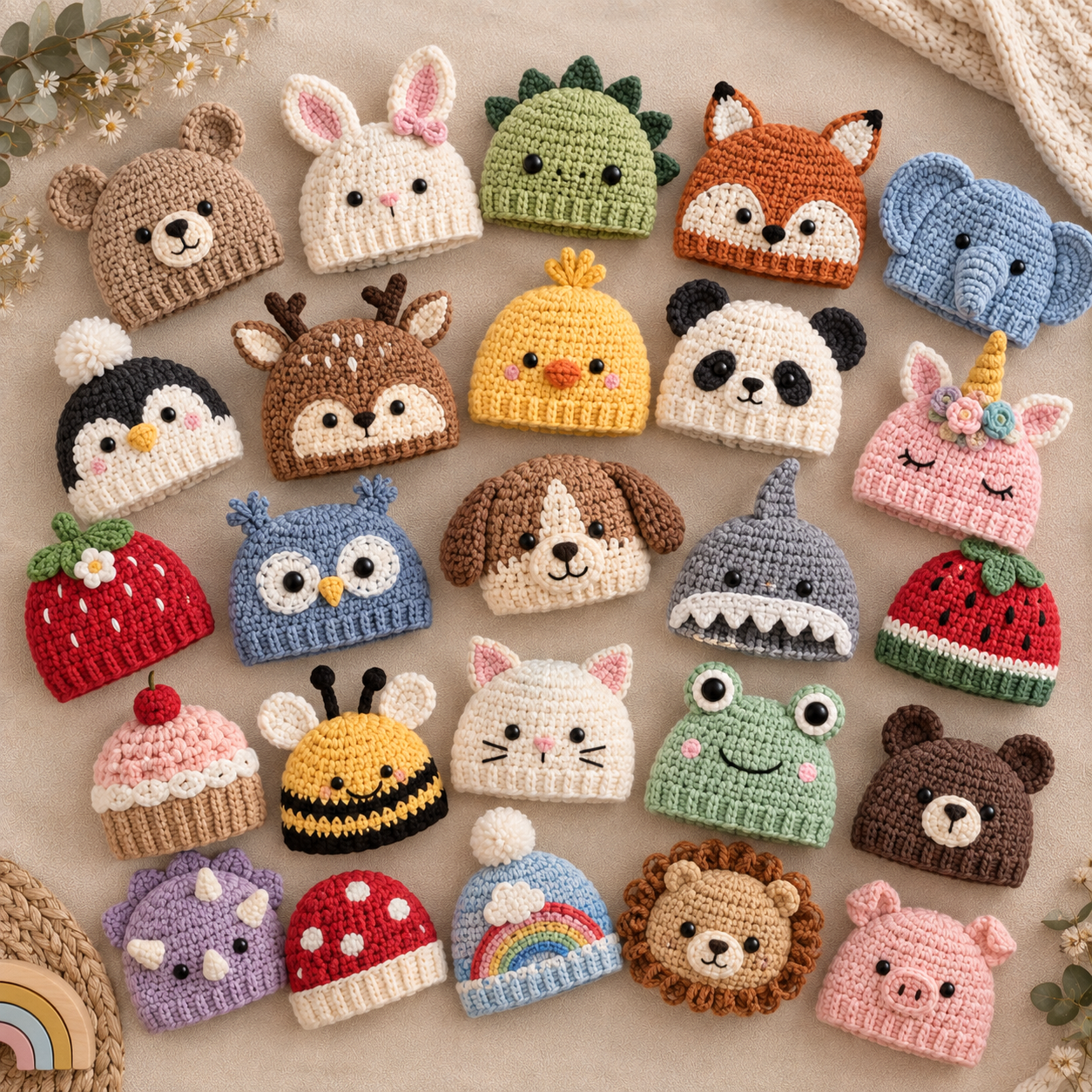
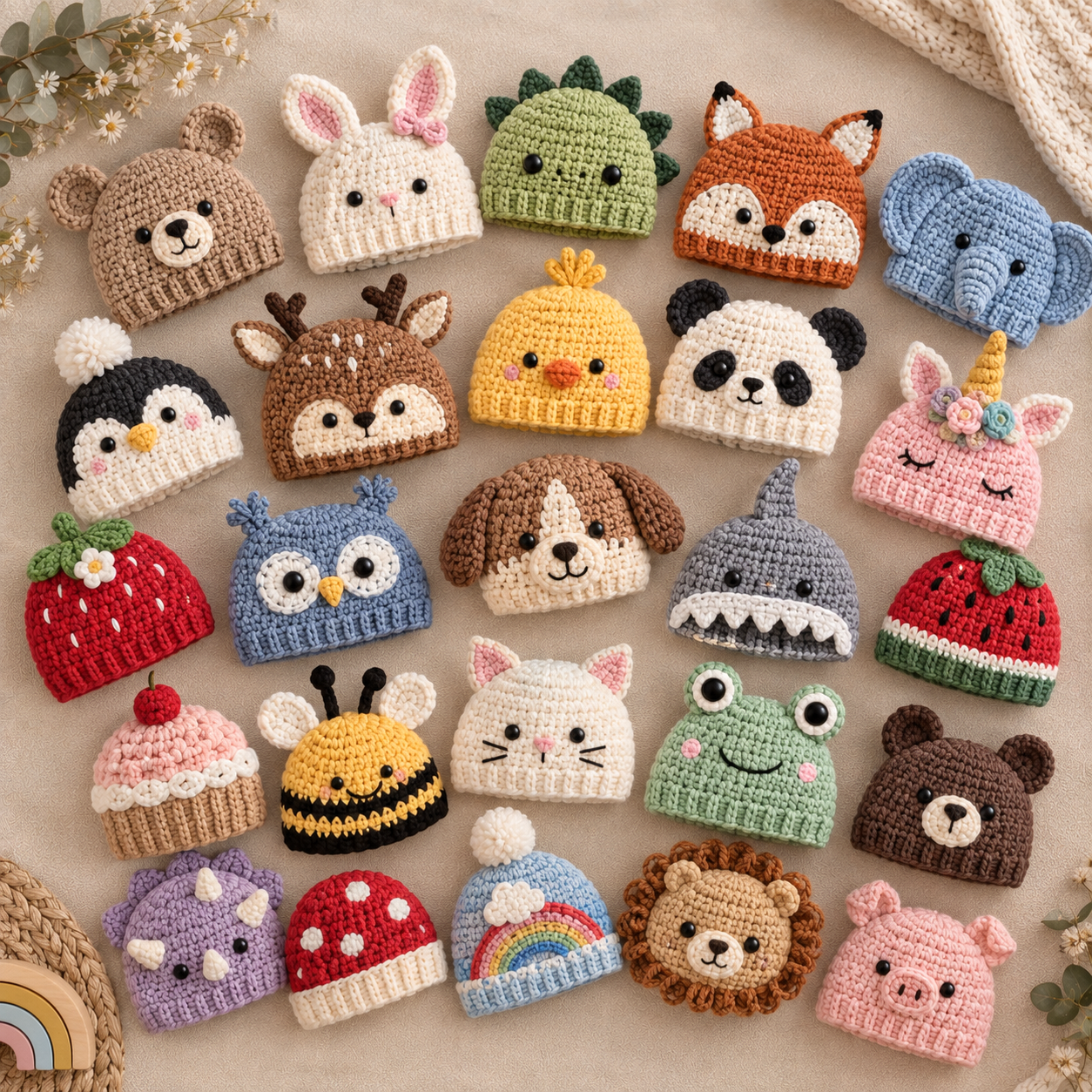
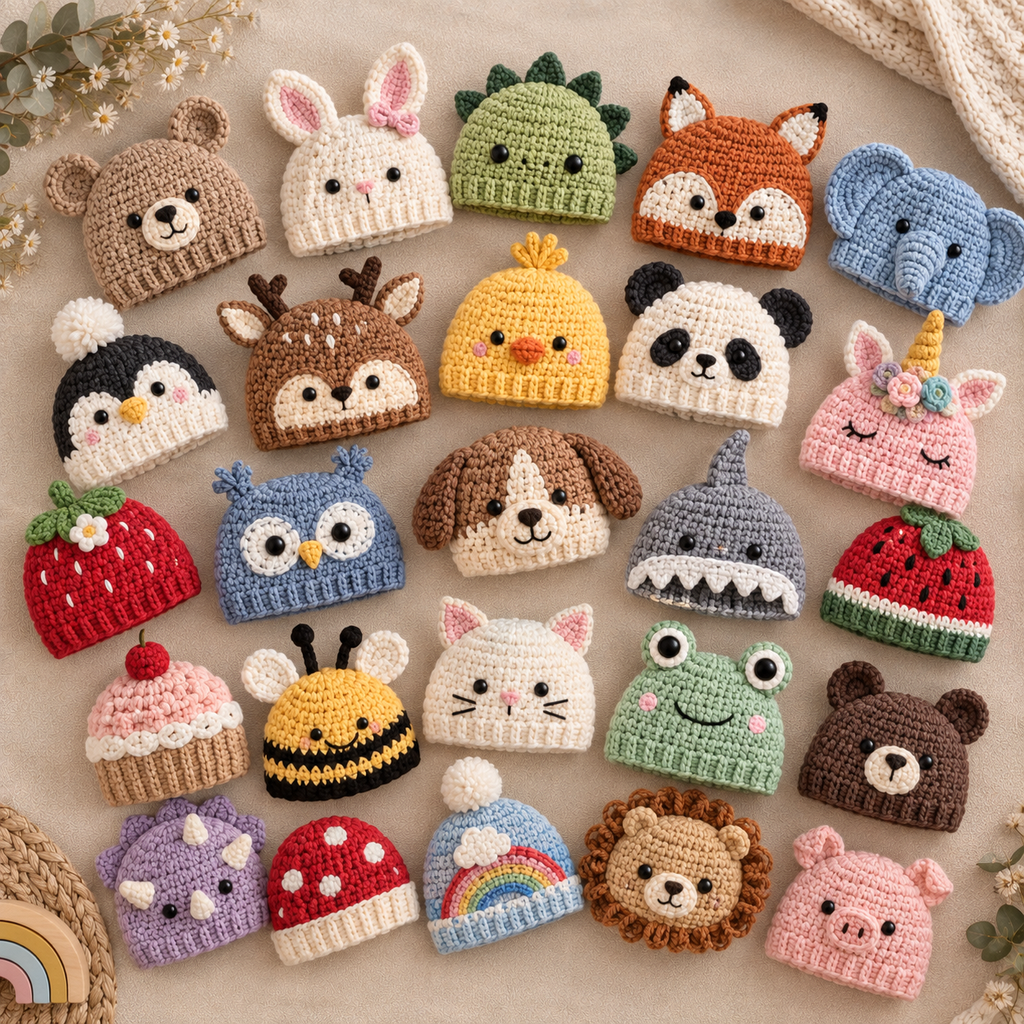
Between the animal kingdom, a few fantasy characters, and a couple of sweet treats, there’s an almost endless supply of directions to take a basic baby beanie. Here are 17 crochet baby hat patterns to try, along with a look at the one skill that trips up almost every themed design on this list.
Symmetry Is the Real Challenge
Whatever character or theme you’re working toward, the hardest part usually isn’t any single stitch, it’s getting paired features, two ears, two eyes, two wings, positioned as true mirror images of each other. A slightly uneven pair is one of the most common reasons a finished hat looks a little off, even when every piece was crocheted correctly. Measuring from a fixed point, like the center seam, and marking both positions with stitch markers before sewing anything down permanently is the most reliable way to catch a mismatch early.
17 Crochet Baby Hat Patterns to Try
1. The Zebra Baby Hat
Bold black and white stripes worked around the crown, finished with two small upright ears, give this hat a striking, high-contrast look. Carrying the second color neatly up the inside of the work takes practice, but the stripes read clearly even from a distance.
2. The Monkey Baby Hat
A brown or tan crown paired with a lighter oval panel worked into the face and two rounded ears set low on the sides gives this design a playful character. Keeping the face panel centered matters more here than the ear placement.
3. The Hedgehog Baby Hat
Small bobble or loop stitches worked across the back of the crown suggest a hedgehog’s spines, while the front stays smooth for a simple embroidered face. The textured back is the main feature carrying this whole design.
4. The Whale Baby Hat
A rounded blue or gray crown finished with a small curved spout piece at the top and a simple tail shape trailing off the back brings a gentle sea creature theme to hat form.
5. The Narwhal Baby Hat
A soft gray body paired with a single spiraled horn worked as a small cone shape and centered on the front captures this unusual whale’s most famous feature. The horn needs a clean spiral texture to read clearly.
6. The Penguin Baby Hat
A black crown with a white oval panel worked into the front and a small triangular orange beak gives this design a simple, graphic look. It’s one of the more beginner-friendly themed hats here, relying mainly on color blocking rather than separate pieces.
7. The Octopus Baby Hat
A rounded crown finished with several short, curling tentacles hanging around the bottom edge gives this design real movement and a distinctly different silhouette. Each tentacle is a simple crocheted tube, though attaching several evenly takes some patience.
8. The Squirrel Baby Hat
Two small rounded ears paired with a fluffy, curled tail attached to the back bring a woodland character to a basic beanie. The tail, worked with a loop or bobble stitch, is proportionally larger than the ears, which is what makes the design read as a squirrel.
9. The Peacock Baby Hat
A crown finished with a fan of small, separately worked feather shapes in blue, green, and gold, each tipped with a simple round “eye” marking, gives this hat a dramatic, showy look. Each feather is its own small piece.
10. The Flamingo Baby Hat
A soft pink crown paired with a long curved neck and small head worked separately and attached to the side brings an elegant silhouette to hat form. Getting the neck to curve naturally rather than sticking out stiffly takes some shaping care.
11. The Sloth Baby Hat
A soft brown and tan face panel with a gentle, half-closed expression and two small rounded ears gives this design a calm, sleepy character. The relaxed expression is easier to achieve than a wide-eyed alert one, since fewer details need to line up.
12. The Chick Baby Hat
A round, fluffy yellow crown with a tiny triangular beak and two small feet gives this hat a cheerful springtime look, distinct from a duck’s flatter bill shape and with almost no separate shaping involved.
13. The Dragon Baby Hat
Small wings attached to the sides and a row of soft spikes running down the center of the crown bring a gentle, storybook dragon theme to a basic hat. Rounding off the spikes rather than making them sharp keeps the design friendly and baby-appropriate.
14. The Mermaid Bonnet
A softly rounded bonnet finished with a scalloped, shell-like trim around the face opening and a few small crocheted shells scattered near one side brings an ocean theme without needing an actual tail shape.
15. The Gnome Baby Hat
A tall, pointed crown worked in a solid color, finished with a soft fringe or fur-style trim around the face opening to suggest a bushy beard, gives this hat a cozy, storybook charm. Skipping a face detail entirely keeps this one of the simpler patterns here.
16. The Cupcake Baby Hat
A textured, swirled “frosting” crown worked in a spiral bobble pattern sits above a plain ribbed “wrapper” section at the brim, recreating a cupcake from the brim up. A few small French knot “sprinkles” finish the look.
17. The Cable Knit-Look Baby Hat
Raised, twisted stitch columns worked up the crown mimic a classic knit cable pattern, giving this hat a more textured, grown-up look than most of the character-based designs here, and a technique that carries over well to adult accessories too.
Working Through a Long List Like This One
With this many options, it helps to sort by your own priorities rather than trying to make every design. If you’re shopping for a specific nursery theme, group the animals and characters that fit it together first; if you’re more interested in building skill, work through the more technique-focused designs, like the cable knit-look or hedgehog texture, before tackling a multi-piece design like the peacock or octopus.
Common Questions
Which of These 17 Styles Is the Easiest Starting Point?
The chick and penguin hats are both good starting points, since each connects on a plain base shape with a color change or a single small attached piece rather than several separate parts. Save the peacock and octopus, both of which have multiple attached pieces, for once you’re more comfortable.
How Do I Keep Paired Features Like Ears or Wings Symmetrical?
Measure from a fixed reference point, like the center seam, to where each piece should attach, and mark both spots with stitch markers before sewing anything down. Stepping back to check the hat from a few angles before committing to permanent stitches also helps catch a mismatch early.
How Long Does It Take to Make One of These Hats?
Most take somewhere between 1 and 3 hours, with multi-piece designs like the peacock’s feathers or the octopus’s tentacles generally taking longer than a simpler color-blocked design like the penguin or chick.
What Yarn Works Best for These Themed Baby Hats?
A soft, machine-washable acrylic or cotton blend suits most of these designs well for everyday wear, while a slightly fuzzier yarn helps texture-based details, like the hedgehog’s spines or the squirrel’s tail, read more clearly.
How Much Yarn Do These Patterns Use?
Most use somewhere between 60 and 140 yards of worsted or DK-weight yarn, with designs that include several separate pieces, like the peacock or the octopus, using more than a simpler single-piece design like the chick.
Can I Mix Elements From Different Hats on This List?
Yes, and it’s an easy way to make a design more your own. A cable knit-look band added to the gnome hat, or a cupcake’s sprinkle detail added to a plain crown, are both simple ways to combine ideas from this list.
Final Thoughts
Whether you’re drawn to the animal kingdom, a storybook character, or a sweet treat, this list proves just how far a single beanie shape can stretch. Pick whichever theme fits your mood or your nursery, and you’ll have a genuinely charming little hat ready before long.