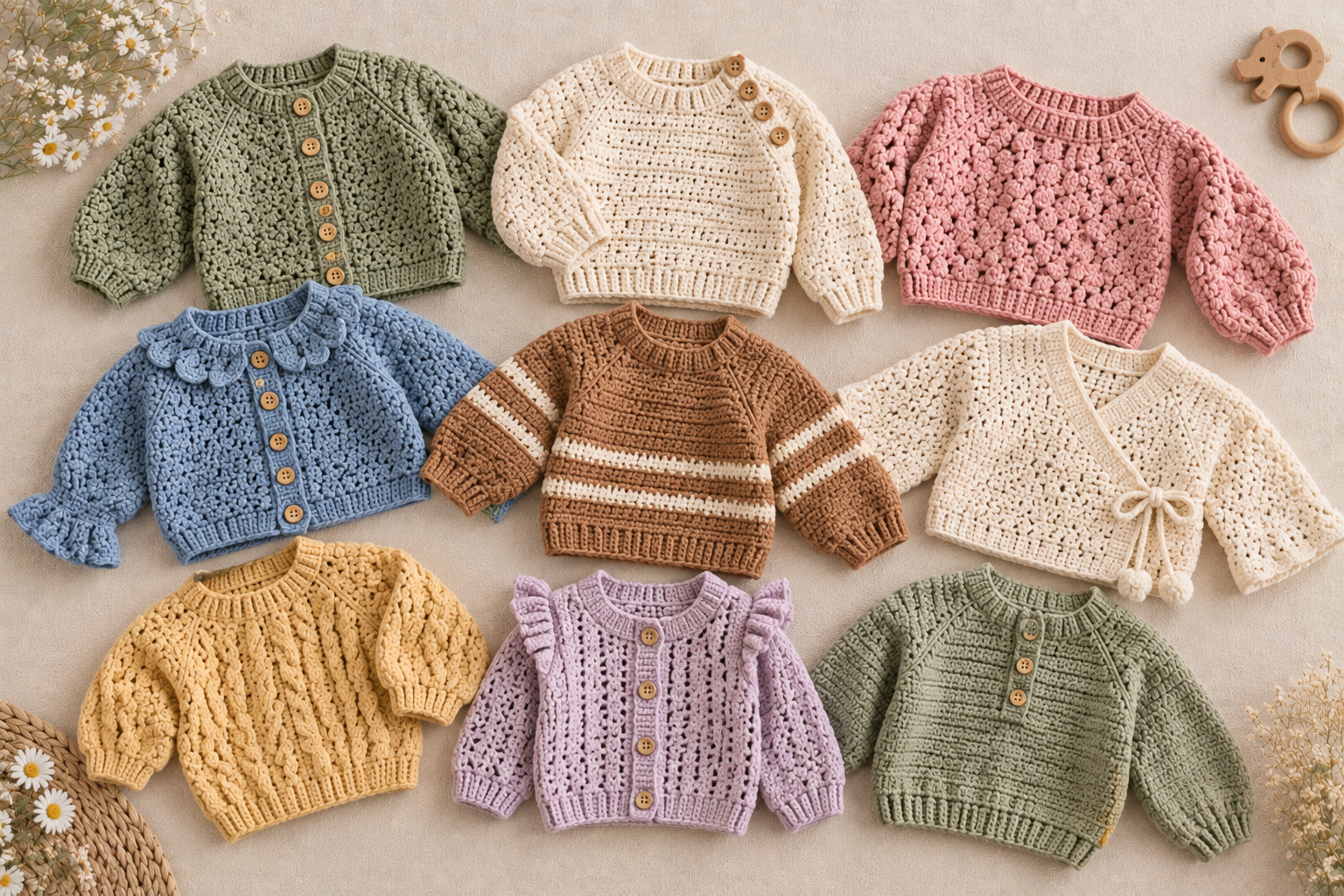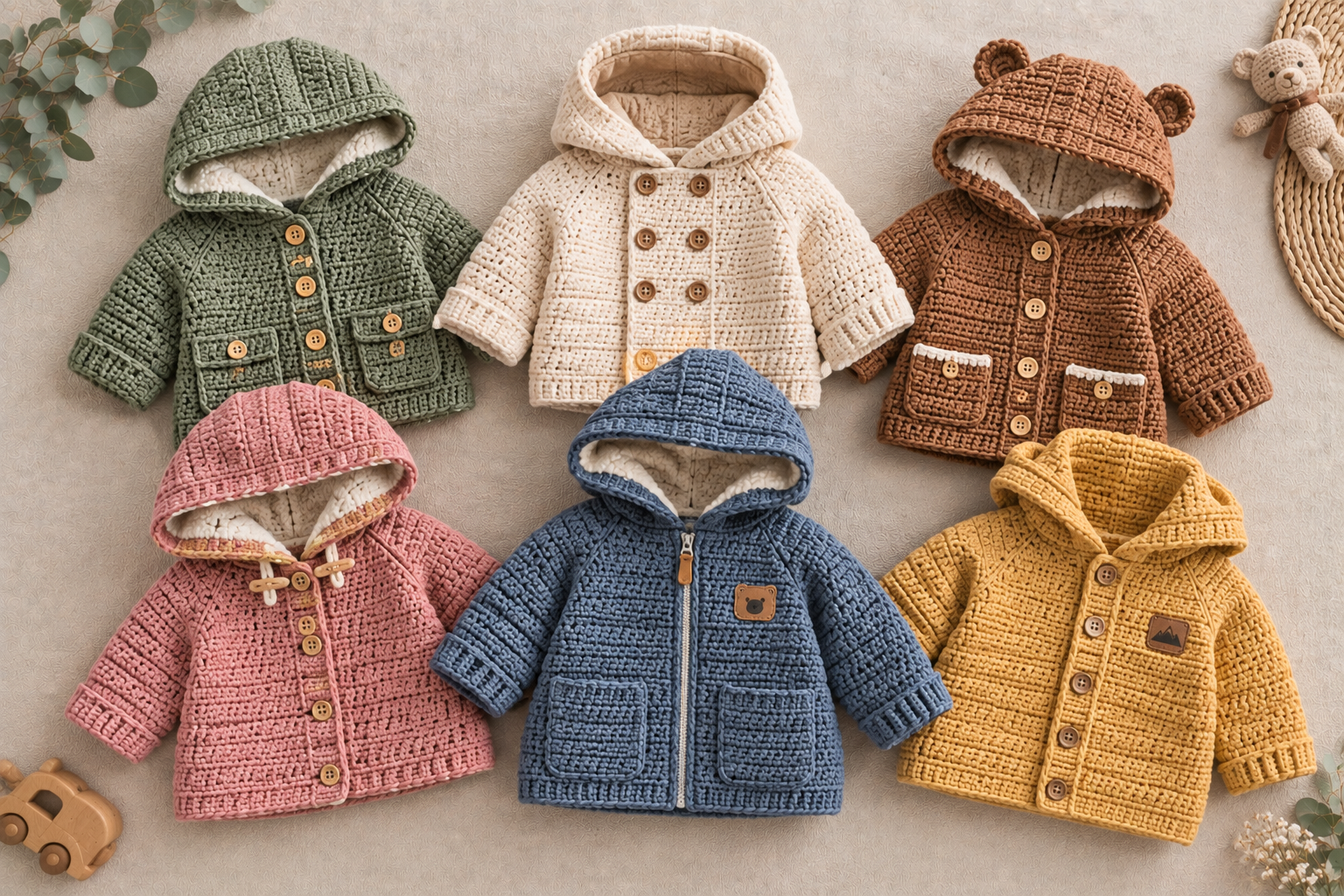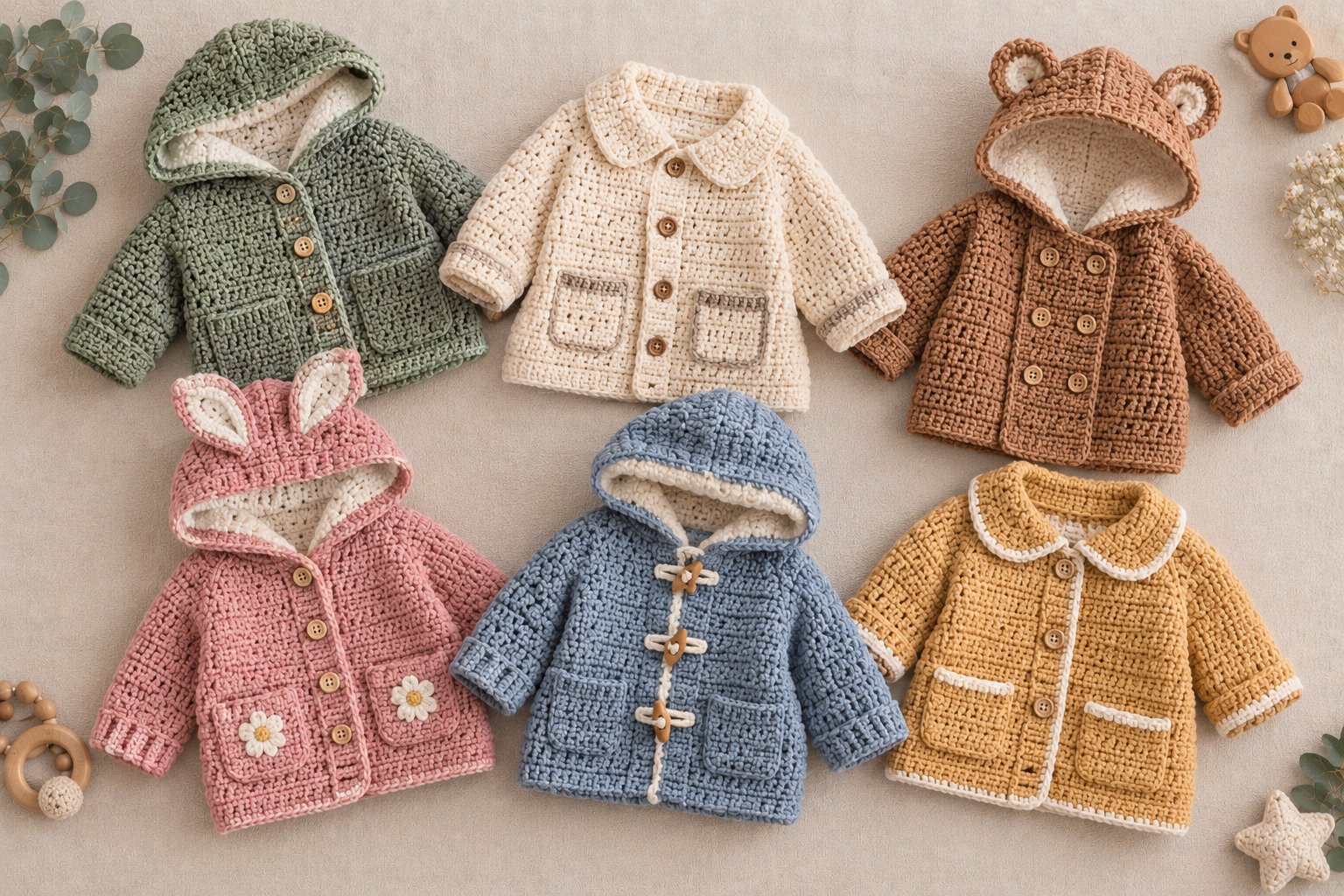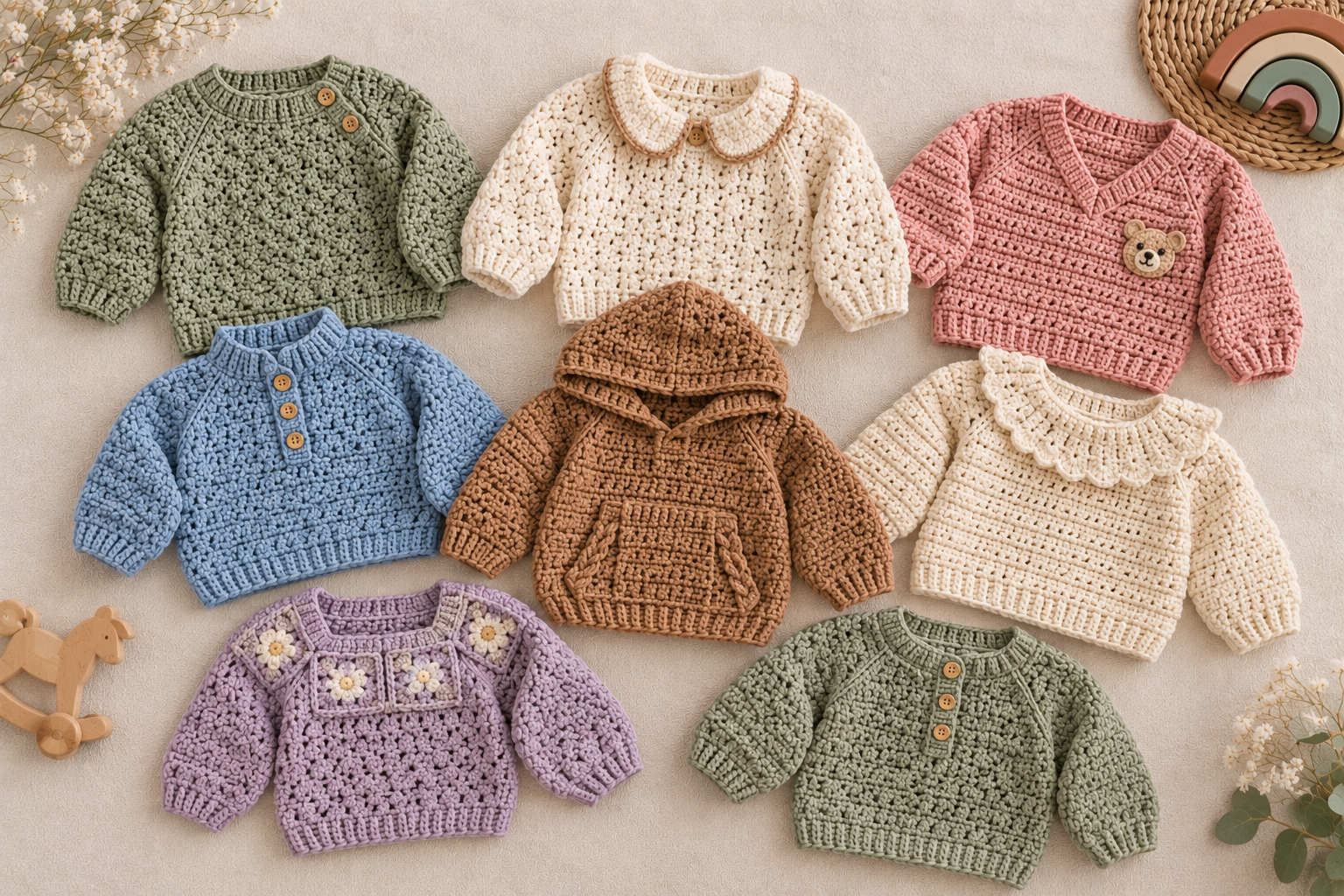
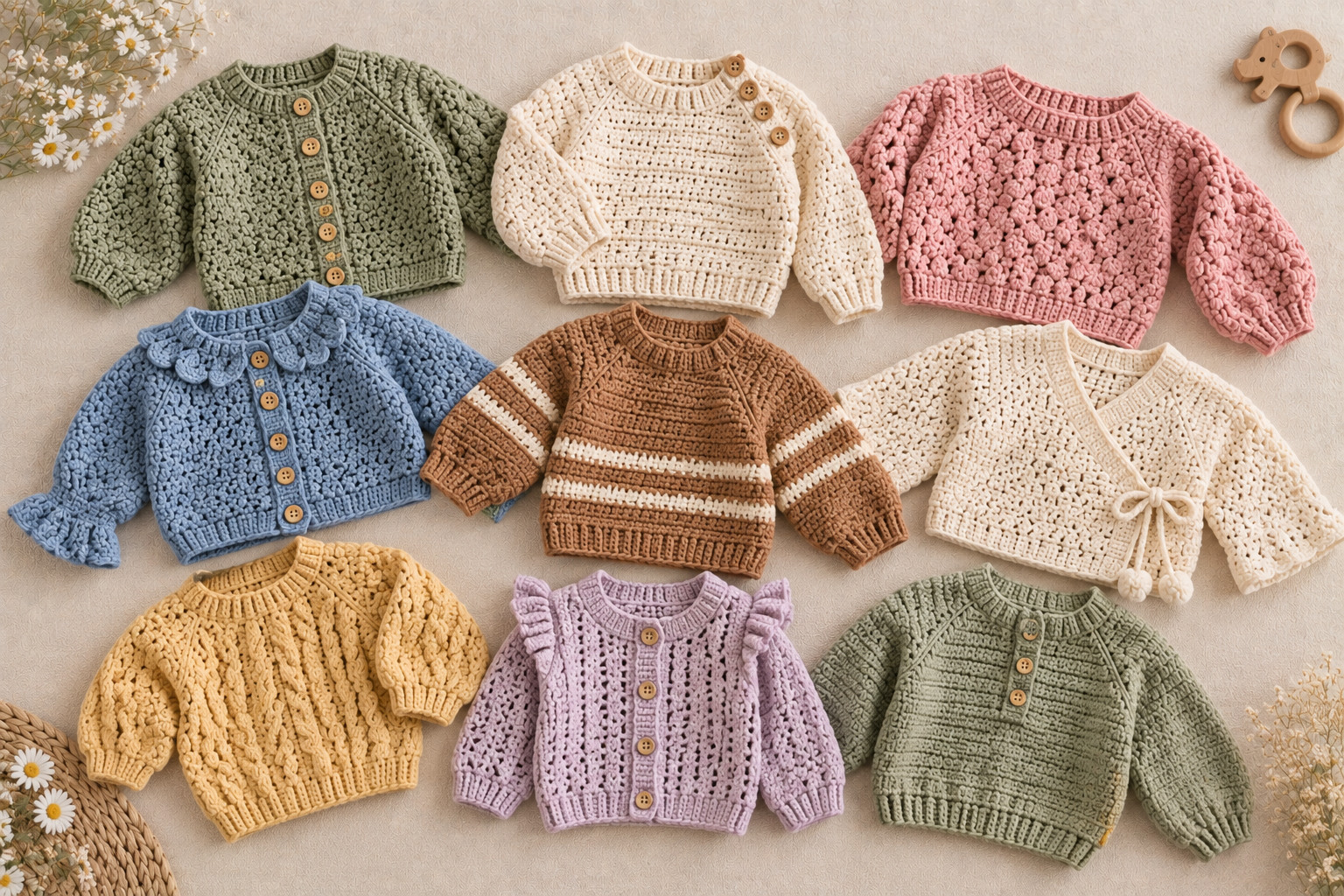
Change the sleeve shape on an otherwise identical sweater body and you’ll end up with a noticeably different finished garment, which is exactly why sleeve style is worth just as much attention as color or stitch pattern. Here are 13 easy free crochet baby sweater patterns to try, along with a look at how a few different sleeve shapes change both the look and the construction.
How Sleeve Shape Changes a Sweater’s Look
A fitted sleeve, set in at a defined shoulder seam, gives a sweater a neat, tailored look but needs the most careful shaping to fit smoothly into the armhole. A dolman sleeve skips that separate seam entirely, since it’s worked as one continuous piece with the body, which makes it simpler to construct but gives the sweater a looser, more draped silhouette through the upper arm. A bell sleeve stays fitted near the shoulder and then flares out toward the cuff, while a puff sleeve does the opposite, gathering extra fullness right at the shoulder cap before narrowing back down to a fitted lower arm. None of these shapes is inherently better, they just read differently once finished, so it’s worth picking based on the overall look you’re after rather than defaulting to whichever is most familiar.
13 Crochet Baby Sweater Patterns to Try
1. The Boatneck Sweater
A wide, shallow neckline that sits close to the collarbone rather than rising up the neck gives this sweater a relaxed, slightly wider silhouette across the shoulders. It’s a simple neckline change that gives an otherwise plain sweater a different overall proportion.
2. The Dolman Sleeve Sweater
Worked as one continuous piece with the body rather than a separately set sleeve, this design has a loose, draped fit through the upper arm and is genuinely one of the simplest sweater constructions to follow. Skipping the sleeve-setting step also makes it one of the faster projects on this list.
3. The Cropped Sweater
Worked a few rounds shorter than a standard body length and finished with a snug ribbed band, this sweater sits higher at the waist, giving it a slightly different proportion than a full-length design. It pairs especially well over a onesie or leggings.
4. The Ombré Fade Sweater
A gradual color transition from a deep shade at the shoulders to a much lighter one at the hem turns a simple color choice into the main design feature. A gradient or self-striping yarn is the easiest way to get a smooth fade without managing several separate skeins.
5. The Chevron Ripple Sweater
A zigzag stitch pattern worked across the body and sleeves creates a wavy, dynamic texture that stands out even in a single color. It looks especially sharp worked in two alternating shades to emphasize the zigzag line.
6. The Basketweave Sweater
Alternating blocks of front-post and back-post stitches create a woven, criss-cross texture across the body, giving this sweater a more tailored look than a plain stitch. It’s a good next stitch to try once you’re comfortable with basic post stitches.
7. The Popcorn Stitch Sweater
Small, raised popcorn stitches scattered across the chest in a simple spaced-out pattern add texture without covering the whole surface. It’s an easy way to add detail while keeping most of the sweater quick, plain single or double crochet.
8. The Two-Tone Colorblock Sweater
Rather than stripes, this design splits the body into solid color sections, like a contrasting yoke or sleeves in a different shade than the body, meeting at clean, deliberate lines. It only needs one or two color changes to pull off.
9. The Waffle Stitch Sweater
A grid of small raised bumps worked across the body adds warmth and texture, giving this sweater a cozier look than a smooth stitch. It’s a satisfying stitch pattern to practice on a project with more surface area than a hat or a pair of booties.
10. The Puff Sleeve Sweater
Extra stitches worked into the top of each sleeve cap, then gathered slightly at the shoulder seam, create a rounded, voluminous sleeve that stands out from a plain fitted one. The rest of the sleeve narrows back down to a standard fit below the cap.
11. The Bell Sleeve Sweater
Fitted through the upper arm and gradually flared with added stitches toward the cuff, this sleeve shape gives the sweater a softer, more feminine silhouette than a straight or fitted sleeve. The flare is created gradually over several rows rather than all at once.
12. The Lace Panel Sweater
A single column of an open, decorative stitch worked up the center front breaks up an otherwise plain body with one delicate detail. Keeping the panel narrow enough to still show off the surrounding plain stitching is what makes this design work.
13. The Hooded Sweater
A soft, attached hood working as an extension of the neckline adds extra warmth and a cozy, casual look to a basic pullover shape. The hood is typically worked as two mirrored pieces seamed together at the top and back.
Choosing the Right Sleeve for Your Skill Level
If you’re newer to sweater construction, start with the dolman sleeve design, since it skips the separate sleeve-setting step almost entirely. The bell and puff sleeve designs ask for a bit more shaping attention, so they’re worth saving until you’ve finished at least one simpler sweater first.
Common Questions
Which Sleeve Shape Is Easiest for a Beginner?
A dolman sleeve is the most forgiving starting point, since it’s worked as part of the body rather than shaped and set in separately. A fitted or bell sleeve is a better second project once you’re comfortable with basic armhole shaping.
Which of These 13 Styles Is Fastest to Finish?
The dolman sleeve and boatneck sweaters are both quick projects, since neither requires a separate sleeve-setting step or an added detail like a hood or lace panel. The hooded and lace panel designs generally take the longest.
How Long Does It Take to Crochet a Baby Sweater?
Most of these sweaters take somewhere between 6 and 12 hours, with more detailed designs like the hooded or lace panel sweater generally taking longer because of their added construction steps.
What Yarn Works Best for These Sweater Styles?
A soft, machine-washable cotton, cotton blend, or baby-weight acrylic suits most of these designs well, while a gradient or self-striping yarn is worth seeking out specifically for the ombré fade sweater.
How Much Yarn Do These Patterns Use?
Most use somewhere between 400 and 800 yards of worsted or DK-weight yarn, with fuller designs like the puff sleeve or hooded sweater using a bit more because of their added volume or extra piece.
Can I Swap One Sleeve Style for Another on the Same Pattern?
In many cases, yes, since the body of the sweater usually stays the same regardless of sleeve shape. Swapping a fitted sleeve for a dolman sleeve is generally the simplest change, since it removes a construction step rather than adding one.
Is a Cropped Sweater Still Warm Enough for Everyday Wear?
It depends on how it’s paired. A cropped sweater worn over a onesie or a pair of leggings covers less of the torso than a full-length design, so it’s better suited to layering indoors or on a mild day than as the sole warm layer outdoors.
Final Thoughts
From a relaxed dolman sleeve to a flared bell cuff, these 13 sweaters show just how much a single sleeve shape can change the character of an otherwise similar garment. Pick whichever style and silhouette suits your skill level, and you’ll have a genuinely distinctive little sweater ready before long.