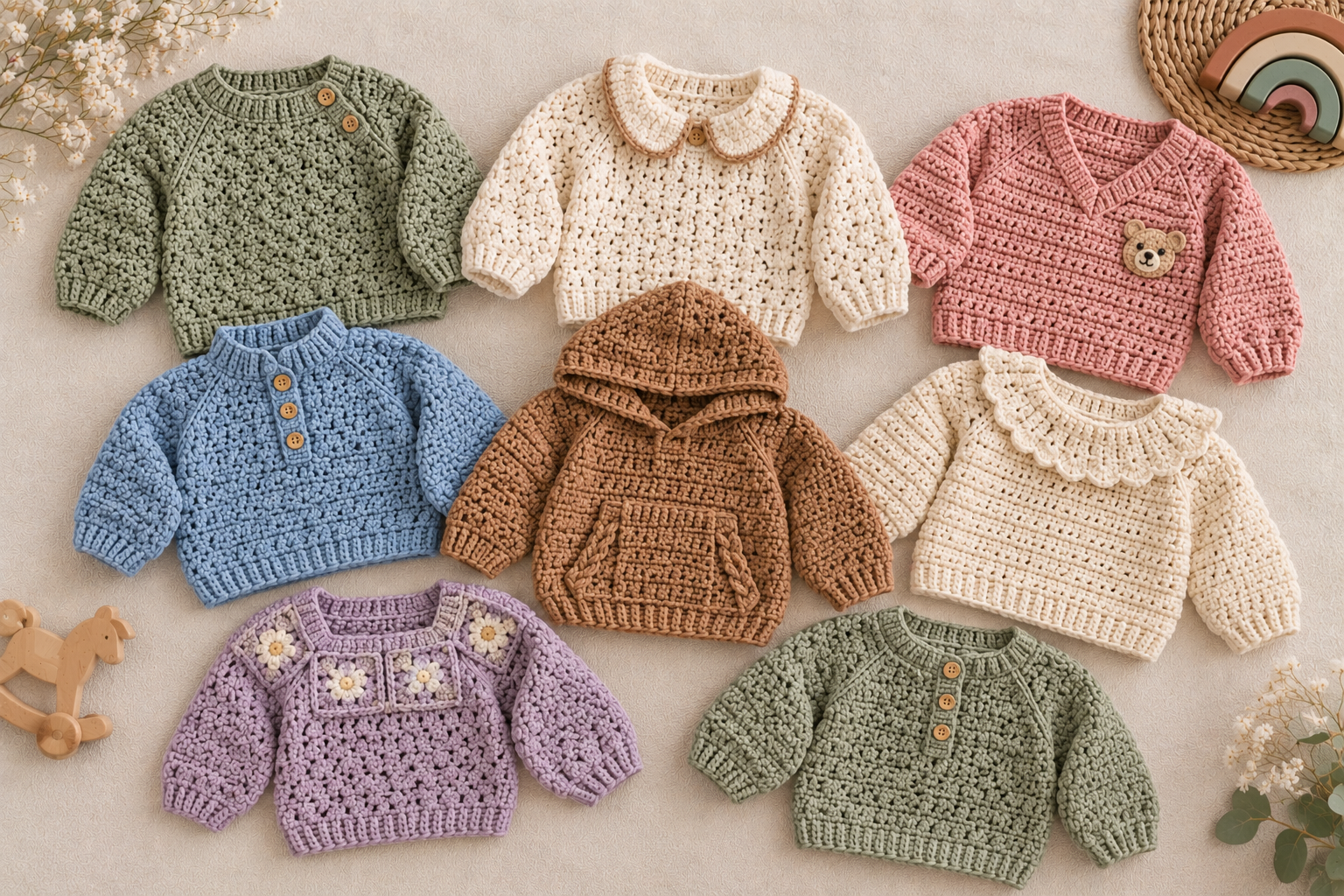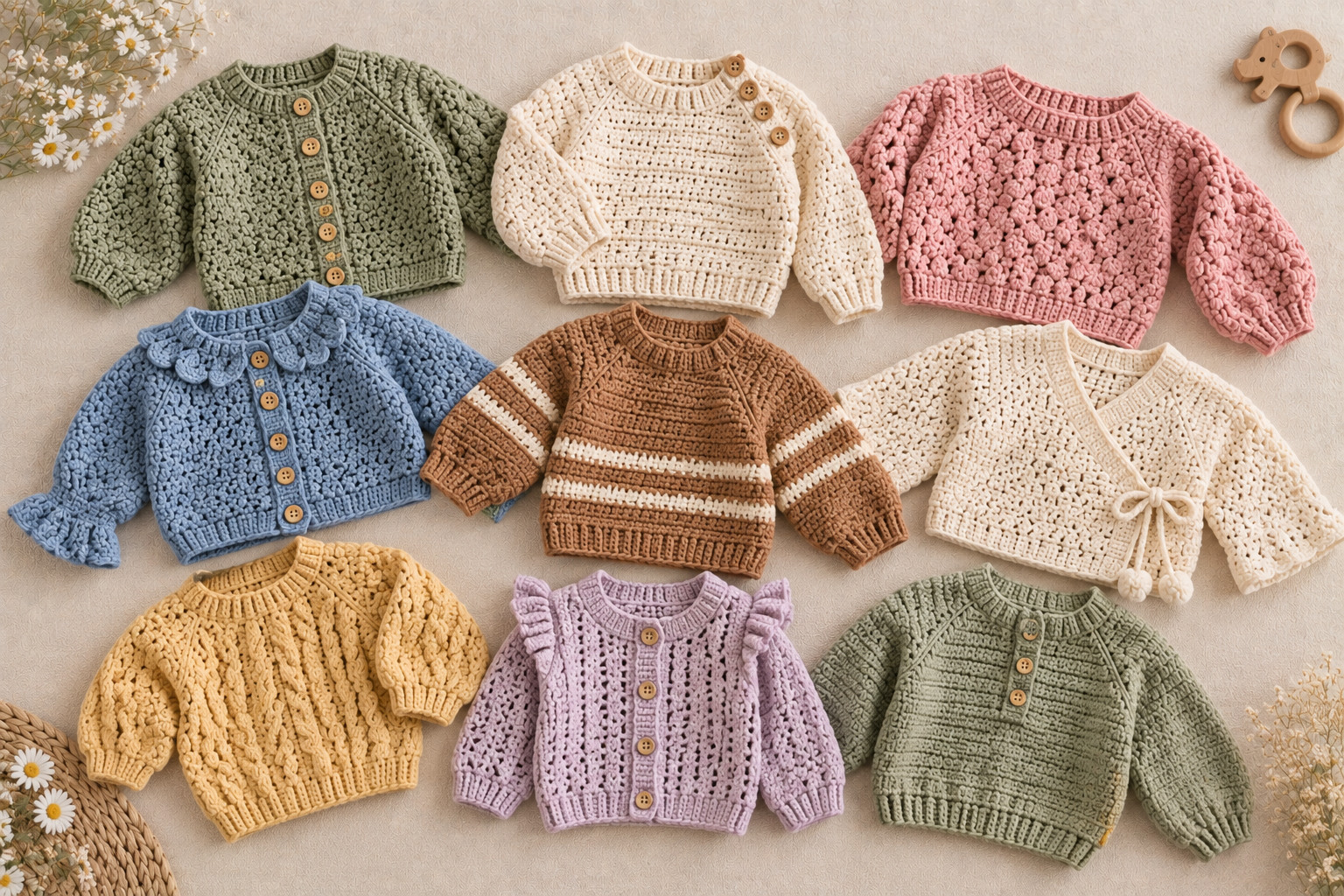
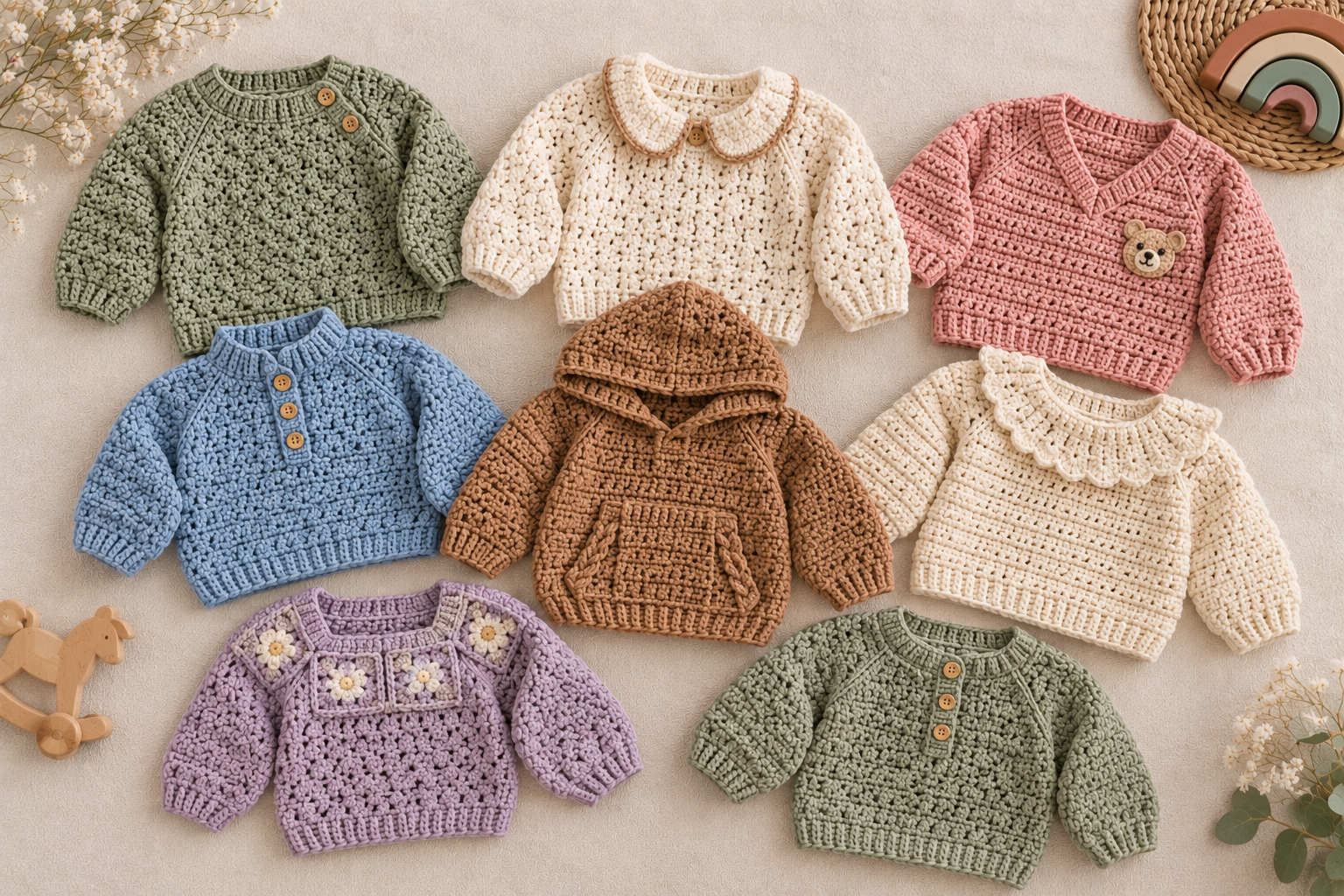
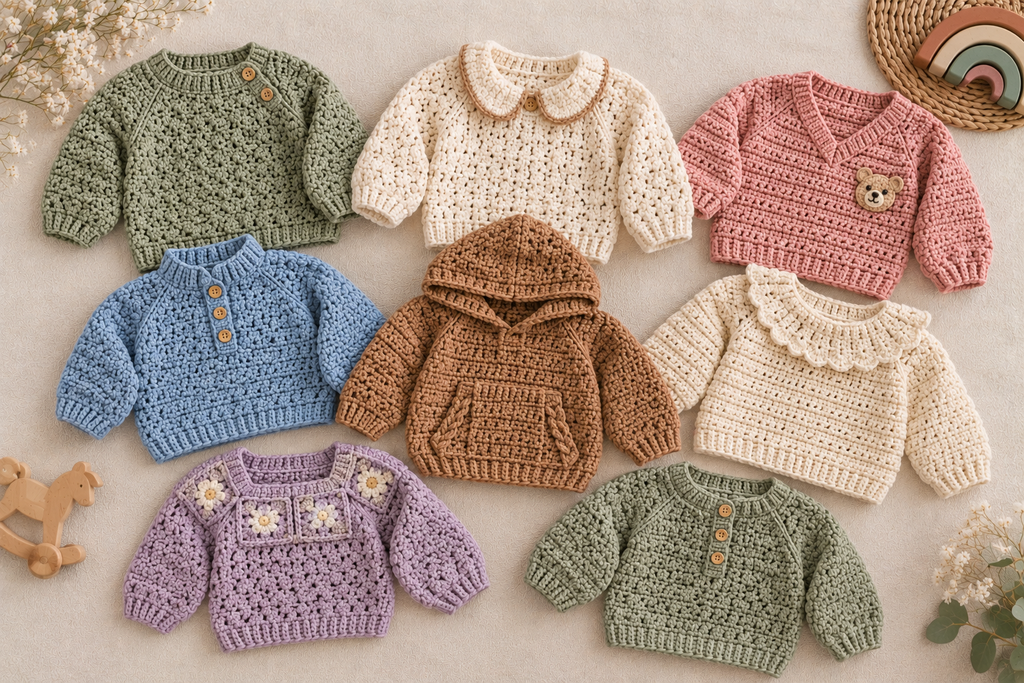
Unlike a cardigan, a pullover sweater has no front opening to make dressing easier, which means getting a baby’s head through the neckline is really the one detail every pattern has to solve well. Here are 7 crochet baby sweater patterns to try, along with a look at the small design choices that make a pullover easier to get on and off.
Solving the Easy-On Problem
Because a baby’s head is often the widest part to get through a neckline, most crocheted pullovers rely on one of a few tricks to avoid a fight during dressing. A button-shoulder placket leaves one shoulder seam open and closed with a couple of buttons instead of fully joined, so the neckline can open wider just for that moment. An envelope neckline uses two overlapping layers of fabric at the back or front of the neck that stretch open without needing any actual closure. And a simply generous, stretchy ribbed neckline, worked a bit looser than the rest of the sweater, can be enough on its own for a younger baby with a smaller head. Whichever method a pattern uses, it’s worth checking for before starting, since retrofitting an opening into a finished sweater is much harder than planning for one from the start.
7 Crochet Baby Sweater Patterns to Try
1. The Classic Crew Neck Sweater
A simple, rounded neckline and plain body make this the most straightforward sweater on this list, and a good introduction to basic pullover shaping. Its unadorned look also makes it easy to dress up later with an appliqué or a contrast cuff.
2. The Raglan Pullover Sweater
Worked top-down with four diagonal increase lines separating the sleeves from the body, this sweater is largely seamless and grows as one continuous piece. It’s a natural next project once you’re comfortable with basic pullover construction.
3. The Button-Shoulder Sweater
One shoulder seam is left open and closed with two or three buttons instead of being fully joined, letting the neckline open wider for easier dressing. It’s a small construction change that makes a real practical difference for a wriggly baby.
4. The Turtleneck Sweater
An extra-tall, folded-over ribbed collar replaces the usual plain neckline, adding both warmth and a slightly more grown-up look than a standard crew neck. The taller collar needs a stretchier stitch than the rest of the body to go on comfortably.
5. The Fair Isle Colorwork Sweater
A small geometric motif worked in two or three colors using a stranded colorwork technique brings a folk-inspired pattern to the chest and sleeves. Carrying the unused color neatly across the back of the work takes some practice to keep even.
6. The Striped Sweater
Even bands of color worked across the body and sleeves give this sweater a bold, graphic look that’s simple to customize. It’s also a great way to work through several coordinating colors of leftover yarn from other baby projects.
7. The Textured Cable Sweater
A single raised, twisted cable worked up the center front adds structured texture and a cozier, more substantial look than a plain stitch. It’s a satisfying next step once you’re comfortable with basic cable shaping.
Getting the Fit Right
A pullover with too snug a neckline is one of the most common fit complaints with handmade baby sweaters, so it’s worth working a slightly looser gauge for just the neckline ribbing even if the rest of the sweater is worked at standard tension. Measuring the intended wearer’s head circumference and comparing it to the neckline’s stretched measurement before finishing off is the most reliable way to avoid this problem.
Common Questions
Why Don’t All Crochet Baby Sweaters Have an Opening?
A younger baby with a smaller head often doesn’t need one, since a generously sized, stretchy ribbed neckline can be enough on its own. An opening becomes more useful as the baby gets bigger relative to the neckline, or if the sweater is worked in a less stretchy stitch pattern.
Which of These 7 Styles Is Easiest for a Beginner?
The classic crew neck and striped sweaters are both good starting points, since neither requires an added closure or a new stitch pattern. Save the fair isle and cable designs for once you’re comfortable with the core body and sleeve shaping.
How Long Does It Take to Crochet a Baby Sweater?
Most of these sweaters take somewhere between 6 and 12 hours, similar to a cardigan, since the body and sleeve construction is largely the same. The fair isle and cable designs generally take longer because of their added stitch detail.
What Yarn Works Best for a Baby Sweater?
A soft, machine-washable cotton, cotton blend, or baby-weight acrylic suits most of these designs well for everyday wear, since a sweater gets washed as often as any other everyday garment.
How Much Yarn Does a Baby Sweater Use?
Most of these sweaters use somewhere between 400 and 800 yards of worsted or DK-weight yarn, depending on size, similar to a comparable cardigan.
Is a Button-Shoulder Opening Safe for a Baby?
A large, securely sewn button, checked periodically to make sure it hasn’t loosened, is generally fine for a sweater worn during supervised time, though it’s worth choosing a snap-style closure or a stretchy envelope neckline instead for a very young baby to avoid any small hard pieces near the neck and shoulders.
Can I Add an Easy-On Opening to a Pattern That Doesn’t Include One?
Yes, to an extent. Leaving one shoulder seam unjoined and adding a couple of buttons, or working the neckline ribbing a size looser than the pattern calls for, are both simple ways to make an existing pullover pattern easier to get over a baby’s head.
Can I Turn a Sweater Pattern Into a Cardigan, or the Other Way Around?
Not directly, since a pullover is worked as a single closed piece while a cardigan needs a front opening built in from the start. It’s easier to plan which one you want before beginning rather than trying to convert a finished piece afterward.
Can I Make a Matching Hat to Go With a Sweater?
Yes, and it’s a popular way to round out a baby gift. Repeating a detail from the sweater, like a stripe pattern or the colorwork motif, on a simple matching hat ties the two pieces together without needing to design anything new.
Final Thoughts
From a classic crew neck to a colorwork motif, these 7 sweaters show just how much a small construction choice, like where and how the neckline opens, can shape the whole wearing experience. Pick whichever style suits your skill level and the baby’s age, and you’ll have a genuinely practical little sweater ready before long.