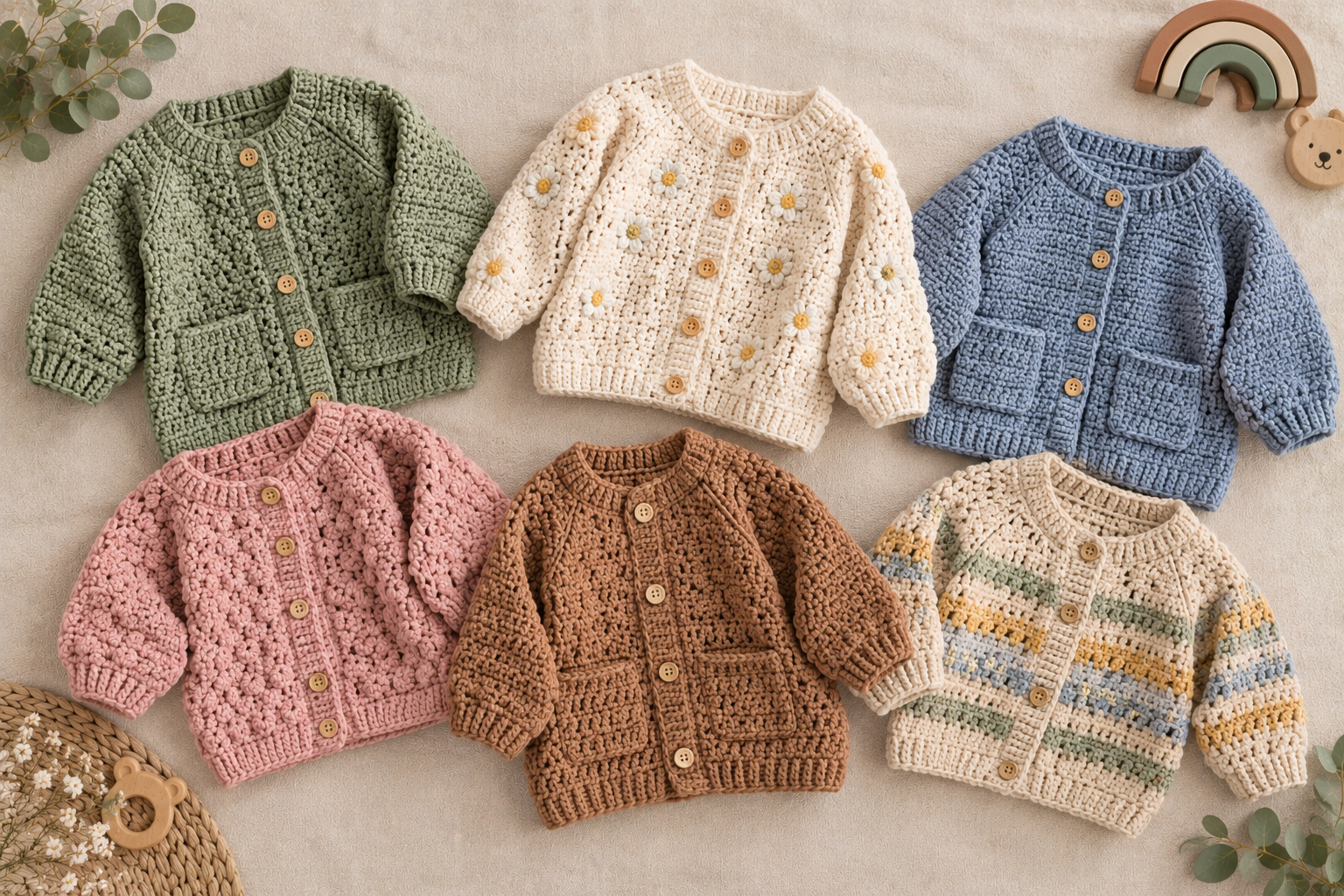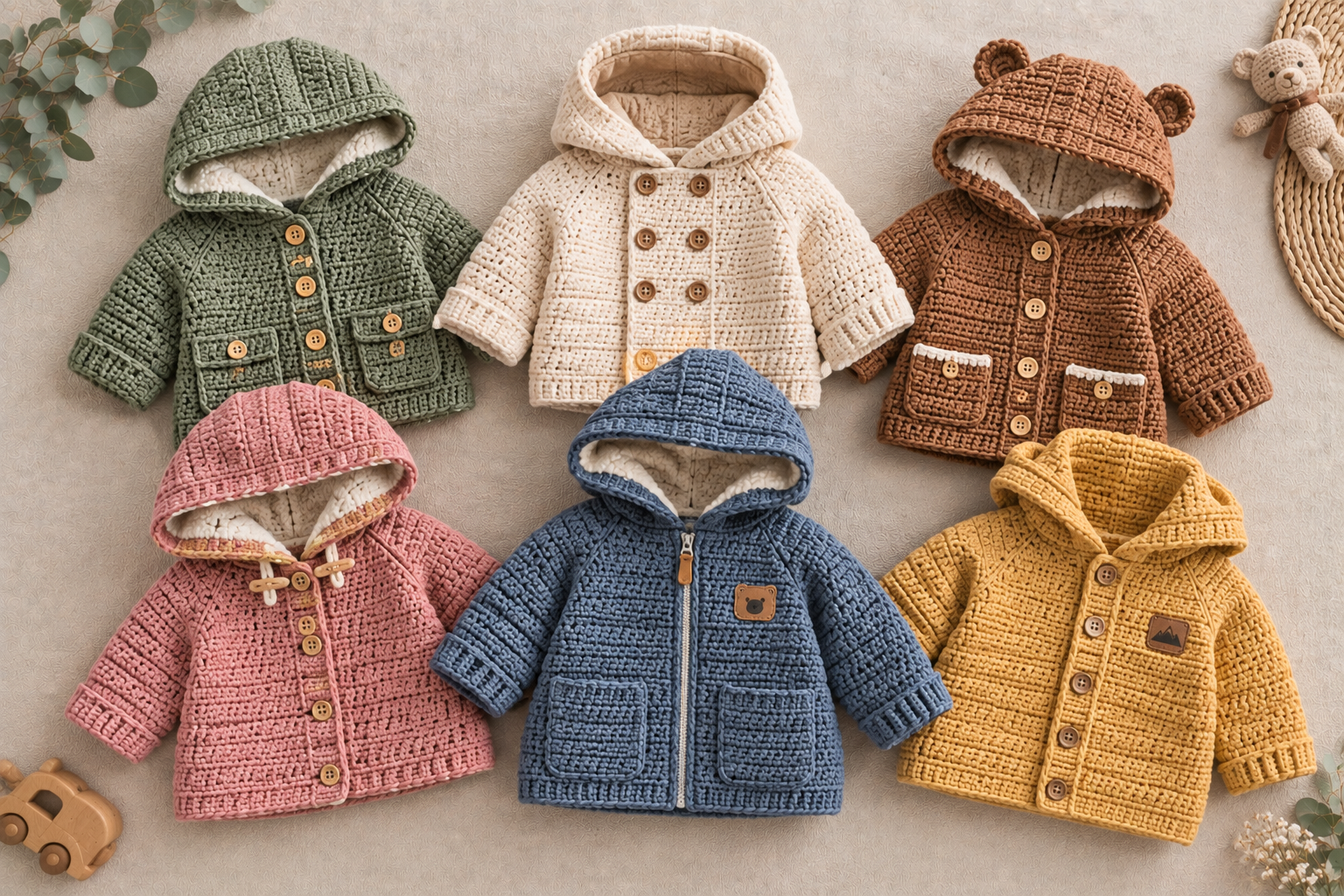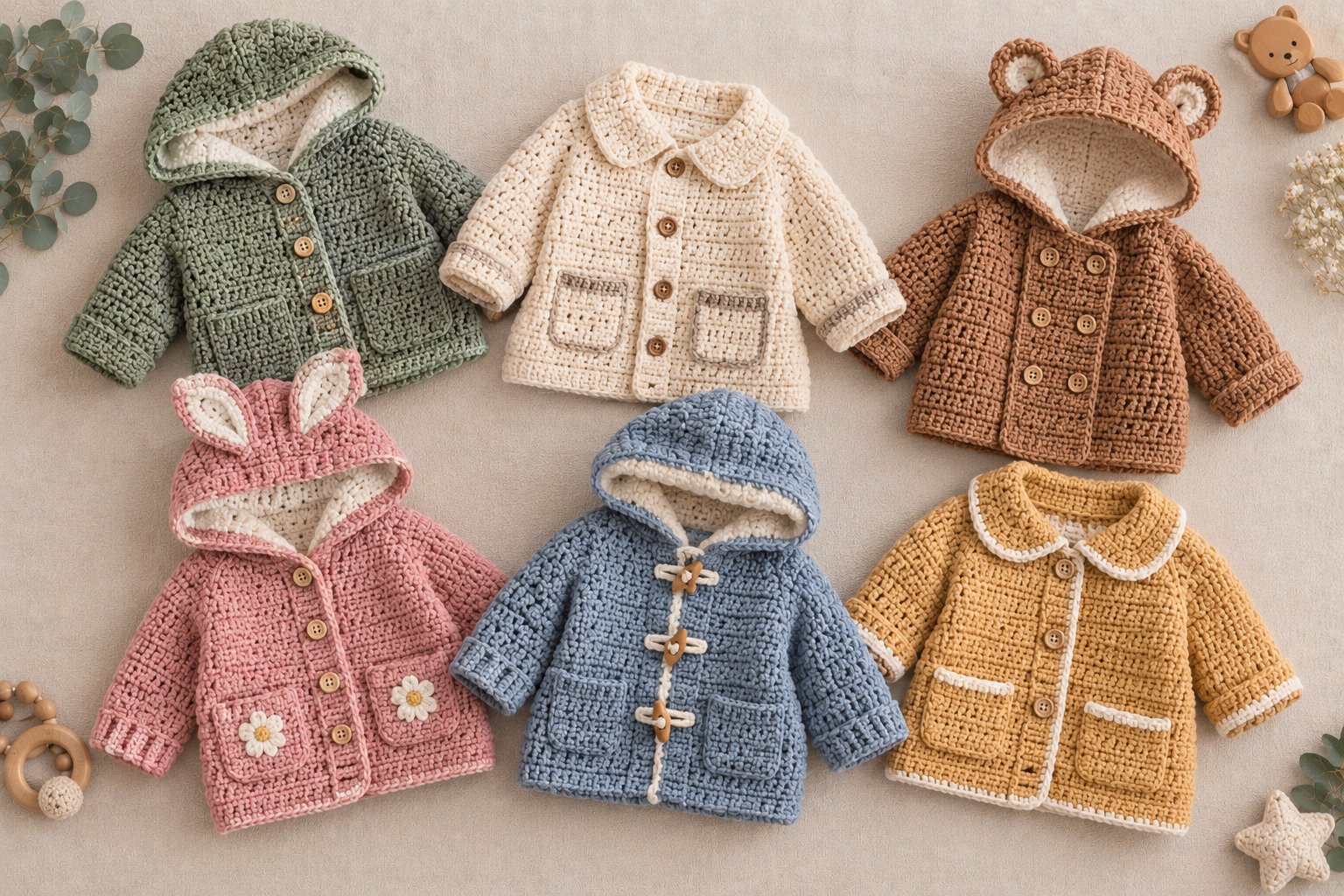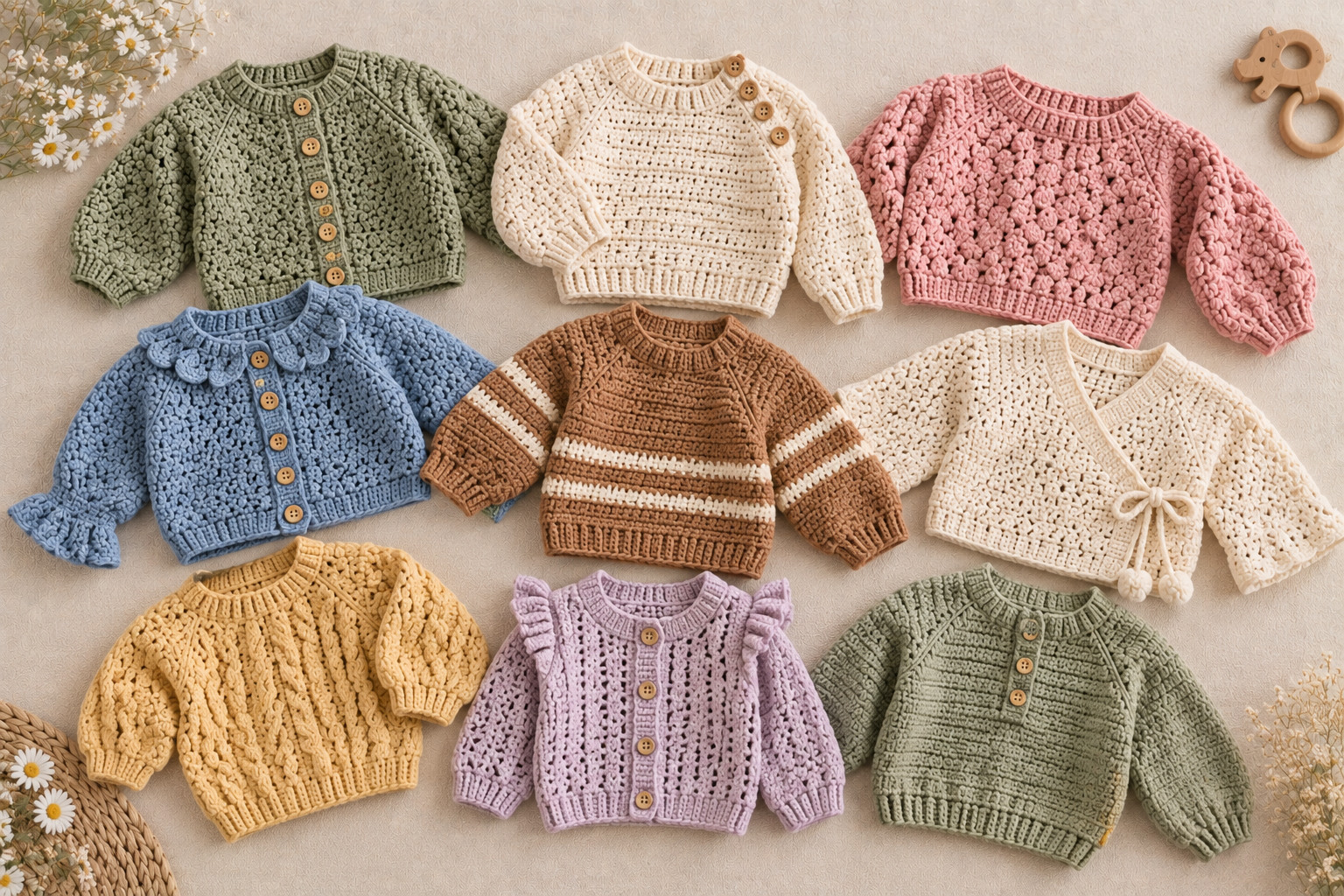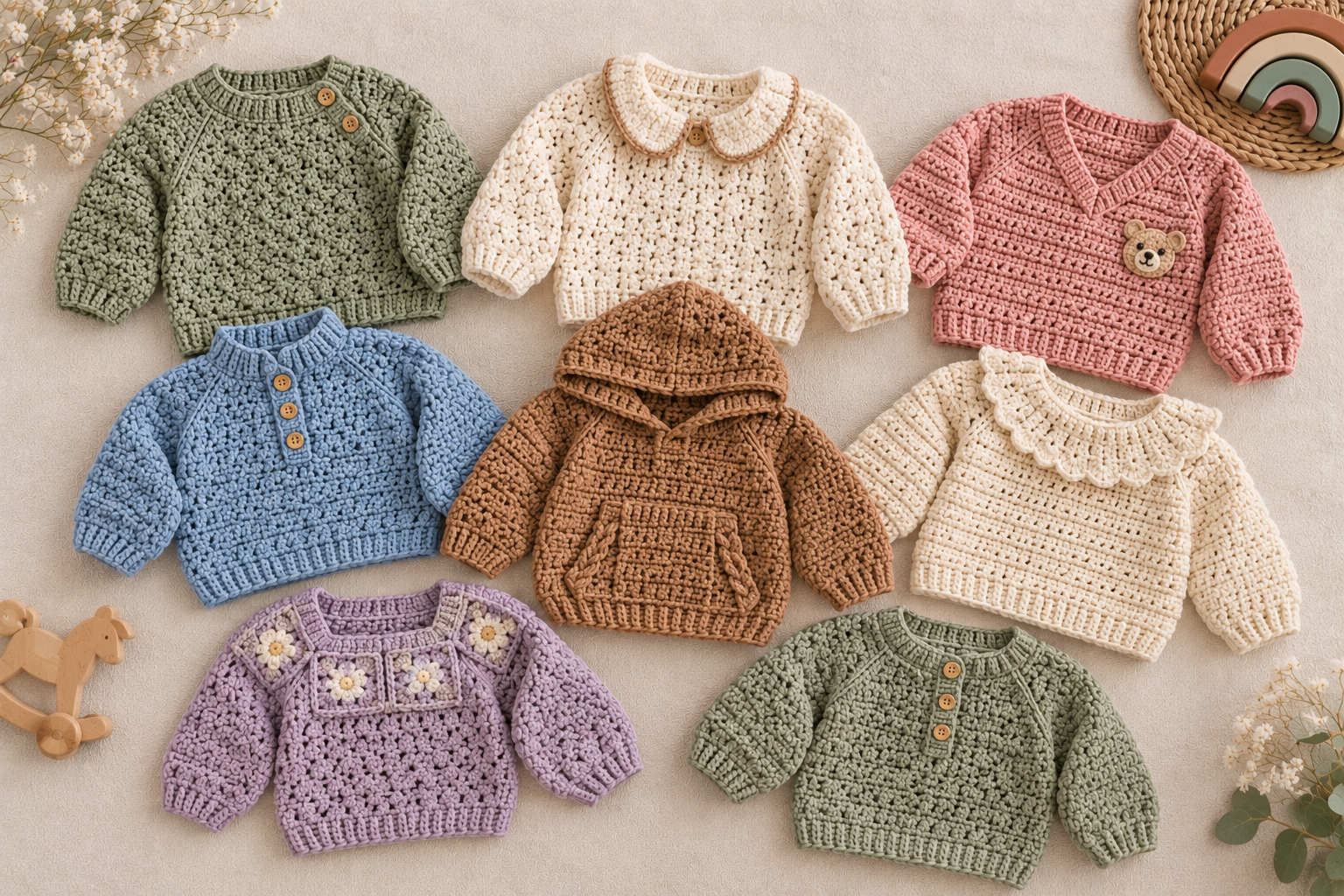
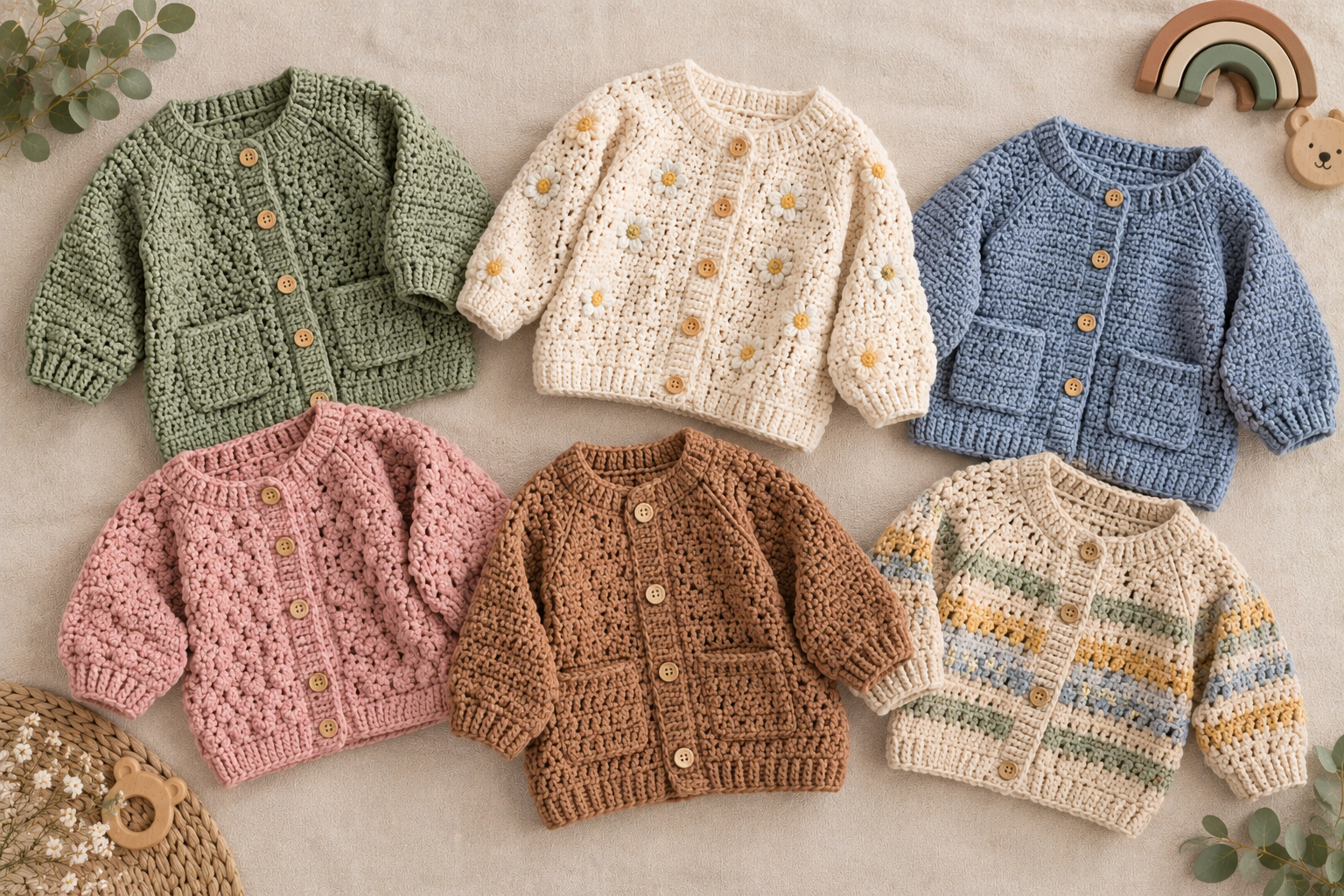
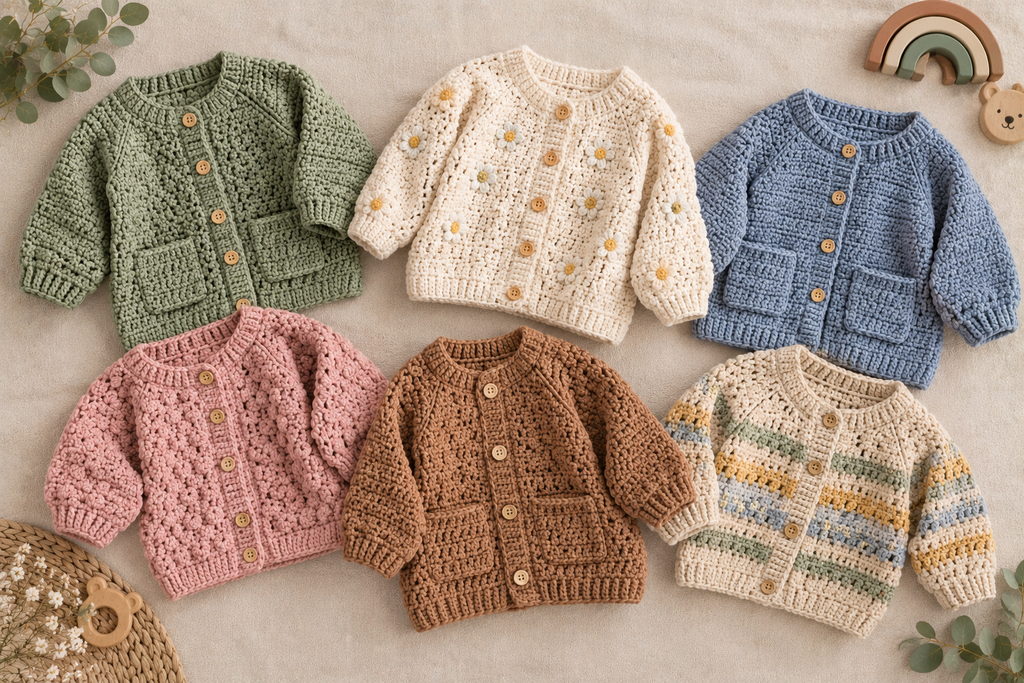
A baby outgrows clothing so quickly that a little extra planning at the pattern stage can genuinely stretch how long a handmade cardigan stays wearable. Here are 9 free crochet baby cardigan patterns you’ll love, along with a few ways to build in some growing room from the start.
Building In Room to Grow
A few small choices can add real wearable life to a baby cardigan without changing the overall design. Working the sleeves a bit longer than needed and turning back the cuffs gives you a hidden length reserve that can be let down later as the baby’s arms grow. A tie or drawstring closure, rather than fixed buttons sewn at an exact spot, naturally adjusts to a slightly bigger or smaller chest without needing to be resewn. And sizing the body with a little extra ease rather than a snug fit means the cardigan stays comfortable to wear open over a bigger outfit even after it’s technically too small to close.
9 Crochet Baby Cardigan Patterns to Try
1. The Bolero Cardigan
Cropped short at the waist with no closure at all, this open-front style is worn more as a layering piece than a full cardigan, which makes it a quick, low-commitment project. It’s especially nice over a dress for a photo or special occasion.
2. The Bubble Hem Cardigan
A few rounds of decreases worked just above the bottom edge, followed by a plain ribbed band, gather the hem inward for a soft, rounded silhouette that’s different from a straight-hanging cardigan. The gathered shape adds a bit of built-in room through the body.
3. The Lace Yoke Cardigan
An open, decorative stitch pattern worked across the shoulders and upper chest, with the rest of the cardigan left plain, draws the eye upward and gives this design a delicate, dressed-up look. It’s a nice way to introduce one detailed section without committing to lace across the whole piece.
4. The Puff Sleeve Cardigan
Extra stitches worked into the top of each sleeve cap, then gathered slightly at the shoulder seam, create a rounded, voluminous sleeve that stands out from a plain fitted one. The extra volume is worked into just the cap, so the rest of the sleeve stays simple.
5. The Peter Pan Collar Cardigan
A small, rounded flat collar worked separately and attached at the neckline brings a classic, storybook look to an otherwise plain cardigan. The collar is a quick piece on its own, so it doesn’t add much time to the base pattern.
6. The Cable Panel Cardigan
A single raised, twisted cable worked up each front panel adds structured texture down the length of the cardigan, framing the closure in a way a plain stitch can’t. It’s a satisfying next step once you’re comfortable with basic cable shaping.
7. The Two-Tone Colorblock Cardigan
Rather than stripes, this design splits the body into solid color sections, like a contrasting yoke or a different-colored bottom band, meeting at clean, deliberate lines. It’s a graphic, modern option that only needs one or two color changes.
8. The Chevron Ripple Cardigan
A zigzag stitch pattern worked across the body and sleeves creates a wavy, dynamic texture that reads clearly even in a single color, and even more so worked in two alternating shades. It’s a distinctive alternative to a plain or striped surface.
9. The Side-to-Side Cardigan
Instead of working top-down or joining separate pieces, this cardigan is worked as one continuous piece from one sleeve cuff, across the back, and out to the other cuff, with the fronts added afterward. It’s an unusual construction method worth trying once you’re comfortable with the more common approaches.
Choosing a Style for the Season
A bolero or lace yoke cardigan suits a warmer season or a dressier occasion, since neither is meant for heavy insulation, while a cable panel or chevron ripple design worked in a slightly heavier yarn holds up better as a cooler-weather layering piece. Keeping the intended season in mind while choosing a yarn weight matters just as much as the stitch pattern itself.
Common Questions
How Much Growing Room Should I Add to a Baby Cardigan?
A little ease through the body, along with an inch or two of extra sleeve length that can be turned back as a cuff, is usually enough to extend a cardigan’s wearable life by a few months without making it look obviously oversized when first worn.
Which of These 9 Styles Is Easiest to Make?
The bolero and two-tone colorblock cardigans are both good starting points, since neither requires an attached collar, a cable pattern, or an unusual construction method. Save the side-to-side and cable panel designs for once you’re comfortable with the basics.
How Long Does It Take to Crochet a Baby Cardigan?
Most of these cardigans take somewhere between 5 and 10 hours, with the cable panel and Peter Pan collar designs generally taking a bit longer because of their added detail. The bolero finishes fastest, since it’s cropped and skips a closure entirely.
What Yarn Works Best for These Cardigan Styles?
A soft, machine-washable cotton, cotton blend, or baby-weight acrylic suits most of these designs, while a slightly heavier yarn is worth choosing specifically for the cable panel or chevron ripple cardigan if it’s meant for cooler weather.
How Much Yarn Do These Patterns Use?
Most use somewhere between 350 and 750 yards of worsted or DK-weight yarn, with the bubble hem and puff sleeve designs using a bit more because of their added fullness.
Can I Add a Tie Closure to Any of These Patterns Instead of Buttons?
Yes, in most cases. Since a tie is usually just a length of chain or a separately worked cord attached at the front edges, you can swap it in for buttons on almost any of these designs without changing the main body construction.
Is Side-to-Side Construction Harder Than Top-Down?
It’s not necessarily harder, just less familiar. Since the whole cardigan grows sideways from one cuff to the other, it can take a little longer to visualize how the finished shape comes together, but the individual stitches and shaping involved aren’t more advanced than a standard top-down design.
Can I Combine Details From Different Patterns on This List?
Yes, and it’s an easy way to make a design more your own. A Peter Pan collar added to the two-tone colorblock body, or puff sleeves added to the bubble hem cardigan, are both simple ways to mix elements from this list into a single piece.
Final Thoughts
From a quick cropped bolero to an unusual side-to-side construction, these 9 cardigans prove there’s more than one way to build the same basic garment. Pick whichever style and construction method suits your skill level, and you’ll have a genuinely wearable little cardigan ready before long.