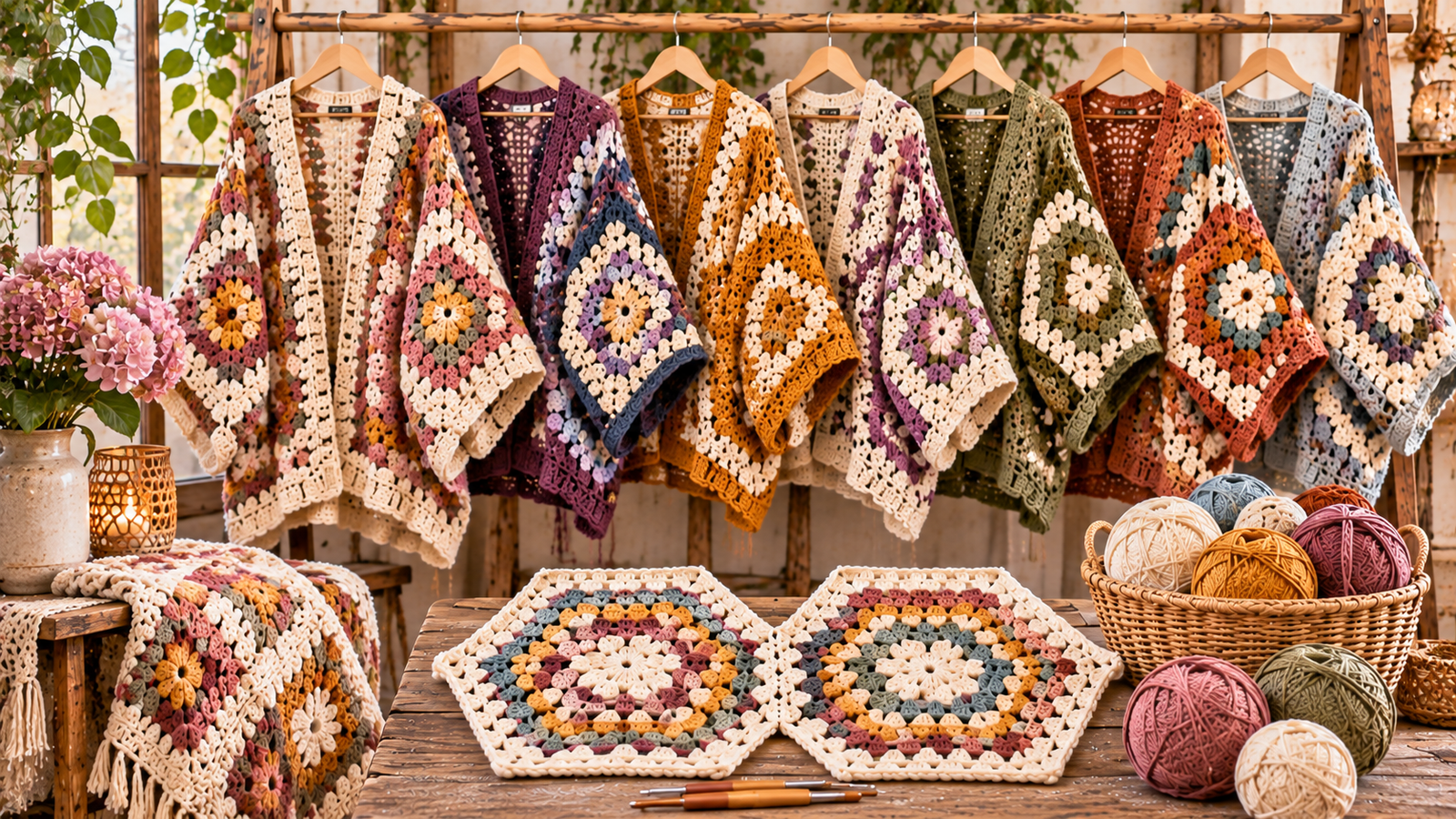
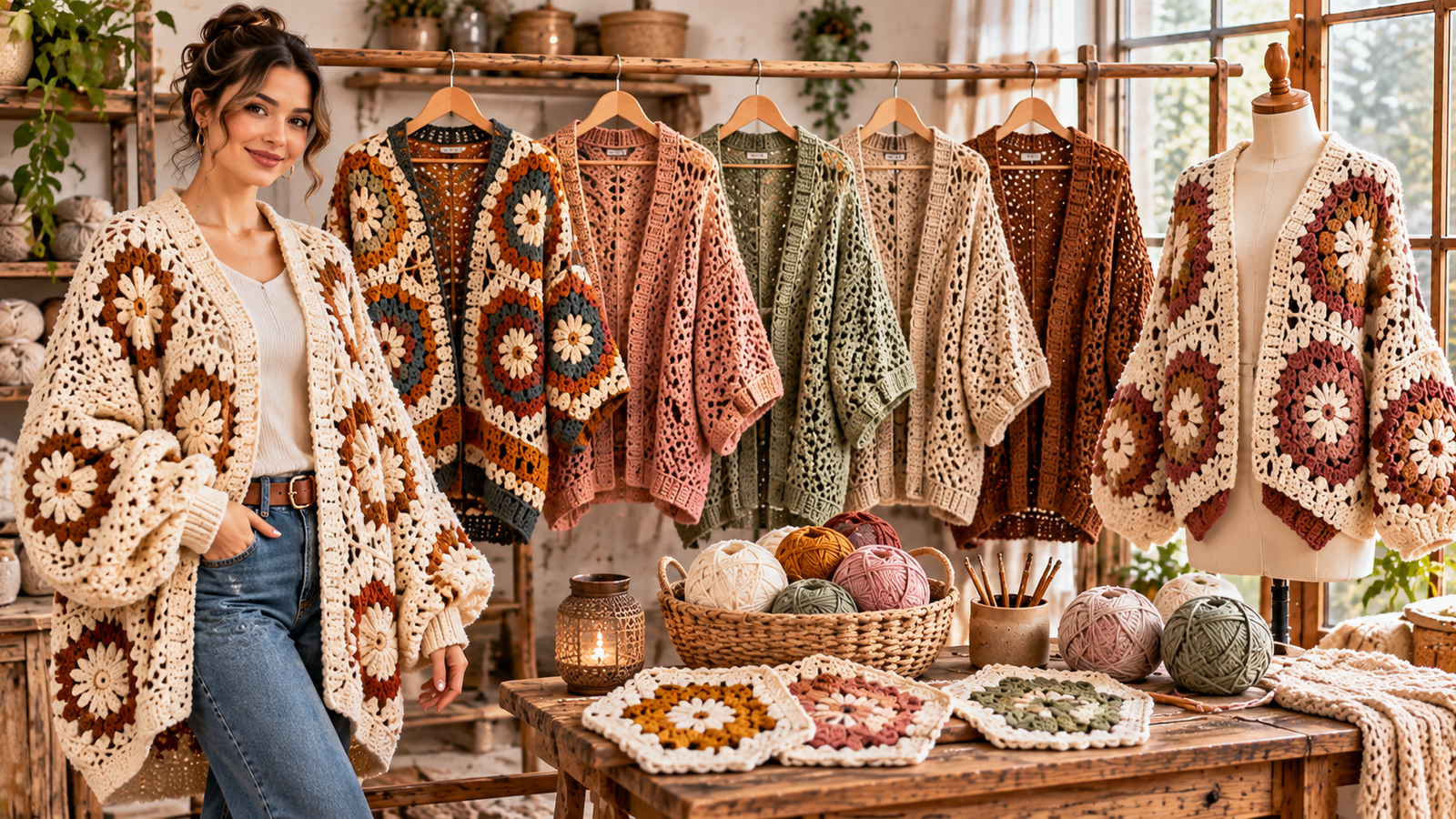
If you’ve ever wanted to crochet your own cardigan but felt intimidated by complicated shaping, a hexagon cardigan is a wonderful place to start. This popular crochet design is made using two large hexagon-shaped panels that are folded and joined to create the body and sleeves. With a little extra shaping and finishing, you can turn two simple crochet pieces into a beautiful handmade cardigan.
One of the best things about hexagon cardigans is how customizable they are. You can make them oversized and cozy, lightweight and elegant, colorful and playful, or simple enough for everyday wear. By changing the yarn, stitch pattern, sleeve length, and overall measurements, you can create a cardigan that matches your personal style.
Whether you’re a beginner learning the basics or an experienced crocheter looking for a new project, these eight hexagon cardigan designs offer inspiration for every skill level.
How Does a Crochet Hexagon Cardigan Work?
A traditional hexagon cardigan usually starts with two crocheted hexagons. Each piece is worked outward from the center, increasing at six corners to create a roughly hexagonal shape.
Once the two pieces reach the desired size, they are folded and joined along selected edges. This creates the main body and sleeves of the cardigan. The remaining front sections can be extended or finished with a border, while the sleeves can be adjusted to achieve the desired length and fit.
<text> </text>
The basic construction involves:
- Crocheting two matching hexagons.
- Folding each hexagon into the cardigan shape.
- Joining the panels along the back and selected sleeve edges.
- Adding length or shaping where needed.
- Finishing the neckline, front opening, cuffs, and hem.
The exact folding and joining method can vary depending on the design, so always follow the construction instructions for your chosen project.
1. Classic Granny Stitch Hexagon Cardigan
Skill level: Beginner
The classic granny stitch hexagon cardigan is one of the most recognizable versions of this style. It uses groups of double crochet stitches separated by chain spaces, creating a textured fabric with small openings.
This design is ideal for beginners because the repeating stitch pattern makes it easier to work through the two large panels without constantly learning new techniques.
Design features:
- Traditional granny stitch texture.
- Two matching hexagon panels.
- Relaxed, oversized fit.
- Simple sleeves that can be extended.
- Optional ribbed cuffs and hem.
For a timeless look, choose cream, beige, brown, or soft grey. If you prefer something more colorful, alternate several shades to create a beautiful striped effect.
Styling idea: Wear your finished cardigan over a simple white T-shirt with straight-leg jeans and ankle boots.
2. Chunky Crochet Hexagon Cardigan
Skill level: Beginner to Intermediate
If you love warm, oversized winter clothing, a chunky hexagon cardigan is a great project. Using bulky or chunky yarn creates a thicker fabric that feels cozy and gives the cardigan a relaxed silhouette.
Because the yarn is thicker, the hexagons generally grow faster than projects made with fine yarn. However, it’s important to pay attention to the finished measurements because bulky stitches can create a heavy garment.
Design features:
- Thick, cozy crochet fabric.
- Oversized body and sleeves.
- Wide ribbed cuffs.
- Deep front opening.
- Optional shawl-style collar.
Neutral colors such as oatmeal, caramel, charcoal, and chocolate brown work especially well.
Styling idea: Combine it with leggings, a fitted top, and knee-high boots for a comfortable winter outfit.
3. Solid Stitch Hexagon Cardigan
Skill level: Beginner
Not every hexagon cardigan needs a granny stitch pattern. A solid stitch design creates a smoother fabric with fewer openings, making it a practical option if you prefer a more covered and structured garment.
You can use half double crochet or another suitable stitch to create a consistent texture. Working in a solid stitch may also make it easier to add a clean front border and neat cuffs.
Design features:
- Smooth, consistent fabric.
- Minimalist appearance.
- Comfortable everyday fit.
- Simple neckline and front opening.
- Easy-to-customize sleeve length.
Choose a soft acrylic or wool blend that provides enough drape without becoming too heavy.
Styling idea: Wear it with tailored trousers and a fitted top for a simple, polished outfit.
4. Colorful Striped Hexagon Cardigan
Skill level: Intermediate
A striped hexagon cardigan is a fun way to experiment with color. By changing yarn shades as you work, you can create horizontal stripes across the cardigan panels.
You can choose two contrasting colors for a bold design or several complementary shades for a softer appearance.
Design features:
- Alternating color sections.
- Classic hexagon construction.
- Contrasting cuffs and front edging.
- Optional matching collar.
- Personalized color combinations.
One useful tip is to plan your color sequence before starting. This helps ensure that both hexagons have matching stripes and the finished cardigan looks balanced.
Color combinations to try:
- Cream, caramel, and chocolate.
- Pink, lavender, and ivory.
- Sage green, beige, and white.
- Rust, mustard, and brown.
Styling idea: Keep the rest of your outfit simple so the colorful cardigan becomes the main feature.
5. Granny Square and Hexagon Combination Cardigan
Skill level: Intermediate
If you enjoy traditional crochet motifs, consider combining granny squares with a hexagon cardigan construction. This design introduces a decorative element while keeping the relaxed shape that makes hexagon cardigans so popular.
You can use granny squares as decorative panels on the back, sleeves, or front sections. Another option is to combine solid crochet sections with colorful motifs for a more balanced appearance.
Design features:
- Decorative granny square details.
- Solid or textured hexagon sections.
- Contrasting borders.
- Customizable color palette.
- Relaxed cardigan silhouette.
This project is especially useful for crocheters who have leftover yarn from previous projects.
Styling idea: Pair it with a simple black top, denim, and understated accessories for a modern handmade look.
6. Long Oversized Hexagon Cardigan
Skill level: Intermediate
For anyone who loves long layers, an oversized hexagon cardigan is a beautiful option. The extended body creates a cozy silhouette, while the open front makes it easy to wear over different outfits.
You can achieve the longer shape by adding rows to the body after joining the two hexagons. Depending on the construction, you may also need to adjust the front panels and lower edging to keep the cardigan balanced.
Design features:
- Extended body length.
- Relaxed shoulder fit.
- Long sleeves.
- Deep front opening.
- Optional side slits or a wide hem border.
A medium-weight yarn is often a good choice because it provides warmth without making the cardigan excessively heavy.
Styling idea: Wear it over a fitted turtleneck with slim trousers and boots for a cozy layered outfit.
7. Lightweight Summer Hexagon Cardigan
Skill level: Intermediate
A hexagon cardigan isn’t only for cold weather. With lightweight yarn and an airy stitch pattern, you can create a beautiful layering piece for spring and summer.
Cotton and cotton-blend yarns are useful choices for warm-weather garments. They can create a breathable fabric and offer a different drape from thicker winter yarns.
Design features:
- Lightweight construction.
- Open or lace-inspired stitches.
- Three-quarter or short sleeves.
- Relaxed front opening.
- Minimal finishing details.
Soft shades such as ivory, cream, dusty blue, pale pink, and sage green are perfect for a light seasonal cardigan.
Styling idea: Layer it over a tank top with linen trousers or a simple summer dress.
8. Textured Hexagon Cardigan with Statement Sleeves
Skill level: Intermediate to Advanced
If you want a cardigan that feels more distinctive, try a textured hexagon design with statement sleeves. The basic construction remains similar, but you can introduce raised stitches, ribbing, or other decorative techniques to give the garment more character.
The sleeves can be made wider, slightly balloon-shaped, or finished with fitted cuffs to create contrast.
Design features:
- Raised or textured stitch patterns.
- Statement sleeve shape.
- Structured cuffs.
- Decorative front edging.
- Optional collar or extended neckline.
For this style, choose a yarn with good stitch definition so the texture remains visible. A single-color design can help highlight the details.
Styling idea: Combine it with a simple fitted top and straight-leg trousers to let the sleeves stand out.
What You’ll Need to Make a Hexagon Cardigan
Before starting your project, prepare the materials and tools required for your chosen design.
| Material | Purpose |
|---|---|
| Yarn | Choose a weight and fiber suitable for your cardigan |
| Crochet hook | Use the size recommended for your yarn and gauge |
| Stitch markers | Mark the six corners of your hexagon |
| Scissors | Cut yarn when changing sections |
| Yarn needle | Weave in loose ends and join panels |
| Measuring tape | Check body, sleeve, and panel measurements |
You may also want buttons, ties, or additional yarn for decorative edging, depending on the style.
Step-by-Step: How to Make a Basic Hexagon Cardigan
If you’re new to this construction, here’s a simplified overview of how a traditional granny stitch hexagon cardigan comes together.
Step 1: Make the First Hexagon
Start with a small center ring and work your first round of stitches into it. Create six corner spaces that will allow the hexagon to expand as you continue.
In the following rounds, work into the spaces and increase at each corner. These increases are what create the six-sided shape.
Step 2: Crochet the Second Hexagon
Repeat the same process to make a second panel. Both hexagons should have the same stitch pattern and approximately the same number of rounds.
Check their measurements before joining them. Even small differences can affect how the cardigan sits.
Step 3: Fold the Hexagons
Fold each hexagon according to the chosen construction method. This creates the sections that will form the body and sleeves.
Take your time with this stage because the folding arrangement determines the final shape.
Step 4: Join the Panels
Use a yarn needle or crochet joining method to connect the appropriate edges. The back seam and sleeve seams should create a comfortable cardigan shape while leaving the front open.
Try the garment on before making the joins permanent if possible.
Step 5: Shape the Body
If you want a longer cardigan, add rows to the lower body. You can also extend the front sections to create a more generous opening.
Check the length as you work so both sides remain even.
Step 6: Finish the Sleeves
Add additional rounds to the sleeve openings until you reach your preferred length. You can keep the sleeves loose or finish them with ribbed cuffs.
Step 7: Add the Final Details
Finish the cardigan with a border around the front opening and neckline. Add a lower hem if desired, then weave in all loose ends.
Try on the cardigan and check that the sleeves, shoulders, and front panels feel comfortable.
Tips for Getting the Perfect Hexagon Cardigan Fit
A hexagon cardigan is customizable, but getting the proportions right makes a big difference to the finished garment.
1. Check your measurements: Measure your bust, desired cardigan length, and preferred sleeve length before starting.
2. Make a gauge swatch: Different yarns and hooks can produce very different results, even when using the same stitch pattern.
3. Keep both hexagons consistent: Matching panel sizes help the cardigan hang evenly.
4. Try it on during construction: Check the fit before joining everything permanently or adding the final borders.
5. Choose yarn carefully: A very heavy yarn can make an oversized cardigan feel uncomfortable, while a very lightweight yarn may need more structure.
6. Plan the sleeves: Decide whether you want fitted, straight, or oversized sleeves before extending them.
Frequently Asked Questions
Is a hexagon cardigan easy to crochet?
Yes, many hexagon cardigan designs are beginner-friendly because they use two main panels and repeating stitch patterns. The construction may take some getting used to, but the basic idea is relatively simple.
How many hexagons do I need for a crochet cardigan?
A traditional hexagon cardigan usually uses two large hexagons, one for each side of the garment. They are folded and joined to create the body and sleeves.
What is the best yarn for a hexagon cardigan?
Medium-weight acrylic, wool blends, and cotton blends are popular choices. The best yarn depends on whether you want a warm winter cardigan, a lightweight spring layer, or a more structured garment.
Can beginners make a hexagon cardigan?
Absolutely. A simple granny stitch design is a good starting point. Beginners should focus on consistent increases, matching panel sizes, and careful joining.
How do I make my hexagon cardigan longer?
You can add extra rows to the body after joining the two panels. Depending on the design, you may also extend the front sections to create a longer and more relaxed silhouette.
Can I make a hexagon cardigan without granny stitches?
Yes. You can use half double crochet, double crochet, textured stitches, or other suitable patterns. The important part is maintaining the six corner increases needed to create the hexagon shape.
Final Thoughts
A crochet hexagon cardigan is a rewarding project that combines simple construction with endless creative possibilities. From classic granny stitch designs to chunky winter layers and lightweight summer styles, there’s a version for almost every taste and skill level.
If you’re a beginner, start with a simple design and focus on making two matching hexagons. Once you’re comfortable with the construction, experiment with colors, textures, sleeve shapes, and different lengths.
The beauty of this cardigan is that you can make it completely your own. Choose your favorite yarn, pick a design that inspires you, and create a handmade piece you’ll love wearing.