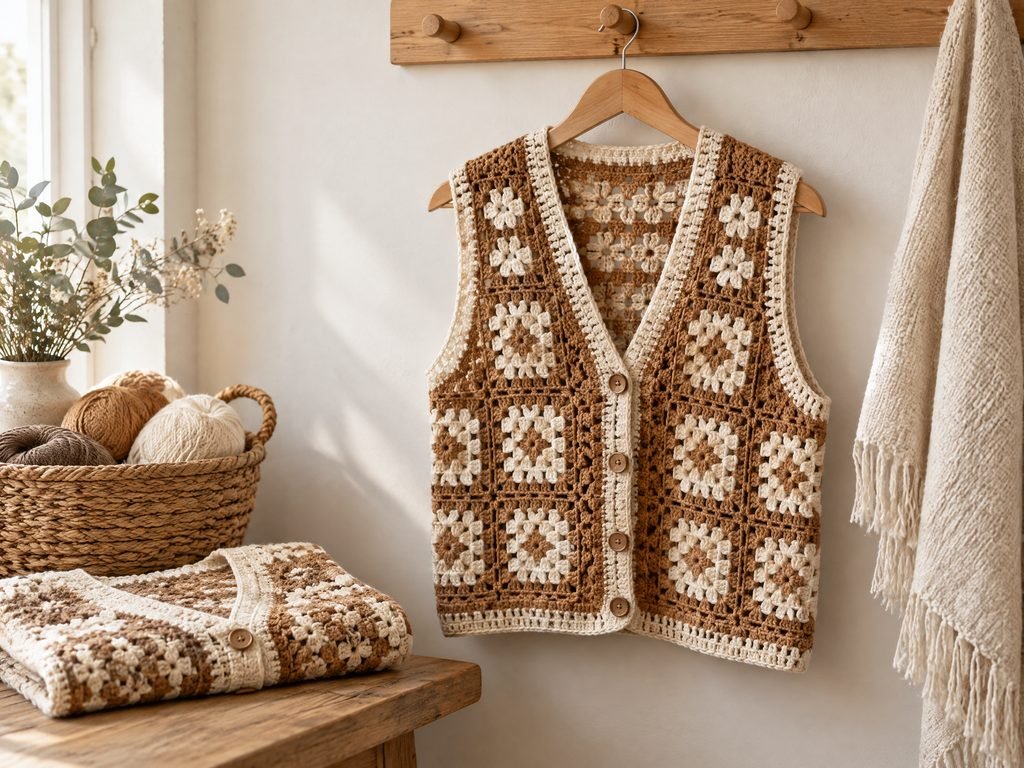
A vest is one of the most practical things you can crochet. It’s faster to finish than a sweater, easier to layer than a cardigan, and versatile enough to wear year-round with the right yarn. Instead of one generic list, here are 8 of the best crochet vest patterns, each picked for a specific purpose, so you can start the one that actually fits what you need right now.
Best for Beginners: The Basic Boxy Vest
A straight, rectangular body with simple armhole openings makes this the easiest vest to start with. There’s no shaping to get wrong and no sleeves to worry about at all, which makes it a genuinely realistic first garment project, even in a single sitting or two.
Best for a Fast Finish: The Chunky Puffer-Look Vest
Worked in bulky yarn with a dense stitch, this vest mimics the rounded, padded look of a puffer without any actual insulation inside. The heavier yarn and simple stitch repeat mean you can go from skein to finished vest remarkably quickly.
Best for Boho Style: The Mixed-Motif Vest
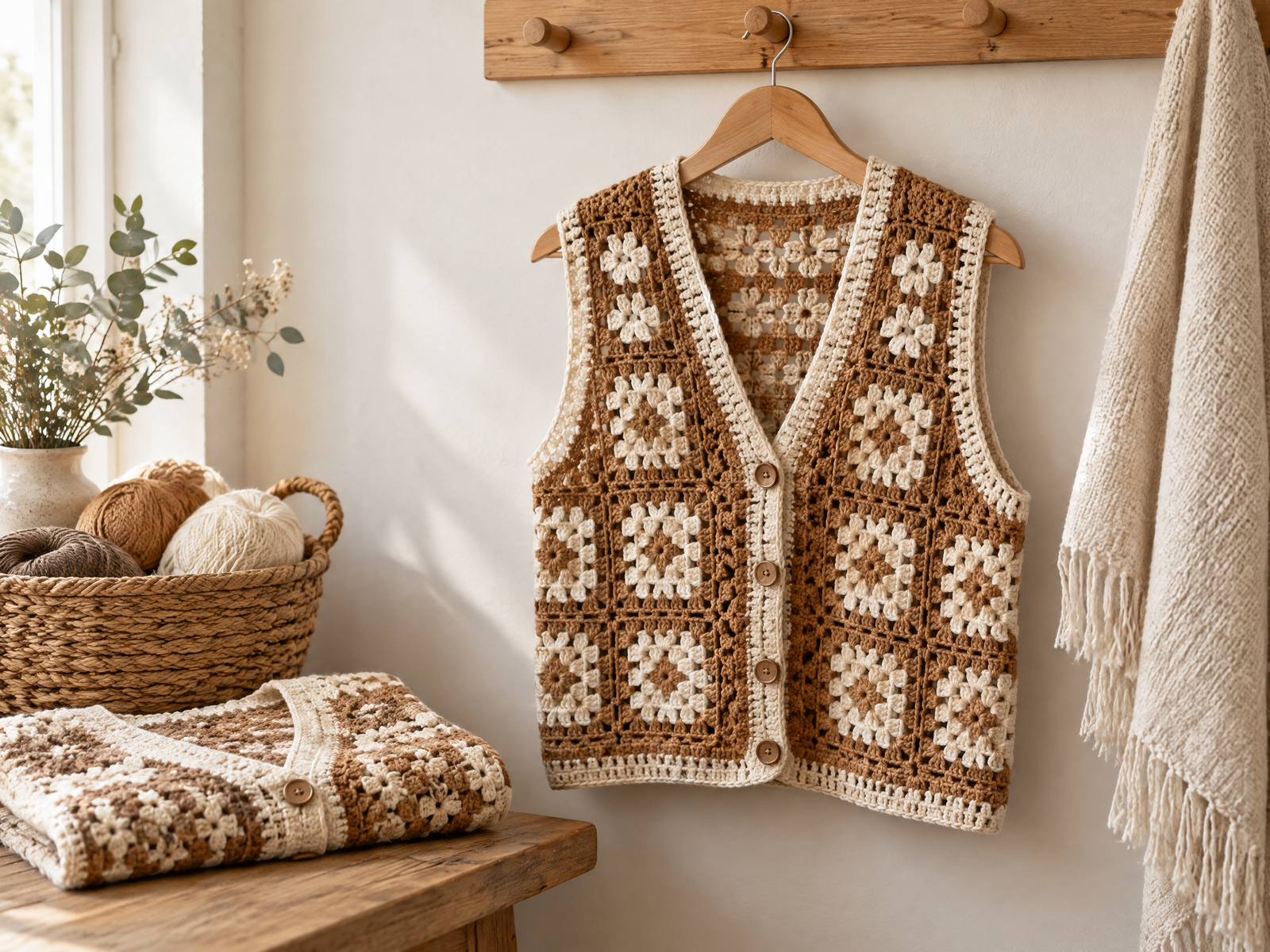
Built from a combination of different crochet motifs, like hexagons, squares, and circles joined together into one patchwork piece, this vest has a relaxed, festival-ready look. It’s a great project if you enjoy variety and don’t want every row to look the same.
Best for Layering: The Lightweight Mesh Vest
An open, airy stitch pattern in a lightweight yarn keeps this vest from adding bulk over a shirt or under a jacket. It’s less about warmth on its own and more about texture and layering, making it a versatile piece across most of the year.
Best for Extreme Warmth: The Double-Thick Ribbed Vest
Worked with ribbing built into the entire body instead of just the edges, this vest creates a noticeably denser fabric than a plain stitch would. Paired with a wool or wool-blend yarn, it holds in far more heat than a standard single-layer stitch pattern.
Best for a Structured Look: The Denim-Inspired Textured Vest
A firm, textured stitch worked in a mid-tone blue or chambray-colored yarn gives this vest the look of a denim vest without the sewing. It pairs well with a plain shirt underneath and holds its shape better than a softer, drapier stitch would.
Best for Using Stash Yarn: The Scrap Stripe Vest
Worked in simple rows with frequent color changes, this pattern is the perfect home for leftover skeins in different colors and weights. Every stripe uses up a bit more of your stash instead of letting partial balls sit unused.
Best for Gifting: The Classic Crew Vest
A simple, round neckline and clean, minimal shaping give this vest broad appeal for almost anyone’s closet. Made in a mid-weight yarn and a neutral color, it’s an easy choice when you’re not entirely sure of the recipient’s personal style.
Why Vests Are Worth Making Even If You Already Own Sweaters
A vest fills a gap that most closets don’t already have covered. It adds warmth to your core without the bulk of full sleeves, which means it layers under a jacket far more comfortably than an extra sweater would. It’s also one of the few garment projects you can realistically finish in a weekend, which makes it a good choice when you want the satisfaction of a completed wearable piece without a multi-week commitment.
How to Choose the Right Vest Pattern
Think about how you’ll actually wear the finished vest before picking a pattern. A structured, denim-inspired style works best over a simple shirt, while an oversized or double-ribbed vest is built to be a warm outer layer on its own. Matching the pattern to your actual wardrobe, rather than picking whichever one looks the most interesting to make, is what determines whether you’ll reach for the finished piece regularly or let it sit in a drawer.
Common Questions
Are Crochet Vests Warmer Than They Look?
Yes, especially with the right stitch and yarn. A dense stitch like double crochet or a doubled ribbing pattern, worked in wool, holds in a surprising amount of warmth, even without sleeves. Since a vest still covers your chest, back, and core, it does more to keep you warm than its lack of sleeves might suggest.
What’s the Fastest Crochet Vest Pattern to Finish?
The chunky puffer-look vest is usually the quickest, since bulky yarn and a large hook cover ground fast with relatively few stitches. A basic boxy vest in a mid-weight yarn is a close second, since the lack of shaping keeps the project simple even if the yarn itself works up a bit slower.
Can I Wear a Crochet Vest in Any Season?
Yes, as long as you match the yarn to the weather. A lightweight mesh or cotton vest works well in spring and early fall, while a chunky wool or double-ribbed version is better suited to winter. The same basic vest shape can be made in different yarns to suit almost any time of year.
How Much Yarn Do These Vest Patterns Typically Use?
Most adult vests use somewhere between 600 and 1,200 yards of yarn, depending on size and yarn weight. That’s noticeably less than a full sweater, which is part of what makes vests such an approachable project even when you’re short on time or working with a smaller amount of yarn.
What Hook Size Should I Use for a Vest?
Hook size depends on your yarn weight rather than the fact that you’re making a vest specifically. A worsted-weight vest, like the basic boxy or classic crew styles above, usually works well with an H or I hook, while a bulkier yarn, like in the puffer-look vest, calls for a larger hook to match. Always crochet a small gauge swatch before starting, since hook size alone won’t guarantee the right fit.
Can I Add Sleeves to One of These Vest Patterns Later?
In many cases, yes. Since most vests are built from simple front and back panels, you can often add straight, rectangular sleeves along the armhole edges to turn the piece into a sweater later on. It won’t match a pattern specifically written with sleeves in mind, but for simple, boxy styles like the basic boxy vest, it’s a reasonable way to extend the pattern if your needs change partway through, or even after the vest is already finished.
Final Thoughts
A great crochet vest pattern isn’t about finding the single “best” design, it’s about matching the pattern to what you actually need, whether that’s speed, warmth, style, or a way to use up your stash. Pick the one from this list that fits your situation today, and you’ll have a finished, wearable piece before you know it.