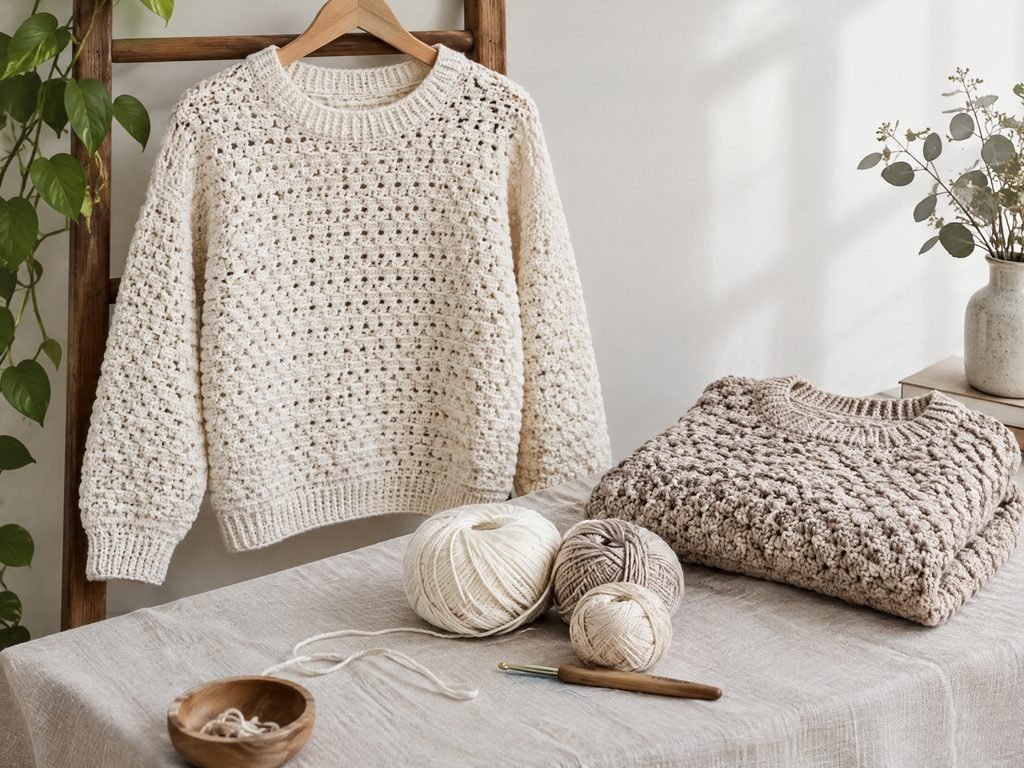
Not every sweater pattern comes down to a different neckline or silhouette. Some of the most interesting crochet sweaters get their character from the technique behind them, the way the stitches are worked, layered, or combined, rather than the shape of the finished garment. Here are 8 crochet sweater patterns built around distinct techniques, each one worth trying at least once.
Technique Matters as Much as Shape
Two sweaters can share the exact same silhouette and still look completely different depending on how they’re worked. A plain crew neck in solid double crochet reads as simple and classic, while the same shape worked in a mosaic or tapestry technique looks intricate and detailed, even though the underlying garment construction barely changes. That’s the idea behind this list: each pattern below can be adapted to almost any basic sweater shape, so the technique becomes the real star of the project.
8 Crochet Sweater Patterns to Try
1. The Mosaic Crochet Sweater
Mosaic crochet uses two colors and a technique of working over stitches from previous rows to create bold, geometric patterns, without ever changing colors mid-row. The result looks like intricate colorwork, but you’re really only ever holding one color at a time, which makes it more approachable than it looks.
2. The Corner-to-Corner Sweater
Corner-to-corner, often shortened to C2C, is worked diagonally in small blocks rather than straight rows, which makes it easy to build pixel-style patterns or simple color blocks. Applied to a sweater, it creates a distinctly graphic, blocky look that stands apart from a traditional row-by-row garment.
3. The Popcorn Stitch Sweater
Popcorn stitches are small, raised clusters worked at intervals across an otherwise plain fabric, creating a bumpy, three-dimensional texture. Scattered across a sweater body or concentrated into a yoke panel, they add serious visual interest without requiring any shaping changes to the pattern underneath.
4. The Chevron Stripe Sweater
Built from a repeating zigzag stitch pattern, this technique turns simple color changes into a bold, graphic stripe instead of a straight horizontal line. It takes a bit more attention to the stitch count than a plain stripe, since the increases and decreases that create the zigzag have to line up correctly.
5. The Lace-Paneled Sweater
Rather than making the entire sweater open and lacy, this approach inserts one or two lace stitch panels into an otherwise solid, plain-stitch body, often down the center front or along the sleeves. It’s a good way to add a delicate detail without making the whole garment as fussy to work as an all-over lace pattern.
6. The Tapestry Colorwork Sweater
A tapestry crochet carries multiple colors within the same row, crocheting over the unused strands as you go, which lets you build detailed pictures, motifs, or patterns directly into the fabric. It takes more planning and a chart to follow, but it produces some of the most detailed, personalized sweaters on this list.
7. The Moss Stitch Sweater
Also called linen stitch, this technique alternates single crochet stitches with chain spaces to create a woven, textured fabric that looks almost like fabric rather than typical crochet. It’s a dense, sturdy stitch that also happens to be one of the easiest techniques on this list to learn.
8. The Striped Tunic-Length Sweater
This one is less about a single stitch technique and more about proportion, taking a simple striped pattern and extending the body length well past the hip. The longer length changes how the whole piece wears, turning a basic pullover into something you can wear over leggings almost like a dress.
Choosing the Right Pattern for Your Skill Level
If you’ve never worked a colorwork or textured technique before, start with moss stitch or a simple chevron stripe, since both rely on stitches you likely already know, just arranged in a new sequence. Popcorn stitch and lace paneling are a reasonable next step once you’re comfortable adding a new stitch into an otherwise familiar pattern. Save mosaic, tapestry, and corner-to-corner for after you’ve tried at least one of the simpler techniques, since all three ask you to follow a chart or track colors more closely than a standard row-by-row pattern does.
How to Adapt Any Technique to a Sweater Shape
Most of these techniques were originally developed for blankets or flat panels, which means adapting them to a garment takes a little extra planning. Start with a simple, well-tested sweater shape, like a rectangle or drop-shoulder pullover, and apply your chosen technique to the front and back panels before worrying about sleeves or shaping. Keeping the base shape simple lets the technique do the visual work, rather than trying to combine a complicated stitch pattern with complicated shaping at the same time.
Common Questions
Is Mosaic or Tapestry Crochet Hard for Beginners?
Both techniques take more concentration than a plain stitch pattern, mostly because you’re following a chart or counting rows carefully. That said, neither one requires an advanced stitch, mosaic crochet is usually just single or double crochet worked in a specific sequence, and tapestry crochet is single crochet with color changes. Patience matters more here than skill level.
Can I Use Any of These Techniques on an Existing Pattern?
In many cases, yes. If you already have a basic sweater pattern you like, you can often swap in a technique like popcorn stitch, moss stitch, or a lace panel for a section of the body, as long as you keep your row and stitch counts consistent with the original pattern’s shaping.
Which of These Patterns Works Up the Fastest?
The chevron stripe and moss stitch sweaters tend to move the quickest, since both use straightforward stitches without the extra color-carrying steps that mosaic and tapestry crochet require. Popcorn stitch sits in the middle, since the clusters themselves take a few extra stitches but don’t require tracking multiple colors.
How Much Yarn Do These Techniques Use Compared to a Plain Sweater?
Colorwork techniques like mosaic and tapestry crochet generally use a similar total amount of yarn to a plain sweater, since you’re still covering the same amount of fabric, just splitting the yardage across two or more colors instead of one. Textured techniques, like popcorn stitch or moss stitch, tend to use slightly more yarn than a flat stitch would, since the extra stitches involved in the texture add a bit to the total.
Do I Need a Special Hook for Any of These Patterns?
No special hook is required for any of the techniques above. A standard hook in the size recommended for your chosen yarn works fine for mosaic, tapestry, popcorn, chevron, lace paneling, moss stitch, and simple stripes alike. What changes between techniques is your process, like following a chart or carrying multiple strands, not the tool in your hand.
Final Thoughts
A crochet sweater doesn’t have to rely on a new silhouette to feel fresh and different. Sometimes it’s the technique underneath a familiar shape that makes a pattern worth trying. Pick one of these 8 approaches, apply it to a simple sweater base, and you’ll end up with something that looks far more advanced than the steps it actually took to make it.