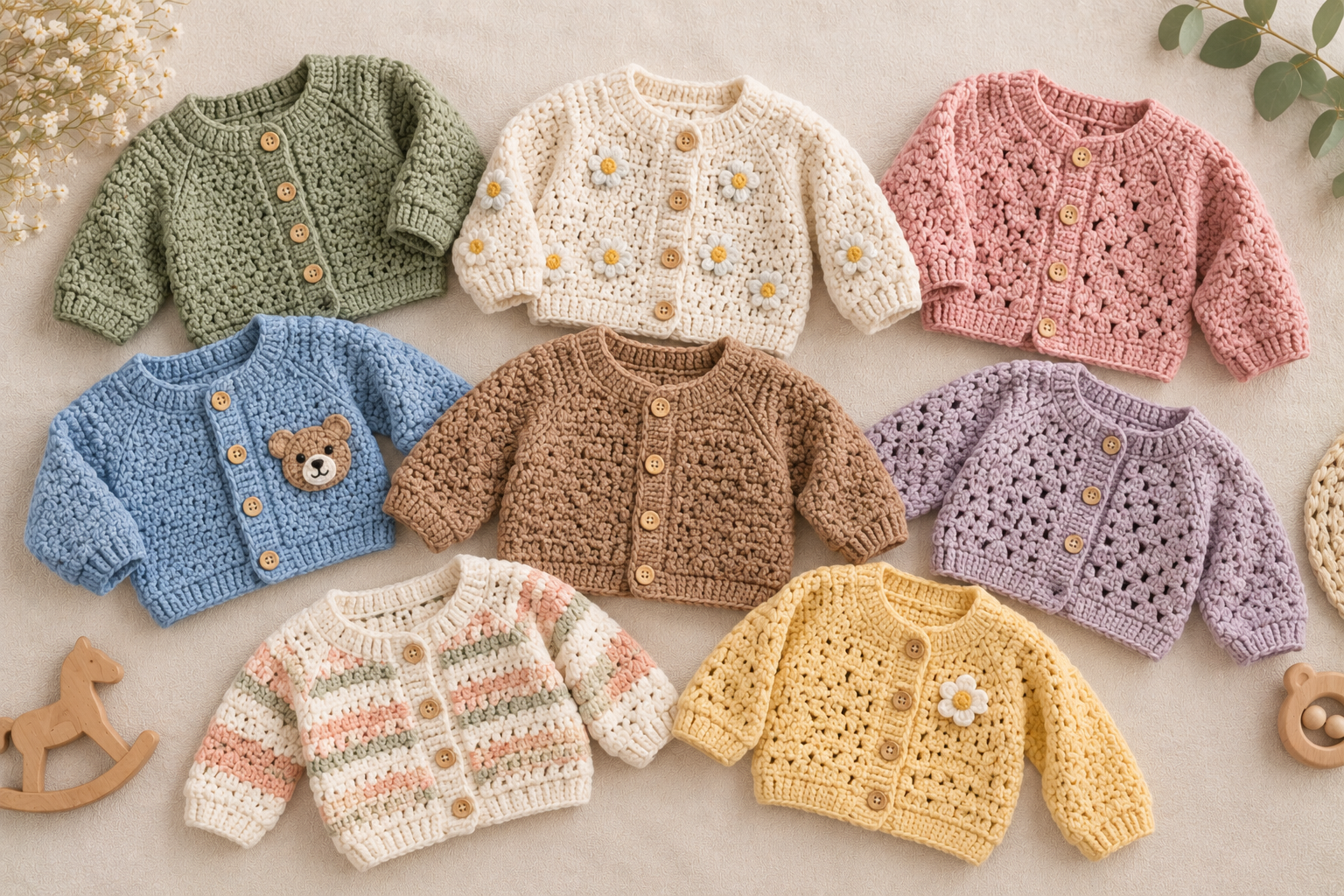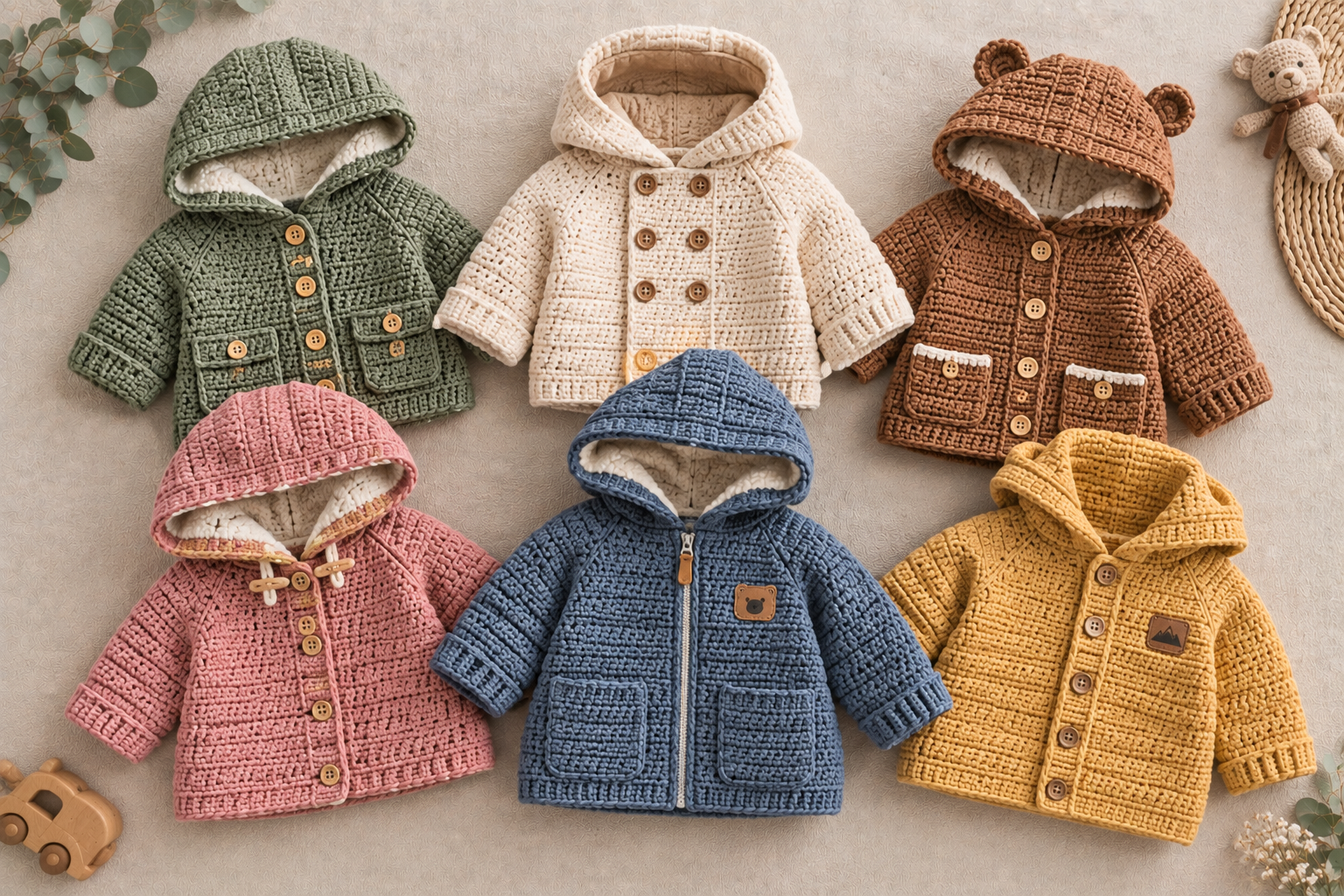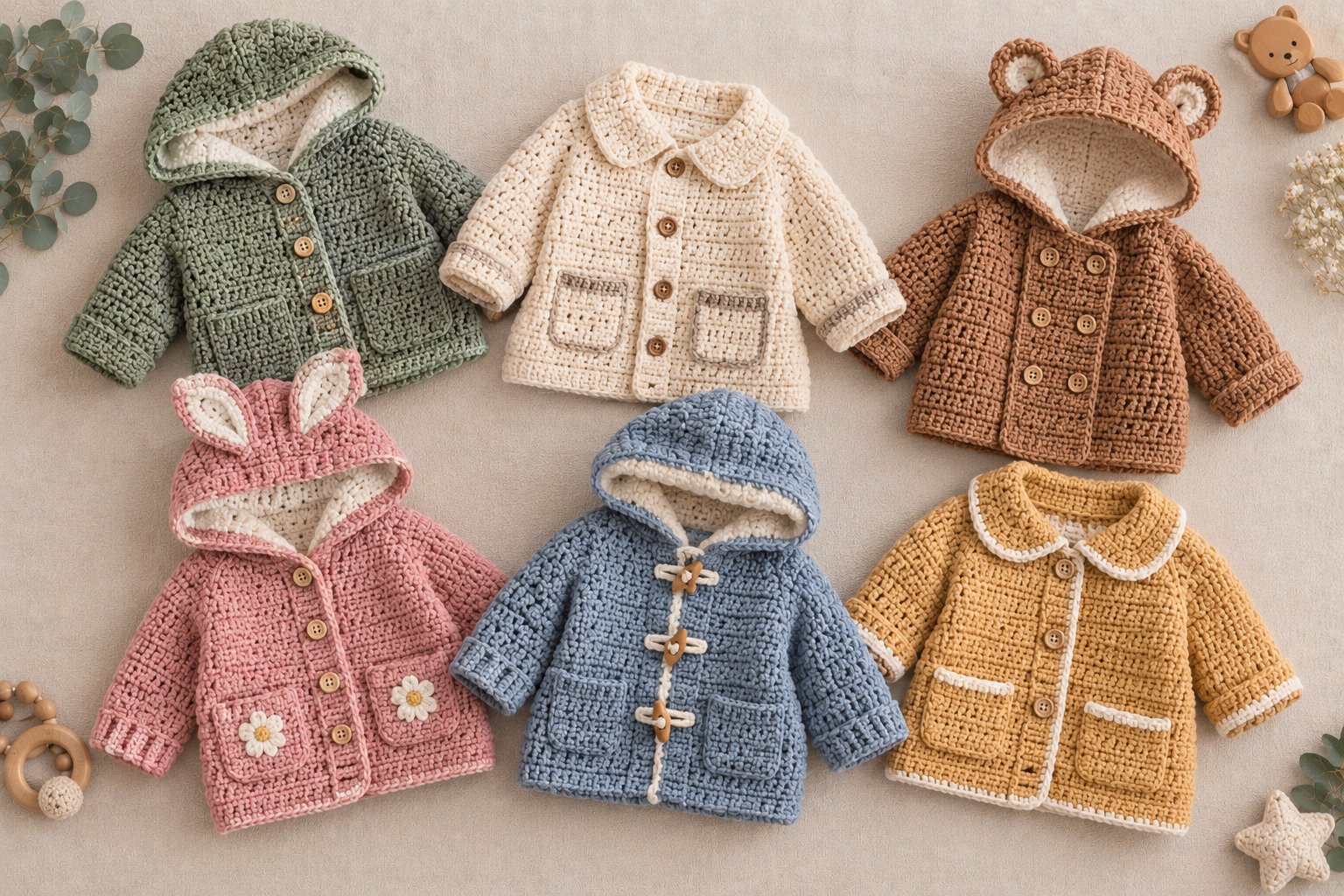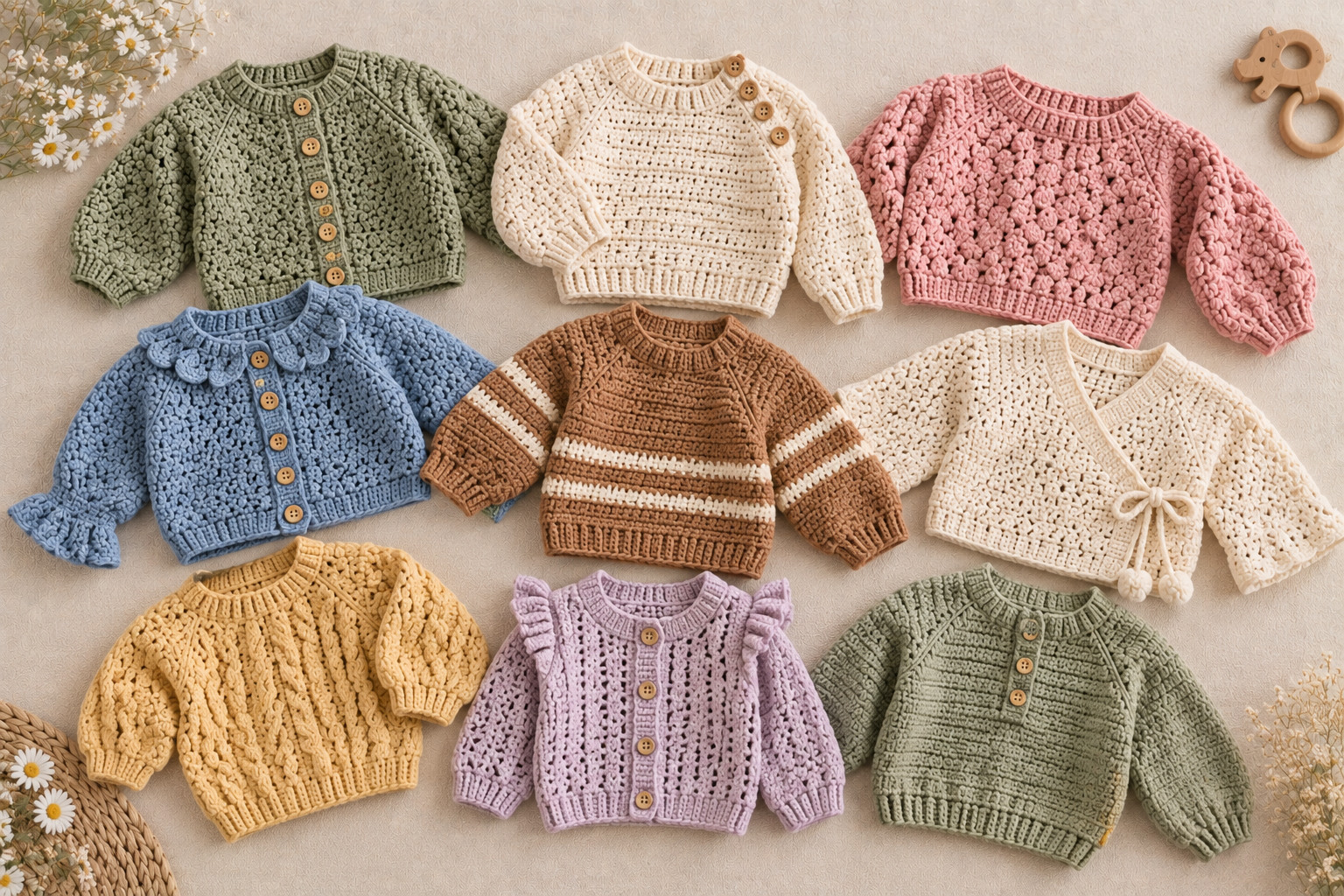
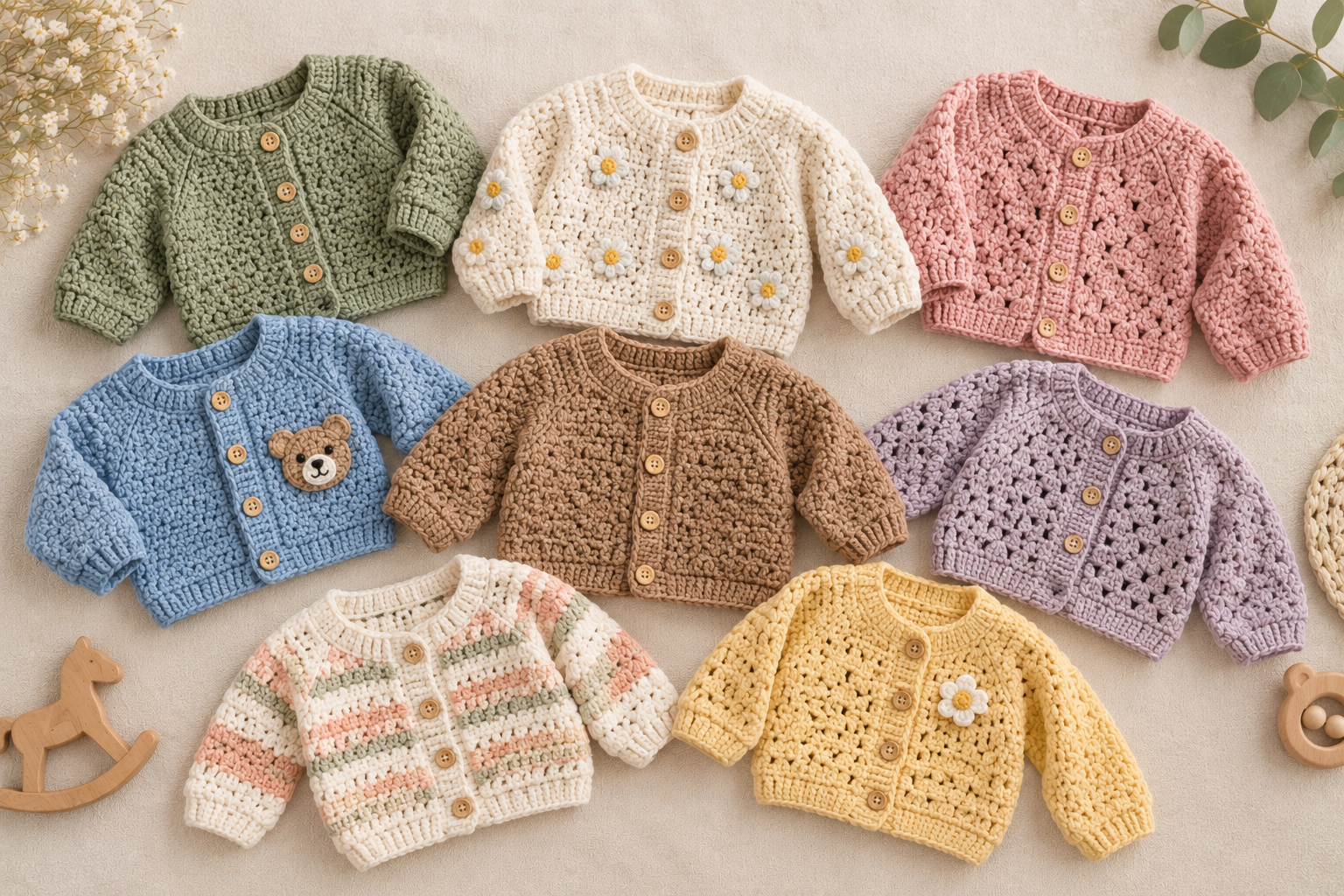
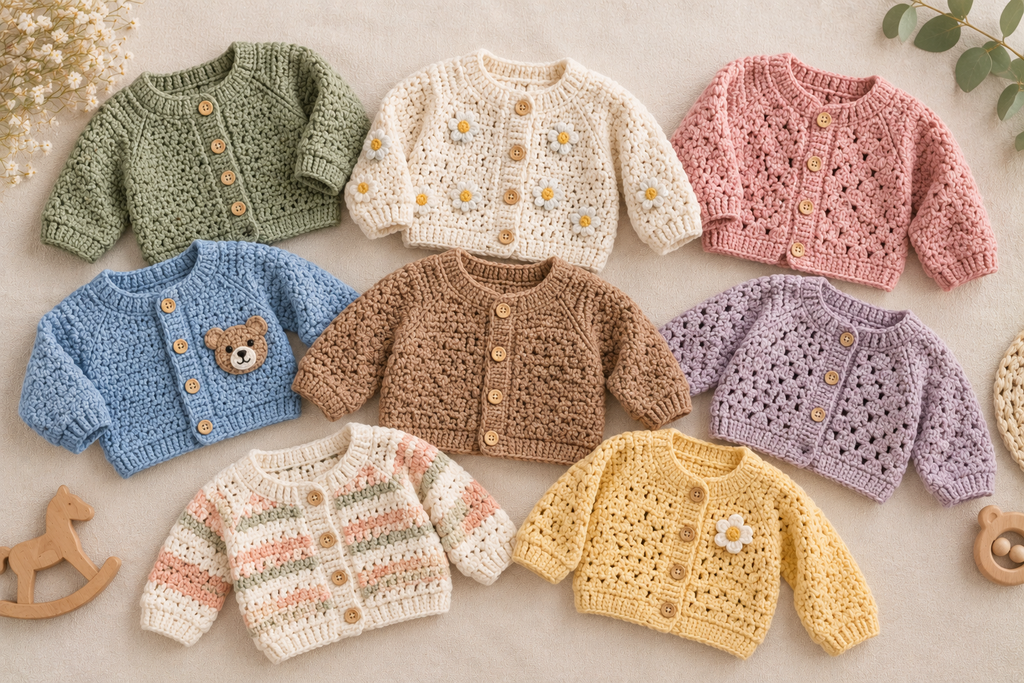
A cardigan asks a bit more of a crocheter than a hat or a pair of booties, but the payoff is a genuinely wearable piece that a baby can grow into rather than out of overnight. Here are 7 crochet baby cardigan patterns to try, along with a look at the two very different ways a cardigan actually comes together.
Two Ways Cardigans Are Built: Top-Down or Pieced
Most baby cardigans are constructed one of two ways. A top-down raglan starts at the neckline and is worked as a single piece, with four diagonal increase lines separating the sleeves from the body as the whole garment grows downward together. It’s largely seamless, which means less finishing work once the last stitch is done, but it does ask you to keep four separate increase points lined up correctly round after round. A pieced cardigan, by contrast, is built from separate sections, like a granny square cardigan made of individual motifs, or a design with a separately worked back, two fronts, and two sleeves, that get joined together at the end. Pieced construction is often easier to follow step by step, since each part is a smaller, self-contained project, but it does mean more seaming once everything is finished.
7 Crochet Baby Cardigan Patterns to Try
1. The Classic Raglan Cardigan
Worked top-down in a single piece with simple increases marking the four raglan lines, this is the most straightforward cardigan on this list and a good introduction to top-down construction. Its plain, unadorned shape also makes it easy to dress up later with a contrast trim if you want.
2. The Kimono-Style Wrap Cardigan
Rather than buttons, this design closes with an overlapping front and a simple tie at the waist, giving it a relaxed, open silhouette that’s easy to put on and take off. The wrap style also makes it more forgiving of small sizing differences than a fitted, buttoned design.
3. The Hooded Cardigan
A soft, attached hood worked as an extension of the neckline adds extra warmth and a cozy, casual look to a basic cardigan shape. The hood is typically worked as two mirrored pieces seamed together, or shaped directly as part of a top-down construction.
4. The Granny Square Cardigan
Individual granny square motifs, worked separately and then joined into the shape of the back, fronts, and sleeves, give this cardigan a colorful, patchwork character that a single continuous piece can’t match. It’s also one of the most portable projects here, since each square is a small, easy-to-carry piece.
5. The Ruffle Trim Cardigan
A row of extra stitches worked along the front edges and cuffs creates a soft, gathered ruffle that dresses up an otherwise plain cardigan shape. The ruffle is added as a final trim, so it doesn’t change the main construction underneath.
6. The Striped Cardigan
Even bands of color worked across the body and sleeves give this cardigan a bold, graphic look that’s simple to customize to match other pieces. It’s also a great way to work through several coordinating colors of leftover yarn from other baby projects.
7. The Textured Waffle Stitch Cardigan
A grid of small raised bumps worked across the body adds warmth and visual texture, giving this cardigan a cozier look than a plain stitch. It’s a satisfying stitch pattern to practice on a project with more surface area than a hat or a pair of booties.
Choosing a Closure
A cardigan can close with buttons, ties, or nothing at all beyond an open front, and each option changes both the look and the practicality of the finished piece. Buttons give the cleanest, most structured look but need to be sewn on securely and checked periodically, while ties or an open wrap front are easier to manage during quick outfit changes and skip small hardware entirely.
Common Questions
Is Top-Down or Pieced Construction Better for a Beginner?
Pieced construction, like a granny square cardigan, is often more approachable for a first cardigan, since each motif or panel is a small, manageable piece rather than a continuous garment with several increase points to track at once. A top-down raglan is a good second project once you’re comfortable with basic garment shaping.
Which of These 7 Styles Is Easiest to Make?
The classic raglan and striped cardigans are both good starting points, since neither requires an attached hood or a separate seaming step. Save the hooded and granny square designs for once you’re comfortable with the core construction.
How Long Does It Take to Crochet a Baby Cardigan?
Most of these cardigans take somewhere between 6 and 12 hours of work, considerably longer than a hat or a pair of booties because of the larger surface area involved. The granny square design can be worked in shorter sessions since each motif is a self-contained piece.
What Yarn Works Best for a Baby Cardigan?
A soft, machine-washable cotton, cotton blend, or baby-weight acrylic suits most of these designs well for everyday wear, since a cardigan gets washed more often than a smaller accessory like a hat or a pair of booties.
How Much Yarn Does a Baby Cardigan Use?
Most of these cardigans use somewhere between 400 and 800 yards of worsted or DK-weight yarn, depending on size, which is considerably more than a smaller project like a hat or a pair of booties.
Are Buttons Safe on a Baby Cardigan?
A large, securely sewn button, checked periodically to make sure it hasn’t loosened, is generally fine for a cardigan worn during supervised time, but it’s worth choosing a tie or wrap closure instead for a very young baby, since any small hard object carries some choking risk if it comes free.
Can I Adjust One of These Patterns to Fit a Different Size?
Yes, in most cases. A top-down raglan is especially easy to adjust, since you can simply work more or fewer rounds before dividing for the sleeves, while a pieced design like the granny square cardigan can be resized by adding an extra round to each motif or working a few additional squares.
Can I Make a Matching Hat or Booties to Go With a Cardigan?
Yes, and it’s a popular way to round out a baby gift. Using the same yarn and repeating a detail from the cardigan, like a stripe pattern or a waffle stitch panel, across a matching hat or pair of booties ties the whole set together without needing to design anything new.
Final Thoughts
From a seamless top-down raglan to a colorful patchwork of granny squares, these 7 cardigans show just how differently one basic garment shape can come together. Pick whichever construction method and style suits your skill level, and you’ll have a genuinely wearable little cardigan ready before long.