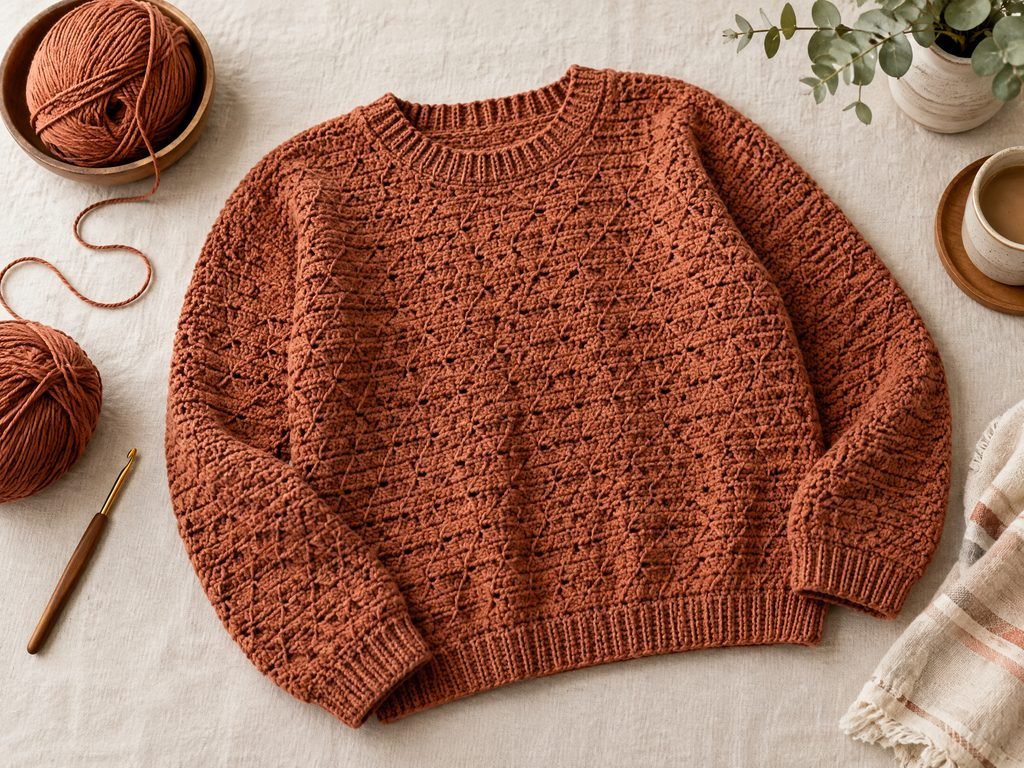
The best sweater pattern isn’t the same for everyone. What works for a first-time garment maker isn’t what you’d reach for on the coldest week of the year, and what makes a great gift isn’t necessarily what you’d choose for yourself. Instead of one generic list, here are 10 of the best free crochet sweater patterns, each picked for a specific situation, so you can match the pattern to what you actually need right now.
Best for Beginners: The Drop-Shoulder Sweater
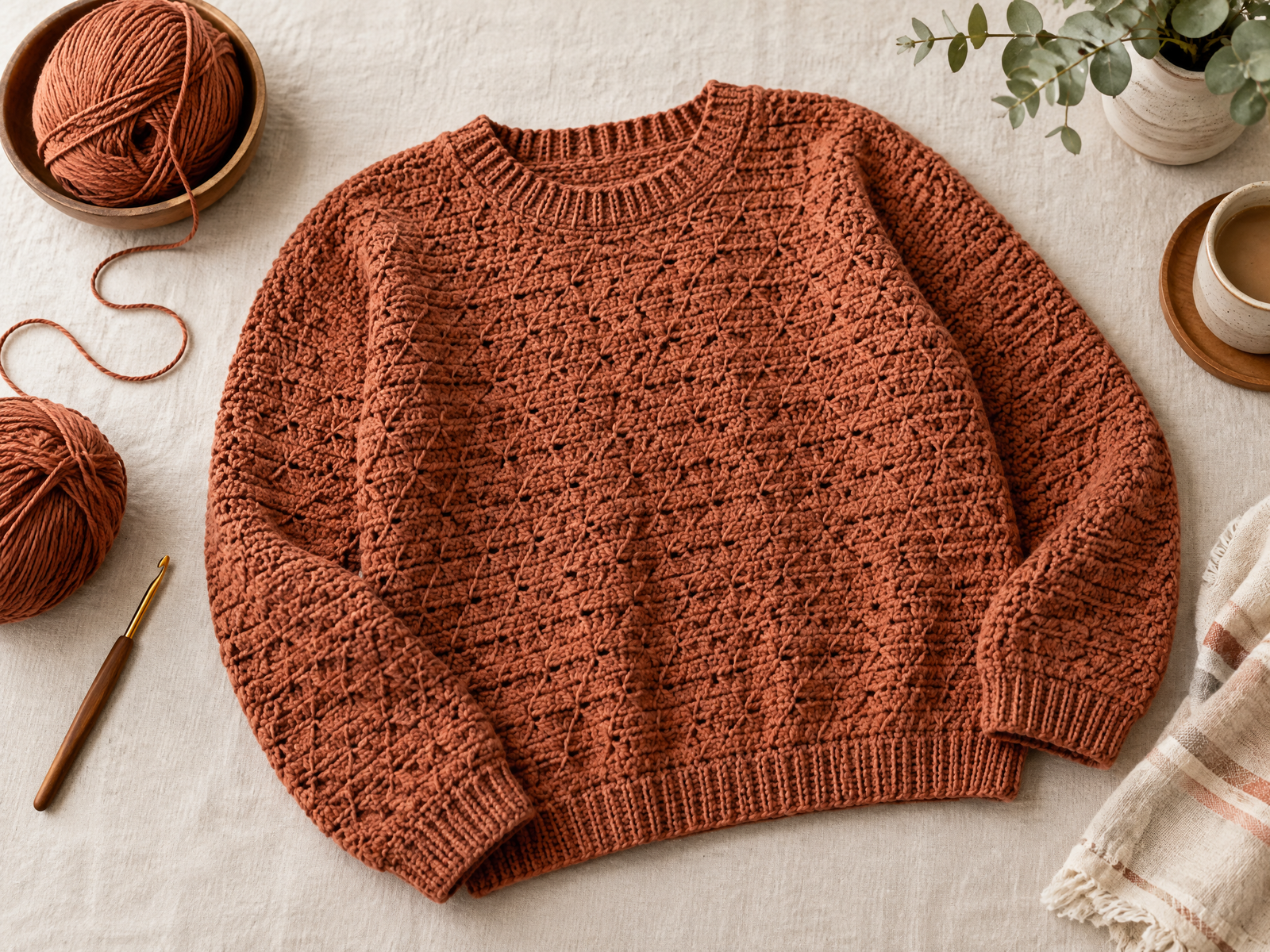
Drop-shoulder construction skips fitted sleeve shaping entirely, attaching straight rectangular sleeves to a straight body. There’s very little to get wrong, which makes it the most forgiving first-sweater option here, even though the finished piece still looks like a proper, intentional garment.
Best for a Fast Finish: The Chunky Weekend Sweater
Made with bulky yarn and a large hook, this sweater trades fine stitch detail for speed. Fewer stitches and fewer rows mean you can realistically go from skein to finished sweater in a weekend, which makes it a good choice when you want a result without a long-term commitment.
Best for Petite Frames: The Cropped Fitted Sweater
A shorter body length and closer fit make this style easier to proportion on a smaller frame than an oversized silhouette would be. It’s also a quicker make overall, since there’s simply less fabric to work through than a full-length sweater.
Best for Plus Sizes: The Oversized Relaxed Sweater
A loose, drop-shoulder or raglan shape with generous ease throughout is one of the easiest silhouettes to size up accurately, since it relies on straight measurements rather than close, fitted shaping. It’s a comfortable, flattering choice that scales well across a wide range of sizes.
Best for Extreme Cold: The Double-Layer Ribbed Sweater
Worked with ribbing built into the entire body instead of just the cuffs and hem, this sweater creates a denser, warmer fabric than a plain stitch would. Combined with a wool or wool-blend yarn, it’s one of the warmest options on this list for genuinely harsh winter weather.
Best for Using Stash Yarn: The Scrap Stripe Sweater
Worked in simple rows with frequent color changes, this pattern is the perfect home for leftover skeins in different colors and weights. Every stripe is a chance to use up a partial ball instead of letting it sit unused in a bin.
Best for a Statement Piece: The Colorwork Yoke Sweater
A patterned band worked around the neckline in two or more colors turns an otherwise plain pullover into a genuine centerpiece. The rest of the sweater stays simple, which keeps the project manageable while the yoke does all the visual work.
Best for Men: The Classic Crew Sweater
A straightforward, minimal-detail sweater with a plain crew neckline and clean, simple lines, worked in a solid, neutral color. The lack of decorative stitching or shaping makes it just as wearable for men as for anyone else.
Best for Layering Under a Coat: The Lightweight Fitted Sweater
A closer fit and a lighter yarn weight keep this sweater from adding bulk under a jacket or coat. It works best in half double crochet or double crochet, which gives enough drape to layer smoothly without feeling stiff.
Best for Gifting: The Simple V-Neck Sweater
A classic, versatile shape with broad appeal, the V-neck sweater works for almost anyone’s taste and wardrobe. Made in a mid-weight yarn and a neutral color, it’s an easy choice when you’re not entirely sure of the recipient’s exact style preferences.
Why Free Patterns Can Still Be the Best Option
It’s tempting to assume a paid pattern is automatically the better choice, but that’s not always true. Free patterns from established designers often go through the same testing process as paid ones, and many free patterns exist specifically because a designer wanted a particular style, like a beginner-friendly drop-shoulder or a quick chunky sweater, to be widely accessible. What actually determines whether a pattern is “best” has more to do with how clearly it’s written and how well it matches your goal than whether it costs anything.
How to Pick the Right One for You
Start with your actual situation rather than the pattern that looks the most impressive. If you’re making your first sweater, prioritize simple construction over an interesting stitch. If you’re crocheting a gift, prioritize a broadly wearable style over anything too specific to your own taste. Matching the pattern to the purpose first will get you a finished sweater you’re actually happy with, rather than one that looks good on paper but doesn’t fit the moment you made it for.
Common Questions
Are Free Sweater Patterns Reliable Enough for a Full Garment?
Yes, in most cases. Many free patterns are written and tested by experienced designers, and a well-written free pattern is just as reliable as a paid one. The main differences are usually in presentation, like extra photos or a printable layout, rather than the quality of the instructions themselves.
How Do I Know Which Pattern Matches My Skill Level?
Look at the construction method before the stitch pattern. Drop-shoulder and raglan shaping are both beginner-friendly, since they avoid complex sleeve settings, while set-in sleeves and detailed colorwork are better saved for after you’ve finished at least one simpler sweater.
Can I Resize Any of These Patterns?
Most can be resized by adjusting your starting stitch count and adding or removing rows to match your measurements, especially for the drop-shoulder and oversized styles above. Always check your gauge first, since resizing without matching gauge is the most common reason a resized garment doesn’t fit as expected.
What Yarn Weight Works Best Across Most of These Patterns?
Worsted weight is the most flexible choice if you’re not sure which yarn to reach for. It’s widely available, easy to see your stitches in, and works well for the drop-shoulder, V-neck, crew, and colorwork styles above. Save bulky yarn for the weekend sweater, where speed is the priority, and a lighter DK or fingering weight for the layering sweater, where bulk under a coat is the main concern.
How Long Does It Take to Finish a Free Crochet Sweater Pattern?
Most adult sweaters take somewhere between 15 and 30 hours of hooking time, though this varies quite a bit by style. The chunky weekend sweater sits at the faster end of that range, sometimes finishing in a single weekend, while a heavily detailed colorwork yoke sweater or a double-layer ribbed design will usually take longer because of the extra stitches or color-tracking involved.
Final Thoughts
The best crochet sweater pattern is whichever one matches your skill level, your timeline, and how you’ll actually wear or gift the finished piece. Use this list as a starting point, and let your specific situation, not just the prettiest photo, guide which pattern you pick up first.