A sweater vest solves a specific problem: you want extra warmth on your core without adding bulk to your arms, especially when you’re already layering a shirt or jacket underneath. It’s also one of the fastest garments you can crochet, since there are no sleeves to shape at all. Here are 10 crochet sweater vest ideas built for fall and winter, from simple first-project styles to more detailed, statement-making pieces.
What Makes a Vest Different From a Sweater or Cardigan?
A vest is sleeveless, which is really the only thing that separates it from a sweater or cardigan in terms of construction. That single difference makes a huge impact on how long a project takes, since sleeves are often the most time-consuming part of a garment to crochet and seam. A vest also layers more easily than a full sweater, since the sleeveless design leaves plenty of room to wear a long-sleeve shirt or turtleneck underneath without feeling bulky.
10 Crochet Sweater Vest Ideas for Fall and Winter
1. The Classic V-Neck Vest
A simple, pointed neckline and straight body make this the most traditional sweater vest silhouette. It’s an easy layering piece over a collared shirt or turtleneck, and the straightforward shaping makes it a solid first-garment project.
2. The Chunky Cable-Front Vest
Raised, textured stitch columns that mimic knit cables run down the front panel, giving this vest a cozy, cold-weather look. The cables add visual interest to a design that would otherwise be very plain, without requiring sleeve shaping to slow you down.
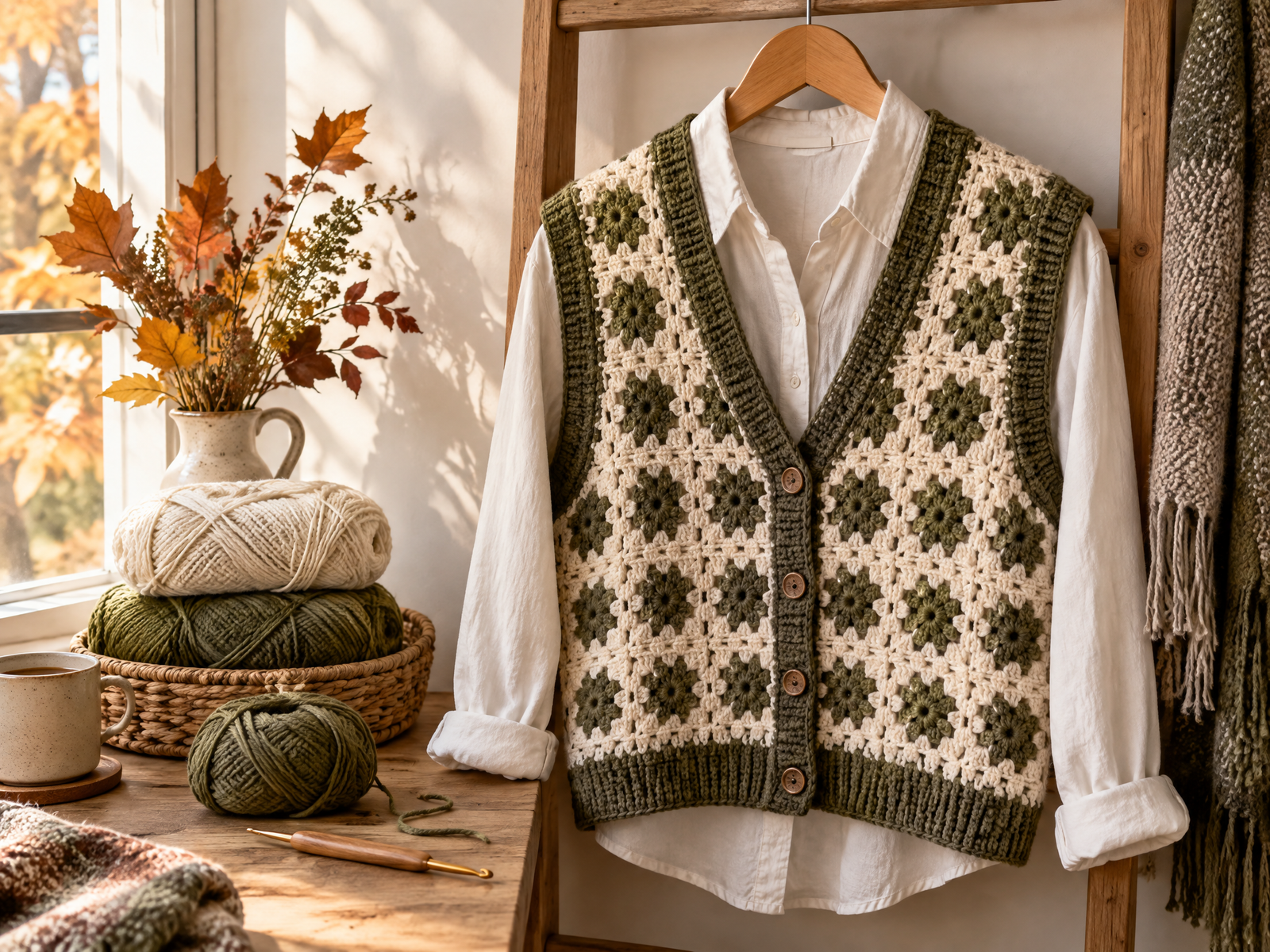
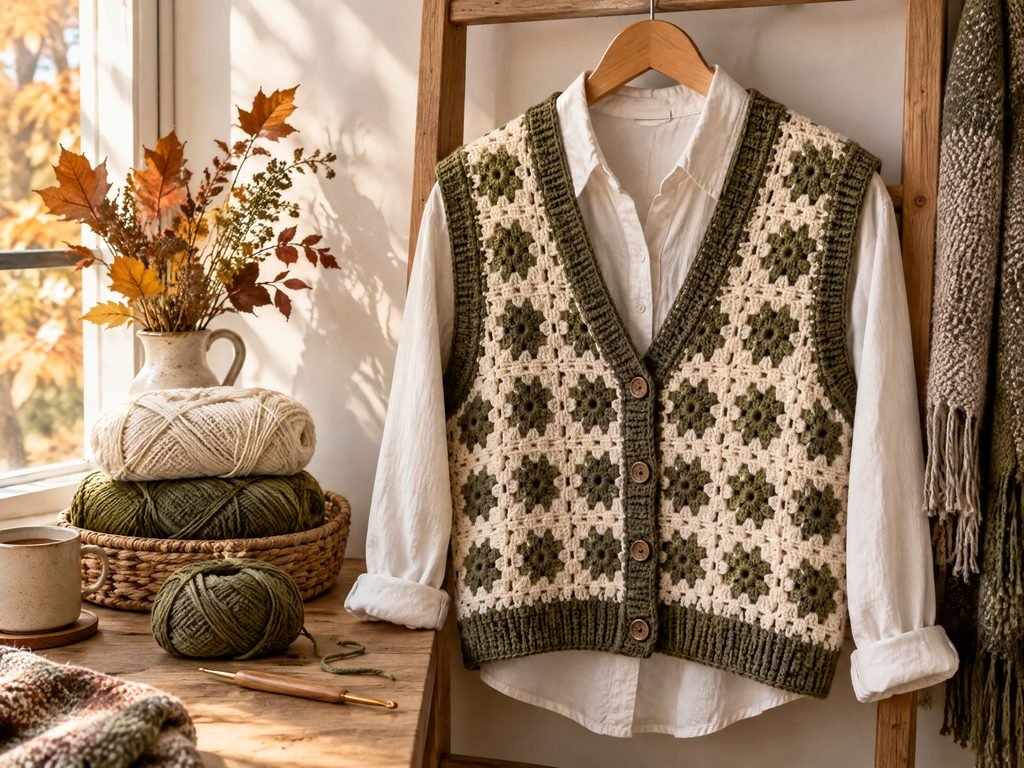
3. The Granny Square Vest
Individual granny squares joined into front and back panels give this vest a colorful, patchwork look. It’s an easy, portable project to work on in small pieces, since each square only takes a few minutes before you move to the next one.
4. The Cropped Boxy Vest
A short, boxy length that hits at the waist makes this vest ideal for layering over a fitted top and pairing with high-waisted bottoms. Its simple, straight shaping keeps the project quick, even for a first-time vest maker.
5. The Button-Front Vest
A center front opening finished with buttons gives this vest a bit more structure and versatility than a pullover style. You can wear it fully closed for extra warmth or leave the top button undone for a more relaxed look.
6. The Ribbed Turtleneck Vest
A tall, ribbed neckline paired with a simple body gives this vest extra warmth right around the neck, where a sleeveless design tends to let the most cold air in. The ribbing also adds a slightly more polished, fitted look to the finished piece.
7. The Argyle-Inspired Vest
Built from a repeating diamond pattern worked in two or more colors, this vest borrows its look from a traditional argyle sweater. It takes more planning than a solid-color vest, since you’re tracking a pattern instead of just working straight rows, but it produces a genuinely classic, preppy result.
8. The Oversized Layering Vest
Roomy through the body, this style is designed to be worn over a bulky sweater or flannel rather than a fitted shirt. The extra ease makes it one of the most forgiving vests to size, and it adds a relaxed, cold-weather layer without feeling restrictive.
9. The Fringe-Trim Vest
A simple vest body finished with a fringe border along the bottom hem, adding movement and a bit of texture to an otherwise plain silhouette. It’s an easy way to dress up a basic pattern without learning a new stitch.
10. The Textured Waffle Vest
A grid of raised bumps across the fabric, similar in look to a waffle-knit thermal, gives this vest both warmth and visual texture. The extra thickness from the stitch pattern makes it a solid choice for layering under a coat on genuinely cold days.
Tips for Layering a Sweater Vest
A vest works best as part of a layered outfit rather than a piece worn entirely on its own in cold weather. Pair it over a long-sleeve shirt or turtleneck for warmth on your arms, and consider a denser stitch, like half double crochet or double crochet, if you want the vest itself to block more cold air. A vest also layers well under a jacket or coat, since the lack of sleeves means it won’t bunch up under a heavier outer layer the way a full sweater sometimes does.
Common Questions
Is a Sweater Vest Too Cold for Winter on Its Own?
On its own, yes, especially with bare arms. A vest is meant to be layered, so pairing it with a long-sleeve base layer underneath is what makes it genuinely practical for winter rather than just a stylish addition to an outfit.
What’s the Easiest Sweater Vest Pattern for Beginners?
The classic V-neck or cropped boxy vest are the easiest starting points, since both rely on simple, straight shaping with a basic stitch. Save the argyle or cable-front styles for after you’ve finished at least one simpler vest.
How Much Yarn Does a Sweater Vest Use?
Most adult vests use somewhere between 600 and 1,200 yards of yarn, noticeably less than a full sweater since there are no sleeves to account for. That makes a vest a good project for using up a smaller amount of yarn or trying a new stitch pattern without a big commitment.
Can a Sweater Vest Be Worn Year-Round, Not Just Fall and Winter?
Yes, especially in a lighter yarn. A cotton or lightweight yarn version of any of these styles works as a cool-weather layer in spring as well, while a chunky wool version is better saved for the coldest months.
Can I Turn a Sweater Pattern Into a Vest Instead?
Yes, in most cases. If you already have a sweater pattern you like, you can usually skip the sleeve instructions entirely and finish the armholes with a simple round of single crochet or a short ribbed border instead. The body, neckline, and any stitch pattern or texture will typically carry over without much adjustment, which makes converting a favorite sweater into a vest one of the easier modifications to make.
What Hook Size Works Best for a Sweater Vest?
The right hook size depends entirely on your yarn weight rather than the fact that you’re making a vest specifically. For a worsted-weight vest, an H or I hook is a common starting point, while a chunkier yarn, like in the waffle or cable-front styles above, usually calls for a larger hook. Always check your gauge against the pattern before starting, since hook size alone doesn’t guarantee a correct fit.
Final Thoughts
A sweater vest gives you most of the warmth and style of a full sweater in a fraction of the crocheting time. Pick a style that matches how you plan to layer it, choose a stitch that fits how warm you need it to be, and you’ll have a versatile fall and winter piece that’s ready to wear in a single sitting or two.