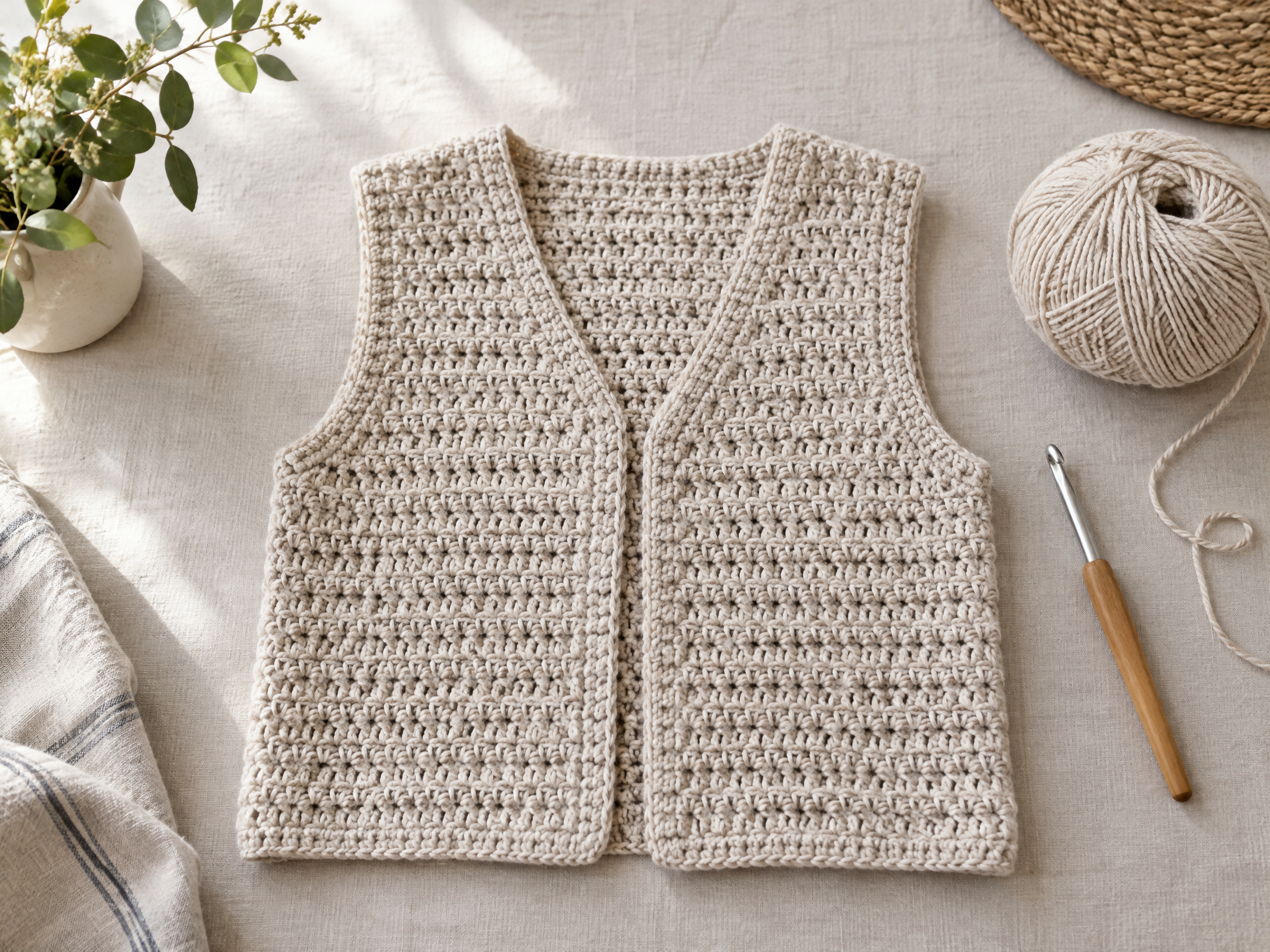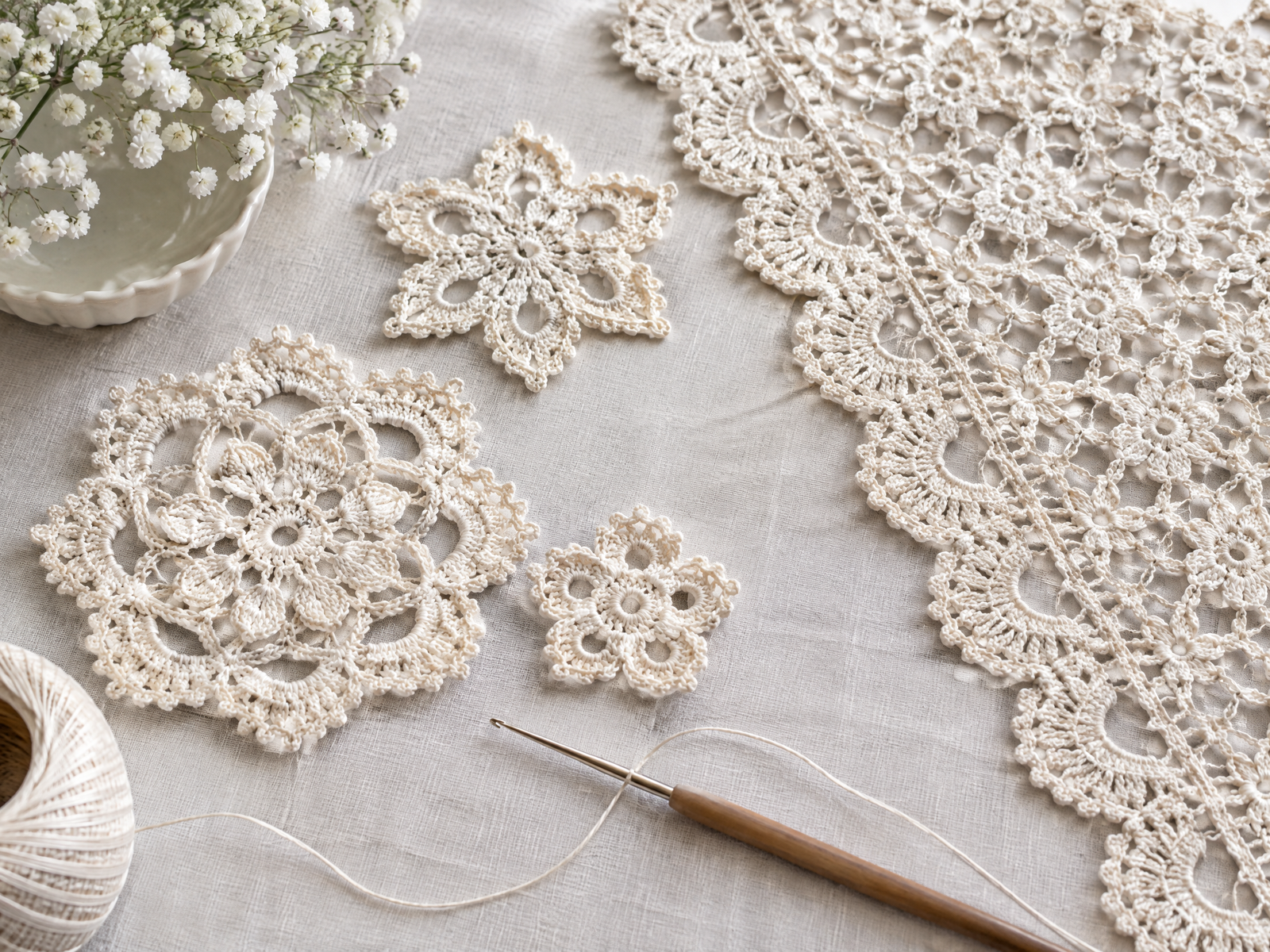
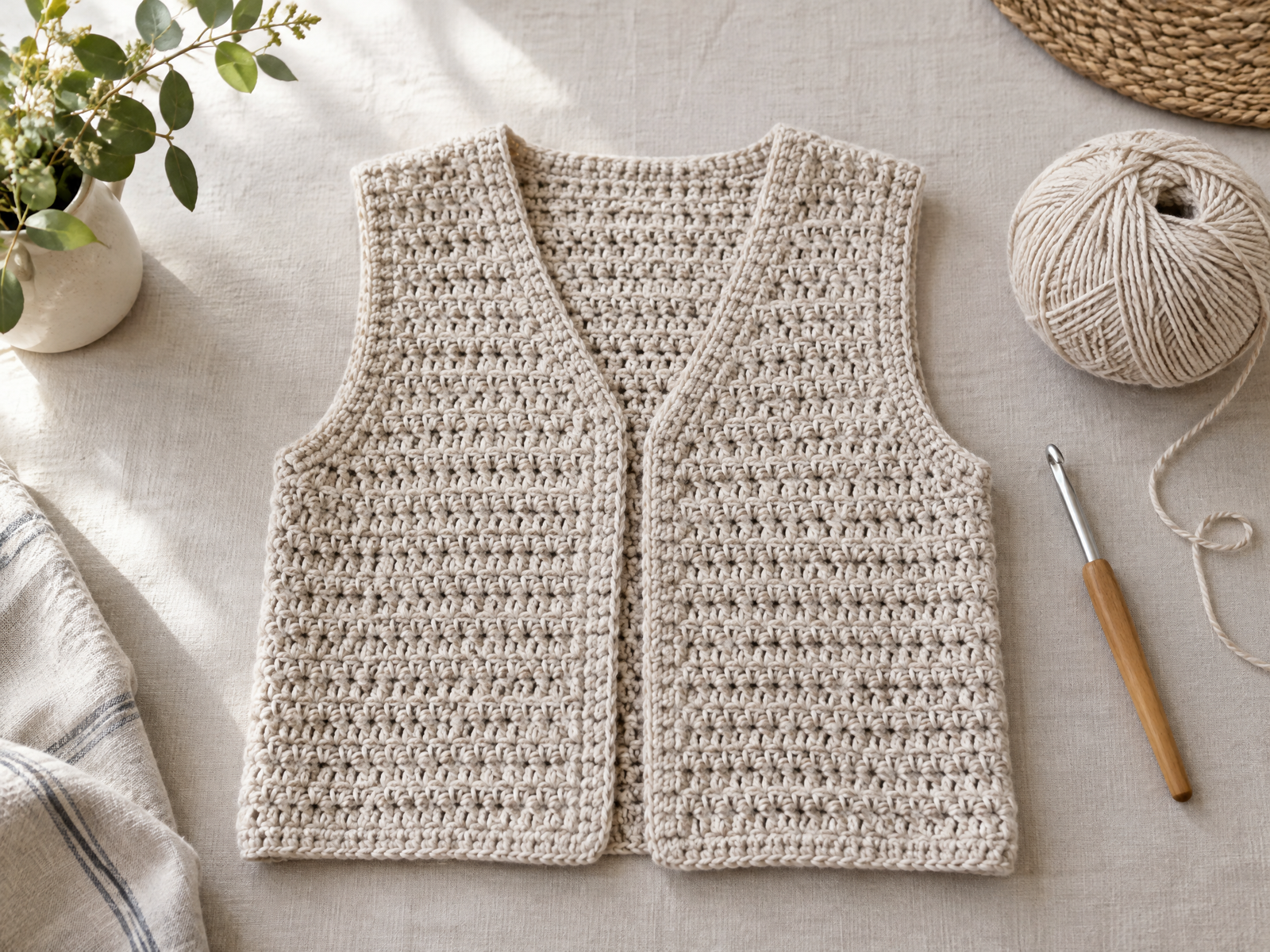
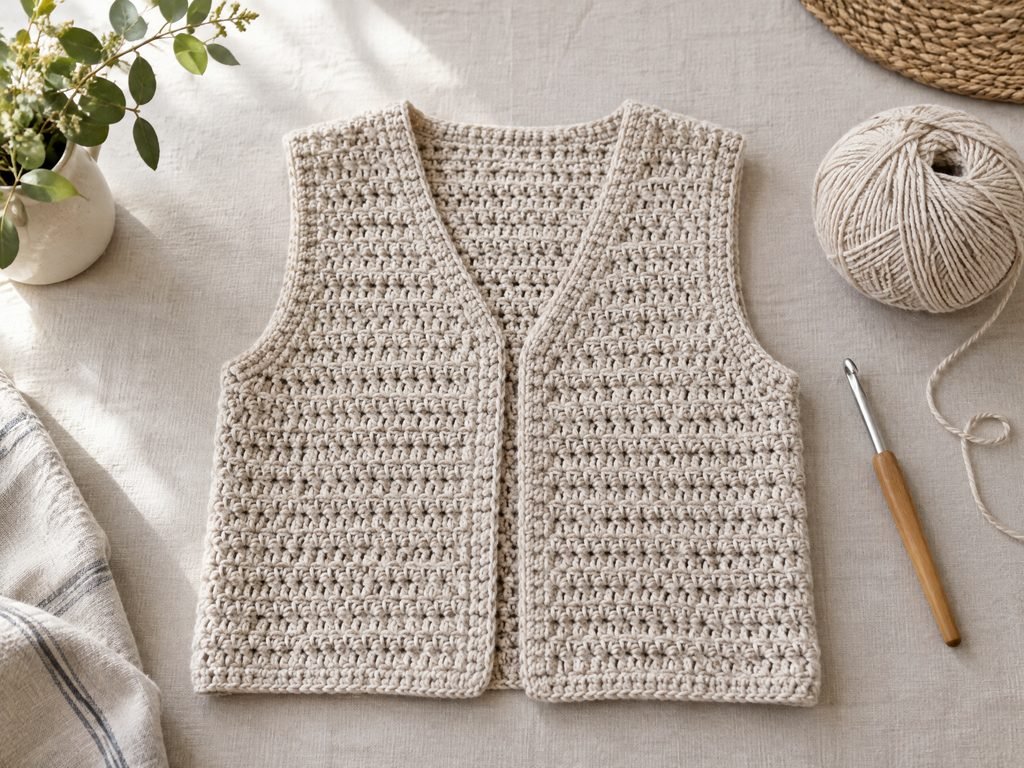
A gilet, essentially a sleeveless vest or waistcoat, is one of the friendliest garments a new crocheter can attempt. Without sleeves to shape or set in, most of what makes garment crochet intimidating simply isn’t part of the project. Here are 10 easy gilet crochet patterns built specifically with beginners in mind, using simple shapes and stitches you likely already know.
What Is a Gilet, Exactly?
Gilet is the term commonly used in British and French fashion for a sleeveless vest or waistcoat, though it’s increasingly used more broadly to describe any lightweight, sleeveless outer layer. Functionally, it’s the same idea as a vest: something you layer over a shirt or sweater for extra warmth on your core without adding bulk to your arms. The name may sound fancier, but the construction behind it is usually just as simple as any other beginner vest project.
What Makes a Gilet Beginner-Friendly?
Three things make a gilet easier than most other garments: no sleeves, simple panel shapes, and minimal finishing work. Without sleeves, you skip one of the most fiddly parts of garment-making entirely. Straight panels, rather than curved or fitted shaping, mean fewer increases and decreases to track. And a design with little sewing at the end saves you from one of the most frustrating parts of finishing a garment. Keep these three things in mind, and almost any gilet becomes approachable.
10 Easy Gilet Crochet Patterns to Try
1. The One-Rectangle Gilet
As simple as a garment gets. One large rectangle, folded and seamed only at the shoulders, with openings left for your arms. There’s no shaping and no sizing math involved at all.
2. The Two-Panel Seam Gilet
Made from two straight panels, one for the front and one for the back, joined with simple seams at the shoulders and sides. Every row is straight, so there’s nothing tricky to keep track of as you go.
3. The Single Crochet Gilet
Worked entirely in single crochet, this style produces a dense, sturdy fabric that’s very hard to mess up. It’s slower than a double crochet version, but the stitch itself is the easiest one to learn, which makes it a genuinely solid first project.
4. The No-Closure Wrap Gilet
This style skips buttons entirely, closing with a simple tie or worn open instead. Removing the closure removes one of the fiddlier parts of garment-making, keeping the whole project quick and low-stress.
5. The Simple Striped Gilet
Built from basic rows of double crochet with regular color changes, this pattern turns an easy stitch into something visually interesting without adding any real difficulty. It’s also a good way to use up smaller amounts of yarn in different colors.
6. The Everyday Half Double Crochet Gilet
Worked in half double crochet, which sits between the density of single crochet and the openness of double crochet, this gilet strikes an easy balance between speed and structure. It’s a versatile, wear-with-anything design.
7. The Quick Chunky Gilet
Made with bulky yarn and a large hook, this gilet uses fewer stitches and fewer rows to reach a finished size. The simple stitch combined with the heavier yarn means beginners can realistically finish it in a single sitting or two.
8. The Top-Down Seamless Gilet
Starting at the shoulders and working downward in one connected piece, this construction method avoids most seams altogether. It’s a satisfying way to watch a garment take shape without much finishing work waiting at the end.
9. The Long-Line Gilet
Falling past the hips, this style is longer than a typical vest but still relies on the same simple, straight panel construction. The extra length changes how it wears without adding any real difficulty to the pattern itself.
10. The Pocket Panel Gilet
A simple gilet body with basic patch pockets added to the front panels. Patch pockets are just small rectangles sewn on afterward, so this style adds a useful, practical detail without introducing any new shaping techniques.
Tips for Finishing Your First Gilet
Check your gauge before you start, even on a simple pattern, since it affects how the finished piece actually fits. If you’re between sizes, sizing up slightly is usually the safer choice, since a gilet with a little extra room still looks intentional, while a too-tight one is much harder to fix. And don’t feel pressured to start with anything more complicated than a plain stitch. A well-made, simple gilet in single or double crochet looks just as finished as a heavily patterned one.
Common Questions
Is a Gilet the Same as a Vest?
Yes, functionally they’re the same garment. Gilet is simply the term more commonly used in British and French fashion, while vest and waistcoat are more common in American and general English. All three describe a sleeveless layer worn over a shirt or sweater.
What’s the Easiest Stitch for a First Gilet?
A single crochet is the easiest stitch to learn and keeps your gauge and stitch count easy to check as you go, though it’s slower to work up. Double crochet is nearly as beginner-friendly and moves faster, making it a good choice once you’re comfortable with basic stitch counting.
How Long Does It Take to Crochet a Gilet?
Most beginner-friendly gilets take somewhere between 8 and 15 hours of hooking time, noticeably less than a full sweater since there are no sleeves involved. A chunky-yarn version, like the quick chunky gilet above, can be finished even faster.
Do I Need Advanced Skills to Add Pockets or Closures?
No. Patch pockets, like the ones on the pocket panel gilet above, are simply small rectangles sewn onto the front panels once the main pieces are finished. A tie closure is just a length of chain or a crocheted strip attached at the front edges, no advanced technique required for either one.
What Yarn Should a Beginner Use for a Gilet?
Worsted weight yarn is usually the easiest starting point, since it’s widely available, affordable, and easy to see your stitches in as you work. Bulky yarn, like in the quick chunky gilet above, grows a project even faster and tends to forgive small tension inconsistencies more easily than a finer yarn would, which is helpful while you’re still getting comfortable with even stitches.
Can I Make a Gilet Without Following a Full Pattern?
To an extent, yes, especially with the simplest styles on this list. A one-rectangle or two-panel gilet really just requires crocheting rectangles to your desired measurements and leaving gaps for your arms, which means you can improvise the basic shape once you understand the concept, even without a detailed row-by-row pattern to follow.
Final Thoughts
A gilet is one of the most approachable garments you can make as a beginner, whether you want something plain and quick or a little more detailed with pockets or stripes. Pick one of the 10 patterns above, stick to a stitch you’re already comfortable with, and you’ll have a finished, wearable layer without the steep learning curve garment crochet sometimes gets a reputation for.