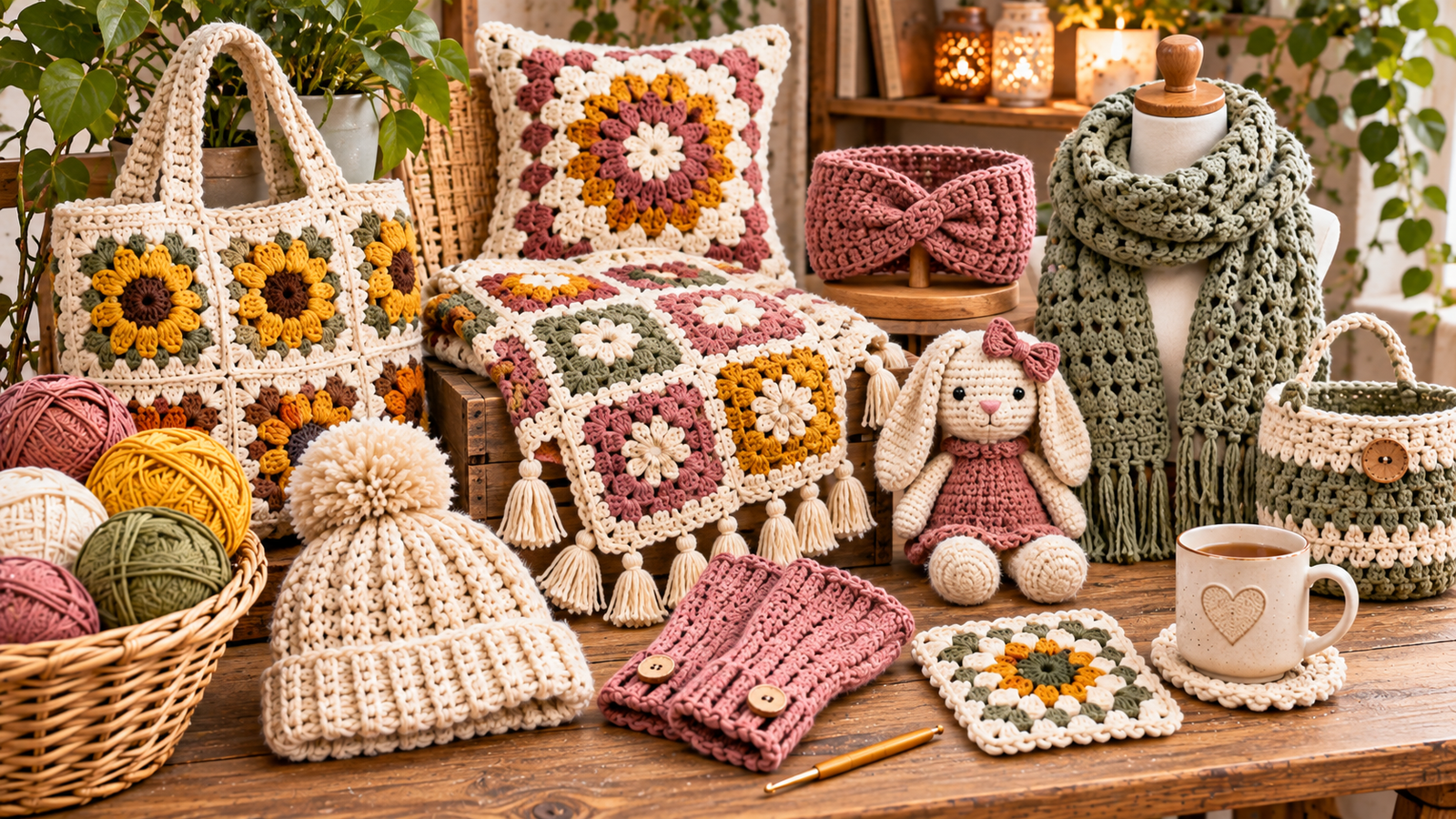
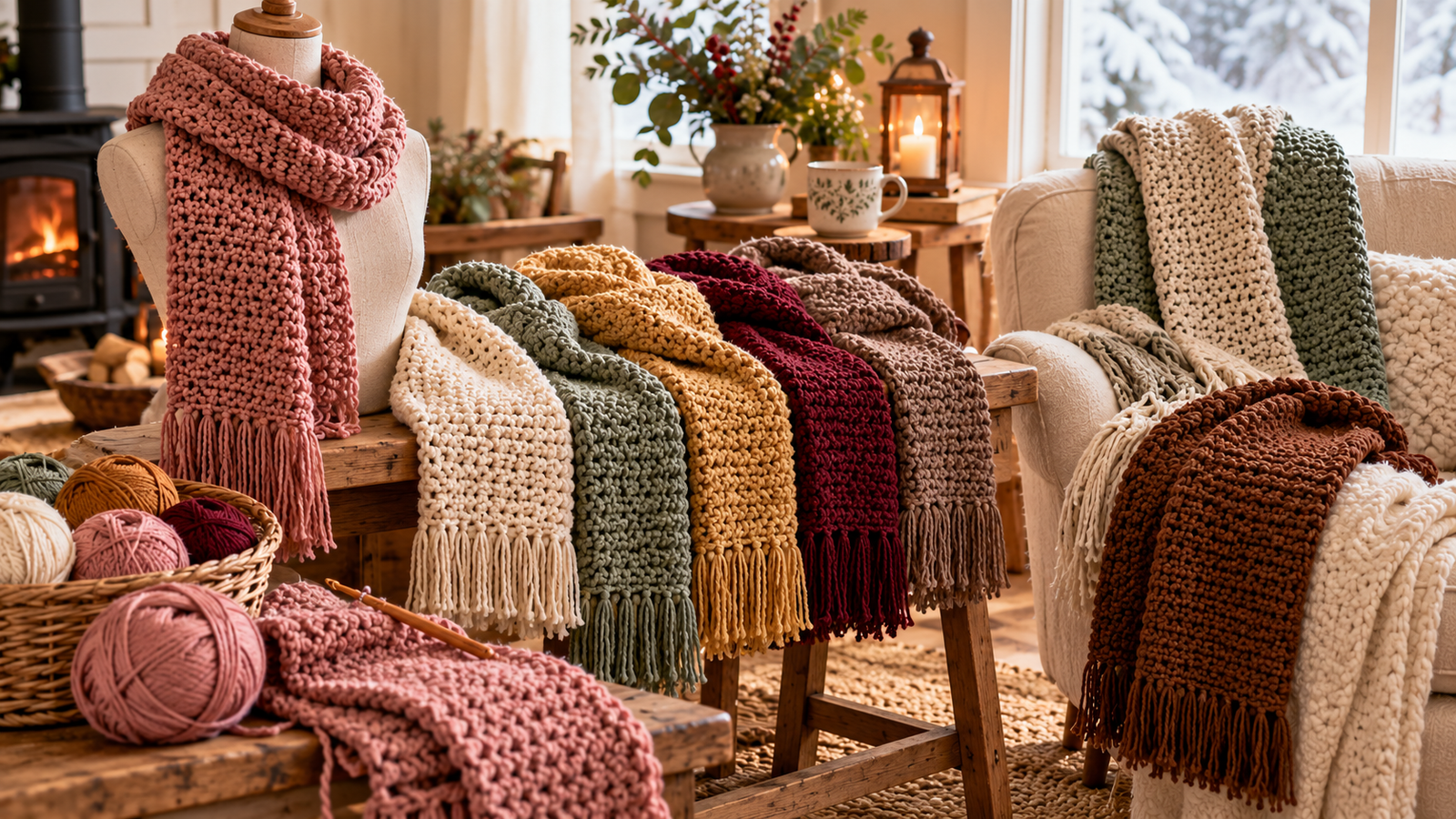
Cold winter days are the perfect excuse to bring out your favorite yarn and start a cozy crochet project. If you’re looking for an accessory that combines warmth, texture, and timeless style, a moss stitch crochet scarf is a beautiful choice.
Moss stitch is loved for its small, woven-looking texture and its simple repeating pattern. It creates a fabric that looks detailed without relying on complicated stitches, making it suitable for beginners and experienced crocheters alike. Depending on the yarn and hook you choose, the finished scarf can feel soft and lightweight or thick and comforting.
Another reason to love this stitch is its versatility. You can create a classic one-color scarf, experiment with winter-inspired stripes, or combine different shades for a handmade accessory that reflects your personal style.
In this guide, you’ll discover 7 beautiful moss stitch crochet scarf ideas for cold winter days, along with practical tips to help you choose yarn, colors, and a design you’ll enjoy wearing.
1. Classic Cream Moss Stitch Scarf
A cream moss stitch scarf is a timeless accessory that works with almost any winter wardrobe. Its understated color allows the texture to stand out, creating a clean and elegant look without needing additional decoration.
This design is particularly beautiful when made with a soft yarn in a medium weight. The moss stitch creates tiny spaces between the stitches, giving the fabric a woven appearance that looks attractive from different angles.
You can make the scarf long enough to wrap around your neck or keep it shorter for a simple draped style. A matching border gives it a coordinated finish, while short fringe can add a relaxed, traditional touch.
Cream works beautifully with camel coats, dark denim, gray sweaters, and black winter jackets. If you prefer a slightly warmer shade, try ivory or oatmeal.
Best for: Beginners, minimalist wardrobes, and anyone who loves classic winter accessories.
Color idea: Cream, ivory, or oatmeal.
Styling tip: Pair your scarf with a neutral coat and textured gloves for a coordinated winter outfit.
2. Chunky Moss Stitch Scarf for Extra Coziness
When the temperature drops, a chunky crochet scarf can become one of the most useful accessories in your wardrobe. Using thicker yarn with moss stitch creates a substantial texture that feels cozy and looks wonderfully handmade.
Choose bulky yarn in a color that complements your winter clothes. Charcoal, chocolate brown, forest green, and deep burgundy are excellent choices for a rich seasonal look.
Because thicker yarn creates larger stitches, your scarf may grow more quickly than one made with lightweight yarn. However, the finished piece can also become heavier, so consider how comfortably it will sit around your neck.
A wide design gives you more fabric to wrap around yourself, while a narrower scarf may be easier to tuck into a coat. Keep the edges simple to let the chunky texture remain the main feature.
Best for: Cold climates, cozy everyday outfits, and crocheters who want a substantial winter accessory.
Color idea: Charcoal gray or forest green.
Styling tip: Wear it with a simple wool-style coat so the scarf becomes the main textured element of your outfit.
3. Two-Color Moss Stitch Striped Scarf
If you enjoy playing with color, a two-color moss stitch scarf is an easy way to create something distinctive without learning complicated colorwork techniques.
The small, repeating texture works beautifully with stripes because the stitches provide visual interest even when the colors are simple. You could alternate cream and caramel for a warm neutral design, or combine navy and ivory for a crisp, classic appearance.
For a more playful scarf, try dusty pink with burgundy or sage green with oatmeal. The best combinations usually include colors that complement each other rather than competing for attention.
You can change colors every few rows for narrow stripes or work wider sections to create a more relaxed pattern. Keeping the stripe sequence consistent will give your scarf a balanced appearance.
Best for: Crocheters who enjoy experimenting with yarn colors and want a scarf with more personality.
Color idea: Cream and caramel.
Styling tip: Repeat one of the scarf’s colors in your hat or gloves to create a coordinated winter set.
4. Soft Pastel Moss Stitch Scarf
Winter accessories don’t always have to use dark or earthy colors. A pastel moss stitch scarf can bring a softer, lighter feeling to your cold-weather wardrobe.
Consider dusty pink, pale blue, lavender, or muted sage. These shades work especially well with cream coats, light gray sweaters, and neutral winter outfits.
A smooth yarn helps the stitch definition remain visible, allowing the delicate color to complement the woven texture. If you want a slightly more interesting design, use two related pastel shades in broad stripes.
For this style, a medium-weight yarn is often a practical starting point. It provides enough structure for the scarf to hold its shape while remaining comfortable to wrap around your neck.
Best for: Soft, feminine styling, thoughtful handmade gifts, and anyone who prefers lighter colors.
Color idea: Dusty pink or pale blue.
Styling tip: Combine your pastel scarf with a neutral coat to let the color stand out without overwhelming your outfit.
5. Earthy Moss Stitch Scarf in Autumn-Inspired Colors
Earthy colors remain beautiful throughout winter, especially when paired with natural textures and simple clothing. A moss stitch scarf in rust, olive, camel, or chocolate brown creates a warm, understated accessory that feels connected to the season.
This design works particularly well when you want a scarf that looks handmade but remains easy to wear every day.
You can keep the entire scarf in one earthy shade or combine two complementary colors. For example, olive green and beige create a balanced combination, while rust and caramel offer a warmer appearance.
If you have leftover yarn from other projects, an earthy striped scarf is also a useful way to use smaller quantities. Just make sure the yarns have compatible weights and similar care requirements.
Best for: Everyday outfits, nature-inspired color palettes, and crocheters who enjoy using leftover yarn.
Color idea: Rust and camel.
Styling tip: Pair the scarf with brown boots, a neutral jacket, and simple accessories for a relaxed winter look.
6. Elegant Long Moss Stitch Wrap Scarf
If you love oversized winter accessories, consider making a long moss stitch scarf that can also be worn as a wrap.
The extra length allows you to style the piece in several ways. You can drape it loosely around your shoulders indoors, wrap it around your neck outdoors, or let it hang down the front of your coat for a simple layered look.
For this design, choose a yarn that provides warmth without becoming too heavy. A soft medium-weight yarn can create a comfortable fabric, although your preferred hook size and stitch tension will affect the final drape.
Neutral colors such as taupe, charcoal, cream, and camel make the wrap easy to coordinate with different outfits. A muted blue or deep plum can offer a little more color while still feeling appropriate for winter.
Because this project uses more yarn than a short scarf, estimate your materials before beginning. A small gauge swatch can also help you calculate the width and length you want.
Best for: Experienced beginners, oversized accessories, and anyone who enjoys versatile winter layering.
Color idea: Taupe or soft charcoal.
Styling tip: Drape the wrap over a simple sweater or use it as an extra layer when relaxing at home.
7. Moss Stitch Scarf With a Contrasting Border
Sometimes a small finishing detail is all you need to make a crochet accessory feel special. A moss stitch scarf with a contrasting border offers a simple way to highlight the shape of the finished piece.
Start with a scarf in a neutral or muted color, then add a narrow border in a complementary shade. For example, a cream scarf with a caramel edge creates a warm, coordinated appearance. A charcoal scarf with an ivory border offers a sharper contrast.
You can also choose a border color that matches another accessory in your wardrobe. This creates a subtle connection between your scarf, hat, and gloves without making every item identical.
Before adding the border, check that the scarf’s edges are reasonably even. If necessary, work a preparatory row or round according to the construction of your project. The right approach depends on whether you’re finishing the short ends, the long sides, or the entire perimeter.
Best for: Crocheters who want a simple scarf with a distinctive finishing detail.
Color idea: Cream with a caramel border.
Styling tip: Keep the rest of your outfit simple so the contrast along the scarf’s edge remains noticeable.
How to Crochet a Moss Stitch Scarf
If you haven’t tried moss stitch before, a scarf is an excellent project for learning the pattern. The stitch repeat is simple, and the rectangular shape makes it easier to practice keeping your edges consistent.
Materials You’ll Need
- Yarn in your preferred weight and color
- A crochet hook suitable for the yarn
- Scissors
- A yarn needle for weaving in the ends
Choose a yarn that feels comfortable against your neck. Since scarves are worn close to the skin, softness is just as important as appearance.
Understanding the Moss Stitch
Moss stitch is commonly made by alternating single crochet stitches with chain spaces. In many versions, you work a single crochet into a chain space from the previous row, followed by a chain that creates the next space.
The exact starting chain and turning instructions can vary by pattern, so follow one consistent set of instructions throughout your project.
Step 1: Decide on Your Scarf Size
Think about how you want to wear the finished scarf before choosing its dimensions.
A narrow scarf is easy to layer under a coat, while a wider scarf provides more fabric to wrap around your neck. If you want an oversized wrap, plan for additional yarn and a longer working time.
Step 2: Make a Foundation Chain
Create a foundation chain according to your chosen moss stitch pattern. The number of chains will determine the scarf’s width, so check the pattern repeat before beginning.
Avoid making the chain excessively tight, as this can cause the lower edge to pull inward.
Step 3: Work the First Row
Follow the pattern’s instructions for placing single crochet stitches and chain spaces. Take your time with this row because it establishes the structure for the rest of the scarf.
Count your stitches and check that the edge looks reasonably straight before continuing.
Step 4: Repeat the Moss Stitch Pattern
Continue working the repeating sequence across each row. Once you become familiar with the placement of the stitches, the pattern usually becomes easier to maintain.
If you’re new to crochet, use a stitch marker at the beginning or end of the row to help you keep track of your work.
Step 5: Continue Until You Reach Your Desired Length
Work additional rows until the scarf is the length you prefer. Check the measurements as you go rather than relying only on the number of rows, because yarn thickness and tension affect the finished size.
Step 6: Finish the Edges
Fasten off your yarn and weave in the loose ends. Add fringe or a border if it suits your chosen design.
Finally, follow the yarn manufacturer’s care instructions if you want to wash or block the scarf before wearing it.
Tips for Making Your Moss Stitch Scarf Look Beautiful
A few practical details can make a big difference to the finished accessory.
Choose a comfortable yarn. Soft acrylic, wool blends, and other suitable yarns can work well. Consider how the material feels against your neck before committing to a full scarf.
Make a gauge swatch. A small sample helps you understand the texture, width, and drape before you begin the full project.
Keep your edges consistent. Count stitches periodically and pay attention to the first and last stitches of each row to prevent accidental increases or decreases.
Choose colors with intention. One solid shade creates a timeless look, while stripes or contrasting borders make the scarf more distinctive.
Don’t pull your stitches too tightly. Consistent tension helps create a flexible fabric that feels comfortable when wrapped around your neck.
Consider the finished weight. Chunky yarn can make a scarf warm and substantial, but a very heavy scarf may be less comfortable for everyday wear.
Frequently Asked Questions
Is moss stitch good for crochet scarves?
Yes. Moss stitch creates an attractive texture that works well for scarves in many different yarn weights. The final result can be lightweight or thick depending on your yarn, hook, and tension.
Is moss stitch suitable for beginners?
Yes. If you know how to make a single crochet and a chain, you can learn the repeating sequence used in moss stitch. A scarf is a good project for practicing the technique.
What yarn is best for a moss stitch scarf?
The best yarn depends on the feel and appearance you want. Wool and wool blends are popular for winter warmth, while acrylic yarn offers many color choices and is often easy to care for. Always check the yarn’s care instructions.
How long should a crochet winter scarf be?
There isn’t one ideal length for every scarf. It depends on the wearer’s height, preferred style, and how the scarf will be wrapped. Measure a scarf you already enjoy wearing or check the finished dimensions in your chosen pattern.
Can I make a moss stitch scarf with two colors?
Absolutely. Moss stitch works beautifully with stripes and simple color changes. Choose two shades that complement each other, and decide on a consistent stripe sequence before starting.
How can I stop my moss stitch scarf from curling?
Curling can result from tight tension, an uneven foundation chain, or the natural behavior of the chosen yarn and stitch pattern. Check your gauge, keep your tension consistent, and consider whether the pattern recommends a border or blocking.
Final Thoughts
A moss stitch crochet scarf is a wonderful winter project because it combines a simple repeating technique with plenty of opportunities for personal style. Whether you prefer a classic cream scarf, a chunky cold-weather accessory, a colorful striped design, or a long wrap, this stitch can help you create something both useful and beautiful.
The seven ideas in this guide offer different ways to experiment with texture, yarn, and color. You can keep things simple with a one-color scarf or add personality through stripes, earthy shades, or a contrasting border.
If you’re just starting out, begin with a straightforward design and focus on keeping your stitches consistent. If you’ve been crocheting for years, use the moss stitch as an opportunity to experiment with new color combinations and different scarf shapes.
Choose your favorite yarn, pick a design that fits your winter wardrobe, and enjoy creating an accessory you’ll look forward to wearing on cold days.